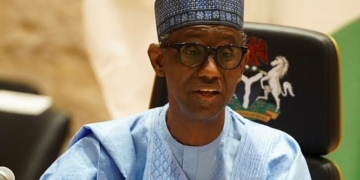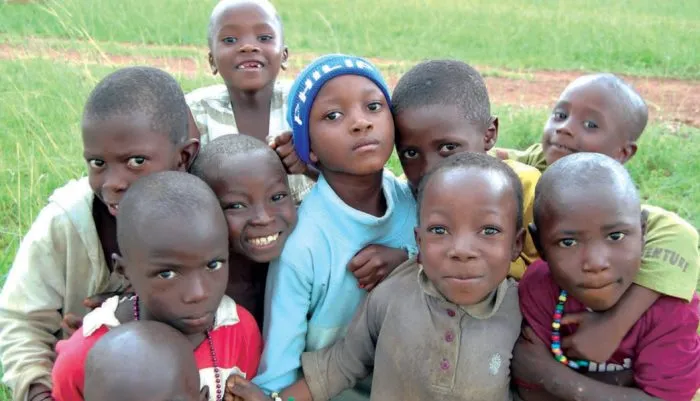
Forty per cent of Nigerian children under five are stunted. That figure, cited by Vice President Kashim Shettima at the Nigeria-Ethiopia Nutrition Leadership Exchange, should concern every Nigerian, and every tier of government. It means two in every five of our youngest citizens are growing into adults whose bodies and brains were shortchanged before they ever reached a classroom, at an estimated cost to the economy of $56 billion a year.
That the country’s leaders have agreed to treat the matter as an emergency is welcome, and the Vice President deserves credit for keeping it on the national agenda. What matters now is that the agreement carries through from Addis Ababa to the wards.
The governors, speaking through Zamfara State Governor Dauda Lawal on behalf of the Nigeria Governors’ Forum, have pledged to declare nutrition a national emergency, create a National Nutrition Intervention Fund and adopt “One Goal, One Plan and One Budget.” The Federal Government, for its part, will begin targeted interventions in two high-stunting states before widening the programme. These are sensible ideas, and borrowing from Ethiopia is sensible too. Its Seqota Declaration started in 2015 with the worst-hit communities and spread outward only after results appeared. Starting small and measuring hard is a lesson Nigerian officials have promised to apply, and we expect them to keep that promise.
RELATED: Governors To Declare Nutrition Emergency, Unveil Funding Mechanism
The commitments build on a foundation already laid. On February 20, 2025, the three tiers of government signed a Nutrition Compact to establish a common commitment against malnutrition, and the Addis Ababa pledges are meant to reinforce it. Shettima points to nutrition committees in 32 state assemblies and more than 450 local governments, which is real progress. The natural next step is a public account of what the compact has delivered so far, so that the new commitments rest on results rather than structures.
Then there is the money. The Vice President told the forum that Nigeria’s $26 million commitment to the Child Nutrition Fund attracted matching support and unlocked $52 million, while 21 states have contributed $6.3 million since 2023. The match is encouraging, and the 21 contributing states have set a standard. It also leaves 15 states still to join, and the sum raised so far is small beside the $56 billion that undernutrition costs every year. Governors who now speak the language of emergency can show their commitment by telling citizens how much of the 2027 budget will carry it, line by line. A fund is only as good as the naira that go into it.
The targets are bold. The National Policy on Food and Nutrition 2026-2035 aims to bring stunting down to 32 per cent by 2029, 28 per cent by 2032 and 25 per cent by 2035. Falling from 40 to 32 in roughly three years demands delivery of a kind this country has rarely managed in any sector. Targets of this kind are met when the numbers are put in front of the public. The governors have promised to extend the National Nutrition Scorecard to local government and ward level. They should publish it, and they should publish it regularly, so that a mother in a ward in Zamfara can see how her council is performing.
We make the same demand of the Federal Government. It has told Nigerians that two states will be chosen on the basis of their stunting burden, with reviews at three, six and nine months chaired by the Vice President. Good.Nutrition programmes in this country have too often ended up in reports that only their authors read, and this one has the chance to be different.
Shettima said each council is the unit of planning, financing and accountability, and that costed plans are being prepared with states for priority councils. That is where the fight will be won or lost. A ward health centre without a trained nurse, a borehole that has run dry and a market where fortified flour is sold at a price no widow can pay will undo any communiqué signed in Addis Ababa. Local government chairmen, who sit at the lowest tier and often hold the least money, need their statutory allocations released in full if they are to carry this load. An emergency cannot be delivered from empty accounts, and the councils will need the means as well as the mandate.
The proposed National Food and Nutrition Bill deserves support, and the National Assembly should give it urgency. The Vice President says it will protect financing and sustain interventions across administrations, which is the right ambition. A law is the one instrument that outlives a government. But Nigeria has no shortage of laws that were passed with applause and then starved of funds. The bill should therefore carry ring-fenced financing and clear consequences for diversion of nutrition money, and it should compel independent reporting to the legislature each year. Without those teeth, it will join a long shelf of well-meaning statutes.
Nutrition is also a food question, and here the Ethiopian example carries a warning. Shettima admired Oromia’s move from a $1 billion annual wheat import bill to self-sufficiency, and said food dependency compromises sovereignty. He is right, and we have said on this page before that a country importing what its own soil can grow is mortgaging its independence. The same logic applies to fortification of salt, flour, edible oil and sugar. Compliance means inspections and sanctions, and regulators should publish who passed and who failed.
The Vice President put it well when he said a budget fulfils its purpose only when it nourishes a child. By that standard, there is much work ahead, and the cost of delay is written on the bodies of millions of children who get only one chance at their first thousand days. The Addis Ababa communiqué is a good start. The measuring tape will show whether it was enough.
We’ve got the edge. Get real-time reports, breaking scoops, and exclusive angles delivered straight to your phone. Don’t settle for stale news. Join LEADERSHIP NEWS on WhatsApp for 24/7 updates →
Join Our WhatsApp Channel