
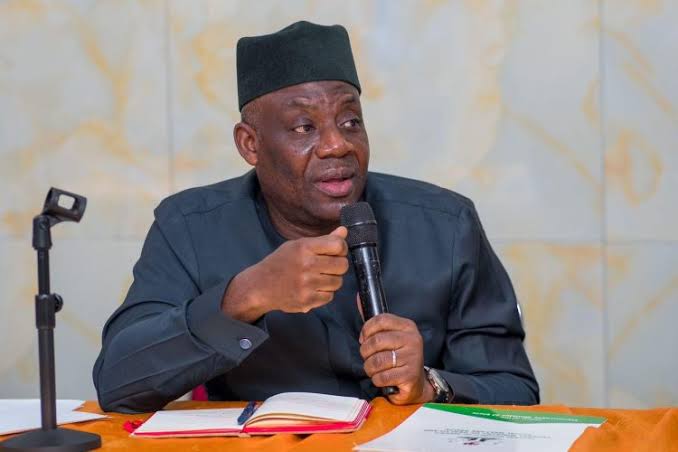
Nigeria has engaged with the Duke of Edinburgh, His Royal Highness, Prince Edward, to explore practical education models designed to improve job readiness among young people through structured skills development and empowerment programmes.
This was contained in a press statement issued yesterday by Ikharo Attah Special Adviser (Media and Communications) to the Minister Of Education, Dr. Maruf Tunji Alausa.
According to the statement, the minister spoke during a special plenary session moderated by Prince Edward, at the ongoing Education World Forum (EWF) in London, United Kingdom.
The other panelists were the Minister of Education, Ontario, Canada, Paul Calandra , Secretary of State for Education, Rio Grande de Sul, Brazil, Raquel Teixeira and International Youth Representative, DofE International Award Foundation, Andrea Chakma.
The special session discussed the importance of non-formal education and soft skills and avails the three participating education ministers an opportunity to talk about the importance of non-formal education, and soft skills, and understand how industry can also be involved, to enable the wellbeing of individuals, and basic employability skills.
During his presentation, Dr Alausa explained Nigeria’s government wide array of informal education programmes targeting out-of-school youths, adults, and vulnerable populations.
These initiatives, according to him are designed to bridge literacy gaps, provide vocational and technical skills, and integrate less privileged or marginalized groups into the economy
“What we are doing in Nigeria is because we have a lot of out of school children we have to find a way that we can quickly get them a kind of non-formal education,” he said.
“We have created a separate curriculum for them called accelerated basic education program which ties them to what they should be learning in school.
“We have heavily focused on technical vocational education, which is still a form of formal education but in a non-formal setting to give people that have gone to school other skill sets that they can use to benefit themselves, benefit their community.
“Most of our youths are in schools and we as a government have to find a way to give them other forms of non-formal education while they are within the formal setting,” he added.
The minister also said the administration of President Bola Tinubu remains committed to the development of non-formal education as part of efforts aimed at job creation and youth empowerment across the country.
According to the minister, the President Tinubu-led federal government through the education ministry is relentless in its push to empower the out-of-school children through informal education while also empowering those undergoing formal education with entrepreneurial skills which is part of non-formal education.
We’ve got the edge. Get real-time reports, breaking scoops, and exclusive angles delivered straight to your phone. Don’t settle for stale news. Join LEADERSHIP NEWS on WhatsApp for 24/7 updates →
Join Our WhatsApp Channel