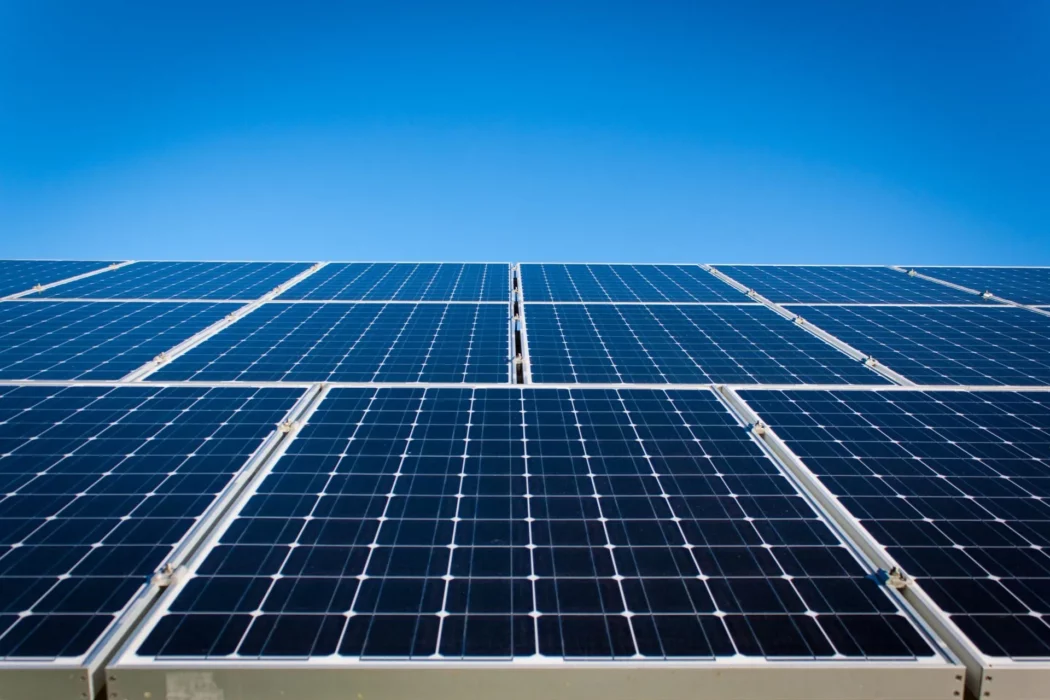
Nigeria has allocated approximately $425 million to establish eight new renewable energy manufacturing facilities, coinciding with a rapid expansion of its solar panel production capacity from 120 megawatts (MW) two years ago to 300MW.
Speaking at a webinar hosted by the African Association of Energy Journalists and Publishers (AJERAP), Rural Electrification Agency (REA) managing director Dr Abba Aliyu hailed the progress as a direct outcome of President Bola Ahmed Tinubu’s Nigeria First Policy. “This policy prioritises local content development and domestic manufacturing,” he said, noting that 2025 was a “defining year” for the sector.
Dr Aliyu revealed that imports of solar cells and components for local assembly surged to 837MW last year—more than double the cumulative 375MW from all prior years combined—surpassing finished product imports.
“This is a powerful demonstration that the Nigeria First policy is driving a structural shift toward domestic manufacturing,” he added.
The $425 million investment, bolstered by commitments from the Nigeria Renewable Energy Innovation Forum (NREIF) 2025, is fostering an integrated ecosystem of manufacturing, deployment, and financing. REA’s flagship programs, including the Energizing Education Programme (EEP) and Distributed Access through Renewable Energy Scale-Up (DARES), are creating steady demand.
“These large-scale deployment programmes are now providing the predictable demand required to sustain domestic manufacturing, ensuring local production matches real market opportunities,” Dr Aliyu explained.
Regulatory support is accelerating growth, with the Nigerian Electricity Regulatory Commission (NERC) expanding frameworks for Distributed Energy Resources (DERs) to enable up to 10MW projects via decentralised and interconnected mini-grids.
“This unlocks new opportunities for private sector participation,” the REA boss stated.
Nigeria is emerging as a regional powerhouse, with locally made solar panels already exported from Lagos to Accra, Ghana.
“We are transitioning from a renewable energy consumer to a regional supplier,” Dr Aliyu said, pointing to potential solar deployments in border communities for cross-border electricity trade.
The model’s appeal is spreading continent-wide, with nations like Mozambique, Benin Republic, Burkina Faso, Niger, Chad, Mauritania, and Mauritius consulting REA.
“Nigeria’s electrification model is increasingly being recognized across the continent,” he noted.
Looking ahead, NREIF 2.0 will prioritize regional integration. “We are building a fully integrated renewable energy ecosystem anchored on local manufacturing, scalable deployment, and regional collaboration,” Dr. Aliyu said.
We’ve got the edge. Get real-time reports, breaking scoops, and exclusive angles delivered straight to your phone. Don’t settle for stale news. Join LEADERSHIP NEWS on WhatsApp for 24/7 updates →
Join Our WhatsApp Channel