Widespread stock-outs of anti-tuberculosis drugs are endangering patients and accelerating transmission across Nigeria, despite assurances by the Federal Government that funds have been approved to secure supplies.
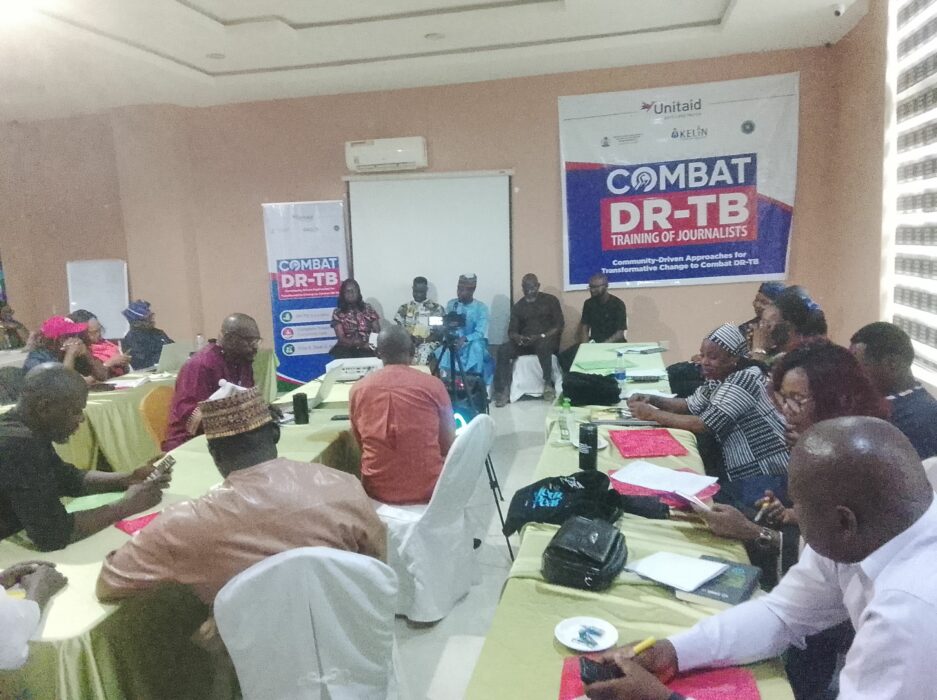
The alarm was raised at the ongoing training of journalists on DR-TB coverage organised by the COMBAT DR-TB Project of the Civil Society for the Eradication of Tuberculosis in Nigeria, TB Network, in Abuja.
Health officers at the training confirmed that facilities nationwide have been without essential TB commodities for almost two months, with current stocks insufficient to last till December.
“We have a stock-out of TB medications nationwide. The drugs we have now cannot take us up to December,” one officer said.
Most alarming, they pointed out, is the absence of TB Preventive Therapy, TPT, given to contacts of TB patients and people living with HIV to prevent progression to active disease.
“There is no single TPT anywhere in this country. All the TPT we have are expired,” an officer said.
Faced with more patients than medicines, workers admitted to rationing treatment against policy.
“You have 20 drugs, but you diagnosed 50. They are dividing the drugs for these 20 to these 50, thinking more drugs will come,” one officer said. “I have 50 patients but 20 kits. Why watch these 50 die?”
Independent data confirms the crisis. At a press briefing in Abuja on June 12, 2026, the Network of People Living with HIV/AIDS in Nigeria, NEPWHAN, called on the Federal Government to declare the stock-out a national public health emergency.
A report on NEPWHAN’s first-quarter community-led monitoring covering 2,135 facilities across the 36 states and FCT found that 64.2 per cent of facilities reported stock-outs of at least one essential TB commodity, particularly Drug Susceptible TB Category 1 drugs, while 58.2 per cent recorded shortages of GeneXpert cartridges and sputum materials.
The body warned that patients diagnosed with TB are being told to return weeks later because drugs are not available. For a disease where treatment rapidly reduces infectiousness, the delay means patients remain infectious at home, in markets, schools and correctional centres.
It disclosed that as at the time of the briefing, “there are no confirmed government funds for 2026 TB interventions, and the 54 million dollars counterpart funding commitment is yet to be released.”
$54m promise made in March, nothing on the ground
The promise of $54 million was first made three months earlier. At the 2026 Pre-World TB Day briefing in Abuja on March 17, 2026, organised by Stop TB Partnership Nigeria, the Director of Public Health, Federal Ministry of Health and Social Welfare, Dr Charles Nzelu, announced that $54 million had been approved for procurement of TB and HIV drugs to prevent stock-outs.
Speaking at that briefing, Dr Nzelu said the government was making giant strides in addressing challenges in the health sector and that the long-term investment was part of a strategy to ensure Nigeria does not experience stock-outs.
He explained that the move became necessary after forecasts indicated that some TB medications supported by the Global Fund might run out, and that the ministry had set in motion the machinery to procure commodities using part of the $200 million sector-wide allocation announced last year.
He also announced the nationwide rollout of the Pluslife Mini Dock, a near-point-of-care diagnostic platform, and the deployment of over 1,000 units of molecular diagnostic equipment.
Seven months after that March 17 briefing, health workers at the TB Network training say nothing is on the ground to show for it. Facilities remain empty, TPT is unavailable, and the promised procurement has not resulted in drugs on shelves.
The Coordinating Minister of Health and Social Welfare, Prof. Muhammad Ali Pate, had also pledged $52.3 million as co-financing for the 2023-2026 Global Fund Round 7 Cycle, part of which was earmarked for TB commodities. TB Network said it projected at the time that the country would risk significant stock-outs by June 2026 if procurement were not expedited — a projection now playing out.
Funding gap
TB Network National Coordinator, Olayide Akanni, said donors who historically procured TB drugs have told government to take ownership. For the next three-year cycle, the Global Fund will provide funding for only one year, leaving two years to the government.
Stop TB Partnership lists Nigeria among 10 countries with the most urgent needs, requiring $85.4 million for 2025/2026.
Nigeria has a 70 per cent funding gap in TB, with only six per cent of the national TB budget coming from domestic sources. While the government earmarked about N73.4 billion for TB drugs for 2026, advocates say no funds have been released.
“Nigerian government needs to wake up! It’s not enough to make promises outside the country,” Akanni said. “One year down the line, funds have not come, drugs have not been procured.”
In a letter dated October 10, 2026, Ref: TBN/ADM/101/001/0943, TB Network asked the Minister for immediate procurement and accelerated mechanisms to prevent future disruptions.
Why it matters
Head of Training at the National Institute of Public Health and Infectious Diseases, Dr Eunice Jiya Chitumu, said stock-outs are dangerous in three ways.
“First, it prolongs illness and increases risk of death. Nigeria recorded 71,000 TB-related deaths in 2023, according to WHO.
“Second, it forces treatment interruption, which breeds drug-resistant TB that is harder, longer and more expensive to treat. Third, it fuels community spread,” she explained.
Nigeria ranks first in Africa and sixth globally among high-burden TB and TB/HIV countries.
The WHO 2025 Global TB Report estimates about 510,000 new TB cases annually, including 61,000 children. Nigeria recorded about 8,200 cases of multidrug-resistant or rifampicin-resistant TB in 2024, but only 3,090 were started on treatment.
Notifications have grown from 106,533 in 2018 to 405,324 in 2024 and 458,534 in 2025, showing progress in detection. But without drugs, case finding alone will not stop transmission.
TB diagnosis and treatment remain officially free in all government-approved DOTS centres. What is missing, health workers say, is the medicine itself.
“The important thing is we don’t have drugs, and we risk an epidemic if funding is not released,” one speaker at the training said.
We’ve got the edge. Get real-time reports, breaking scoops, and exclusive angles delivered straight to your phone. Don’t settle for stale news. Join LEADERSHIP NEWS on WhatsApp for 24/7 updates →
Join Our WhatsApp Channel