Nigeria Liquefied Natural Gas (NLNG) is repositioning itself to increase Nigeria’s footprint in the global liquefied natural gas (LNG) market, building on the country’s current 6 per cent contribution to global LNG supply.
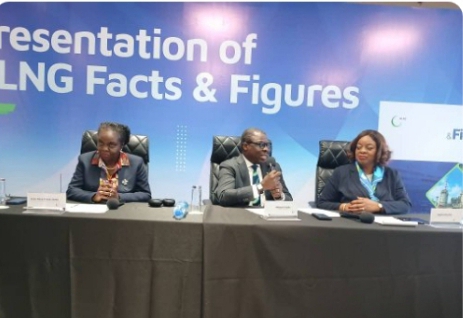
Managing Director of NLNG, Engr. Adeleye Falade, disclosed this while presenting the company’s Facts Behind the Figures report to journalists in Lagos on Tuesday.
According to Falade, discussions are underway on the company’s next growth phase, with plans for Trains 8, 9 and 10 already on the drawing board as NLNG seeks to consolidate Nigeria’s position in the global LNG industry.
He said the company’s immediate focus remains the Train 7 project, which is now more than 92 per cent complete.
The $5 billion expansion project will raise NLNG’s production capacity by 35 per cent, from 22 million tonnes per annum (MTPA) to 30 MTPA, strengthening Nigeria’s competitiveness among the world’s leading LNG exporters while meeting rising global demand.
Falade said Train 7 has already generated more than 10,000 direct jobs, with over 13,000 Nigerians employed at the peak of construction. The project has also boosted local manufacturing through the supply of structural steel, cables and engineering services by Nigerian companies, while supporting skills development through partnerships with universities and technical institutions.
Approved by NLNG shareholders in 2019 and executed despite disruptions caused by the COVID-19 pandemic, the project aligns with the Federal Government’s Decade of Gas initiative aimed at commercialising Nigeria’s abundant gas resources.
Industry stakeholders believe the experience gained from Train 7 will provide a strong foundation for future expansion projects, including the proposed Train 8, while enhancing Nigeria’s competitiveness in the global LNG market.
Falade also highlighted NLNG’s financial contribution to the economy, revealing that the company has generated $149.6 billion in revenue since commencing operations and has paid $10.8 billion in taxes to the Federal Government since becoming tax-compliant in 2009.
He described the figures as evidence of NLNG’s enduring contribution to Nigeria’s energy sector.
“We have made $149.6 billion in revenue by 2026. $10.8 billion has also been paid in tax to the Federal Government right from the time we became tax compliant,” Falade said.
He added that NLNG has remitted $47.2 billion in dividends to shareholders, including the Federal Government, which remains the company’s largest shareholder.
According to him, NLNG currently operates six liquefaction trains, has an asset base valued at more than $22.9 billion, owns a fleet of 20 LNG vessels, and has delivered over 6,285 LNG cargoes to international markets since inception.
Beyond exports, Falade said NLNG is playing a critical role in Nigeria’s energy transition by supplying 500,000 tonnes of liquefied petroleum gas (LPG) to the domestic market last year, helping expand access to cleaner cooking fuel.
He noted that the company’s gas gathering and utilisation model has helped reduce Nigeria’s gas flaring rate from 65 per cent to less than 20 per cent.
Falade also underscored NLNG’s contribution to public health, noting that more than 470,000 Nigerians die annually from illnesses linked to the use of firewood and other polluting cooking fuels. He said the company’s LPG expansion programme is helping to reduce that burden.
On corporate social responsibility, the NLNG boss described the ₦120 billion Bonny-Bodo Road as one of the largest CSR projects undertaken by any company in Nigeria. The 40-kilometre road provides Bonny Island with its first mainland road connection and has significantly improved transportation, trade and economic activities in Rivers State.
We’ve got the edge. Get real-time reports, breaking scoops, and exclusive angles delivered straight to your phone. Don’t settle for stale news. Join LEADERSHIP NEWS on WhatsApp for 24/7 updates →
Join Our WhatsApp Channel