
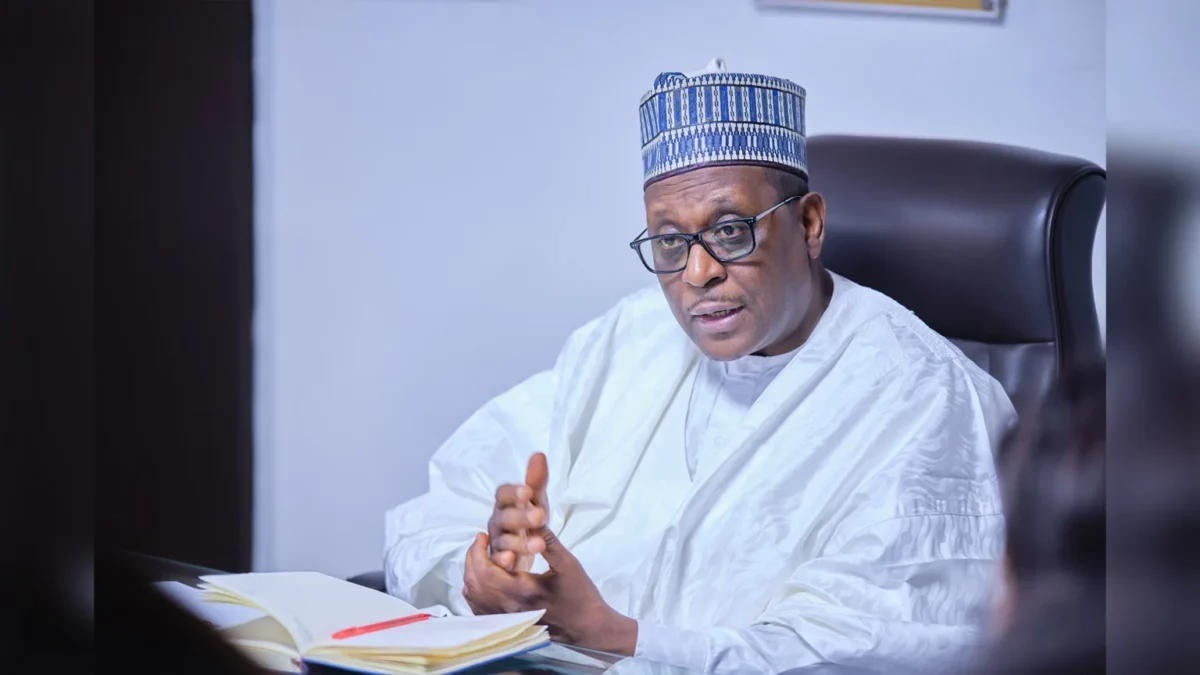
The coordinating minister of Health and Social Welfare, Prof. Muhammad Pate, has said Nigeria must make a deliberate national choice to invest more in healthcare if it wants to build a quality and sustainable health system.
Pate, who spoke on sustainable domestic health financing for universal health coverage, said the country’s persistent health challenges were not accidental, but reflected choices made over the years by governments and society.
According to him, Nigeria had for more than two decades spent far less per capita on public health financing.
He said the low level of public investment could not be reconciled with expectations for a healthcare system capable of delivering quality services to Nigerians.
“Health is not cheap. If you want health, you have to pay for it,” Pate said, stressing that countries with stronger health systems had made substantially higher investments in healthcare.
The minister said the situation was particularly evident at the primary healthcare level, where inadequate funding had contributed to dilapidated infrastructure, shortages of medicines and the departure of health workers.
“You cannot expect to drive a Mercedes Benz if you pay for a bicycle,” he said, stressing the need for governments to increase investment in primary healthcare.
Pate said the administration of President Bola Tinubu was attempting to establish a new national consensus around health by making the sector a priority under the Renewed Hope Agenda.
He, however, said the success of the effort would ultimately depend on actual investments and actions rather than speeches.
He said, “You will see whether you prioritise health or not, not in how much speeches you give, but in how much you actually invest or mobilise, or the action that you take.”
According to him, the responsibility for financing healthcare did not rest solely with the federal government, but involved the National Assembly, state governors, civil society and families.
Pate disclosed that the Basic Health Care Provision Fund (BHCPF), which stood at only about $0.50 per capita in 2023, had increased under the current administration to approximately $1 per capita.
He said although the increase represented a doubling of the previous allocation, it remained modest relative to the needs of Nigeria’s population.
The minister said the focus of ongoing reforms was therefore not only to mobilise additional resources, but also to ensure that available funds were used more efficiently.
He identified allocative efficiency as a major priority, explaining that patients with conditions that could be treated at primary healthcare centres should not routinely have to seek care at teaching hospitals, where treatment was more expensive.
Pate also stressed the need to improve the efficiency of health insurance and strategic purchasing, saying increased financing would have limited impact if resources were fragmented or poorly allocated.
He said the government was working to strengthen the National Health Insurance Authority (NHIA) to enable strategic purchasing and ensure that resources were directed towards interventions that deliver greater population-level health benefits.
The minister also advocated a shift from measuring health sector performance based largely on inputs such as workshops, procurement and infrastructure to measuring outputs and outcomes.
He said the reforms were increasingly focused on measurable results, including improved emergency obstetric care, treatment of children, fistula repair and expansion of health insurance coverage.
Pate said sustainability was another critical component of the reforms, stressing that increased financing must be backed by legislation, national ownership and stronger domestic institutions.
He also called for greater local manufacturing of medicines, commodities and other health products, warning that increased health spending could otherwise result in Nigeria sending substantial resources abroad to finance production in other countries.
“If you increase these resources, and 25 per cent of it goes into buying commodities that are made in some other country, you are just building somebody else’s economy,” he said.
We’ve got the edge. Get real-time reports, breaking scoops, and exclusive angles delivered straight to your phone. Don’t settle for stale news. Join LEADERSHIP NEWS on WhatsApp for 24/7 updates →
Join Our WhatsApp Channel