
Nigeria has called on the global maritime community to prioritise equity, fairness, and targeted support for developing economies as efforts intensify to decarbonise international shipping.
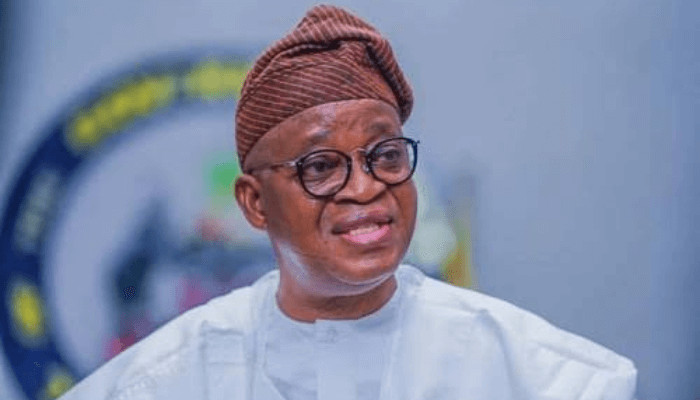
The Minister of Marine and Blue Economy, Adegboyega Oyetola, made the call while addressing stakeholders at the 84th session of the Marine Environment Protection Committee (MEPC 84) of the International Maritime Organisation (IMO) in London.
The minister, in a statement by the Special Adviser, Dr Bolaji Akinola, reaffirmed Nigeria’s support for global decarbonisation goals but stressed that such commitments must be anchored on frameworks that reflect the economic realities and development needs of emerging economies.
Oyetola noted that while the push to achieve net-zero emissions in shipping by 2050 is necessary, it must be aligned with broader sustainable development objectives.
He warned that without adequate financial, technical, and capacity-building support, developing countries risk being disproportionately burdened by the transition.
On the sidelines of the meeting, the minister held strategic engagements with key global maritime leaders, including the Secretary-General of the IMO, Arsenio Dominguez, and the President of Saudi Arabia’s Transport General Authority, Fawaz Al Sehali. The discussions focused on deepening collaboration in maritime security and capacity development, as well as advancing an inclusive energy transition within the sector.
Oyetola reiterated Nigeria’s commitment to strengthening partnerships with global stakeholders, emphasising shared priorities such as maritime safety, institutional capacity-building, and sustainable blue-economy development.
In his remarks, Dominguez commended Nigeria’s growing role in global maritime governance and acknowledged the country’s efforts in improving security in the Gulf of Guinea. He highlighted Nigeria’s success in curbing piracy and enhancing regional coordination, describing it as a model for other maritime regions.
He also lauded Nigeria’s ongoing reforms in port modernisation, digitalisation, and human capital development, noting that these efforts are positioning the country as a key player within the IMO framework.
The engagement with Saudi Arabia further underscored Nigeria’s commitment to expanding bilateral cooperation, with both countries reaffirming their readiness to support each other in advancing shared maritime and environmental goals.
Nigeria maintained that achieving a truly global transition to cleaner shipping will require inclusive policies that ensure no country is left behind, particularly those with limited resources to meet the demands of decarbonisation.
We’ve got the edge. Get real-time reports, breaking scoops, and exclusive angles delivered straight to your phone. Don’t settle for stale news. Join LEADERSHIP NEWS on WhatsApp for 24/7 updates →
Join Our WhatsApp Channel