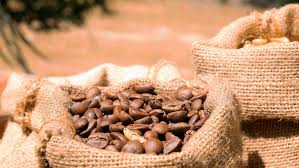
Nigeria has declared a decisive shift away from the export of raw shea nuts, as it intensifies efforts to capture greater value from the global market through industrialisation and local processing.
The position was contained in a statement issued by the Presidential Food Systems Coordinating Unit (PFSCU) and signed by the Technical Assistant to the President on Agriculture in the Office of the Vice President, Marion Moon.
The move was outlined at the Shea 2026: Beyond Borders conference in Accra, Ghana, convened by the Global Shea Alliance, where governments, industry leaders and development partners gathered to shape the future of the shea value chain.
The conference, opened by Ghana’s Vice President, Jane Nana Opoku-Agyemang, provided a platform for producing countries to align strategies on trade, investment, sustainability and value addition.
Nigeria, which accounts for about 40 per cent of global shea nut supply, is seeking to strengthen its influence in a sector where it currently captures only a small portion of total value.
The Presidential Food Systems Coordinating Unit (PFSCU), which represented Nigeria as Guest of Honour, attended alongside the Minister of Agriculture and Food Security, Senator Abubakar Kyari, and the Minister of State for Industry, Trade and Investment, Senator John Owan Enoh.
Speaking at the conference, Enoh underscored the urgency of reversing Nigeria’s export pattern.
“The era of exporting raw nuts while importing finished products must come to an end. The future lies in industrialisation, value addition, and regional integration.”
At the heart of Nigeria’s engagement is a transition to agro-industrialisation, focusing on domestic processing, job creation and expanded participation in global markets.
Officials said the transformation is being driven through targeted measures under the Nigeria Industrial Policy, aimed at strengthening market systems and attracting investment into value-added production.
Beyond economic gains, the shea sector is also being positioned as a catalyst for rural development and environmental sustainability, particularly as women play a central role in production and processing.
Nigeria also emphasised the need for stronger regional coordination among African producing countries to ensure the continent captures greater value from one of its most strategic indigenous commodities.
In a related development, Nigeria welcomed the appointment of Ali Saidu as the new chair of the Global Shea Alliance, describing it as a milestone for the country’s growing influence in the sector.
We’ve got the edge. Get real-time reports, breaking scoops, and exclusive angles delivered straight to your phone. Don’t settle for stale news. Join LEADERSHIP NEWS on WhatsApp for 24/7 updates →
Join Our WhatsApp Channel