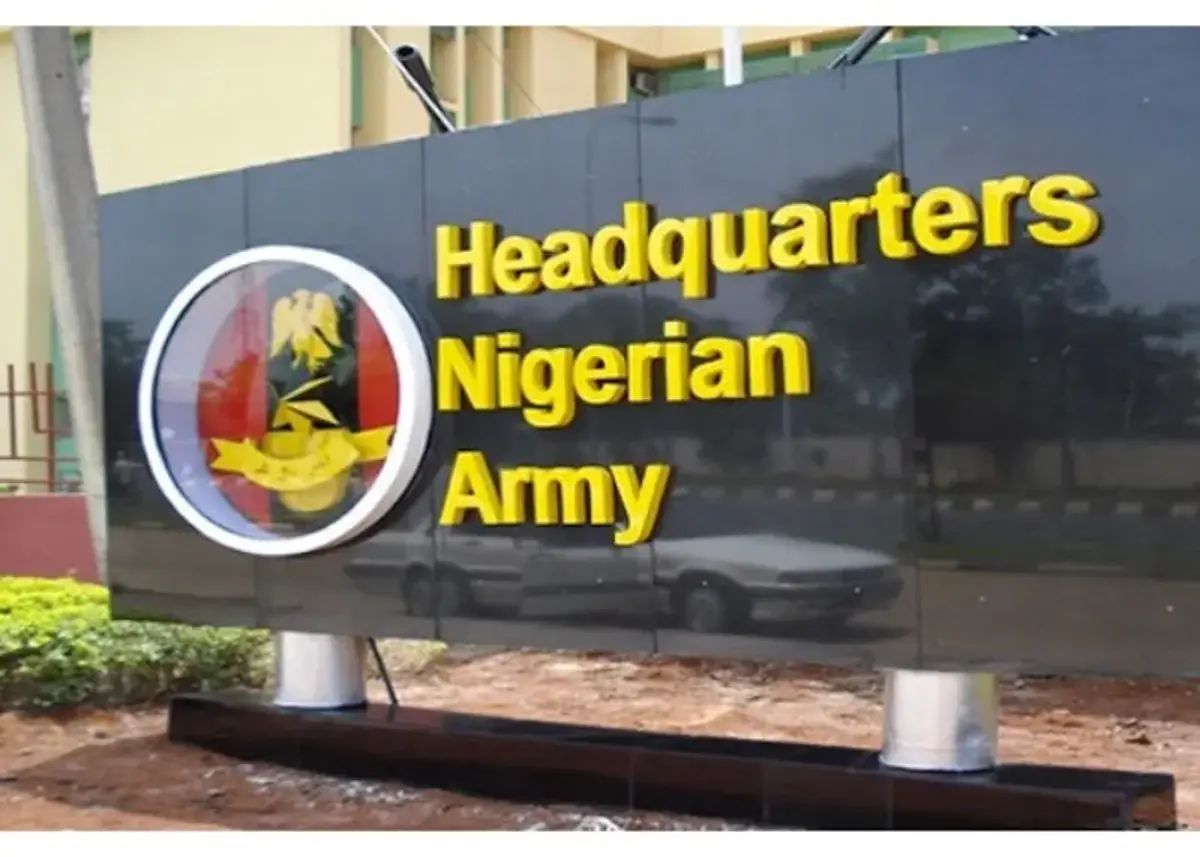
The Defence Headquarters (DHQ) has said its collaboration with the United States Africa Command (AFRICOM) has led to intelligence sharing, joint operations and capacity building aimed at defeating terrorism in the country.
Both the Nigerian military and the United States Africa Command (AFRICOM) reaffirmed their commitment to deepening security cooperation against terrorism during an X Space discussion on Tuesday.
The X space discussion, titled ‘Strengthening Security Through Strategic Information Sharing: United States and Nigerian Military Partnership Against Terrorism’, featured officials from the Nigerian military, AFRICOM, and members of the public.
The Director Defence Information Major General Samaila Uba in his opening remarks said the conversation reflects the growing commitment of Nigeria and the United States of America to addressing the evolving security challenges confronting Nigeria, the Lake Chad Basin region and the wider international community.
He said the partnership has significantly enhanced intelligence sharing, capacity building, training, strategic communication, logistics support and operational effectiveness in the ongoing counter-terrorism campaign.
He commended President Bola Ahmed Tinubu for his unwavering support to the Armed Forces of Nigeria through the provision of platforms, equipment and resources required to fight terrorists.
“Terrorism remains a transnational threat that recognizes no borders. Its defeat requires not only military capability but also intelligence cooperation, technological innovation, strategic communication and strong partnerships built on mutual trust and shared values. Over the years, the collaboration between the Armed Forces of Nigeria and the United States forces has continued to yield significant gains in counter-terrorism operations, force development and regional security cooperation,”.
According to him, the recent collaborative efforts have contributed to improved intelligence-driven operations leading to the disruption of terrorist networks, “the neutralization of several high-value terrorist commanders and about 200 fighters, the destruction of terrorist enclaves and logistics infrastructure, as well as enhanced surveillance and reconnaissance capabilities,”.
“The partnership has also strengthened the operational readiness of Nigerian troops through specialized training programmes, intelligence fusion initiatives, joint planning engagements and professional military education,” he added.
Uba said Nigeria was pursuing a whole-of-society approach involving religious leaders, traditional institutions, civil society groups, government agencies, and economic empowerment programmes to address the root causes of radicalisation.
“Terrorism cannot be defeated by kinetic (military offensives) means alone,” he said. “Non-kinetic measures such as community engagement, economic empowerment, strategic communication and the involvement of religious and traditional leaders are equally important.”
He reiterated that the collaborative efforts have supported ongoing military operations across the North East and other theatres, contributing to operational successes.
“The Armed Forces of Nigeria is benefiting immensely from this collaboration, including skills development and specialised training. There are many operational lessons we continue to learn through our interaction with the United States,” he said.
LEADERSHIP recall that the partnership between the two countries was forged weeks after United States President Donald Trump claimed that there was a Christian genocide ongoing in Nigeria and eventually ordered airstrikes against those he described as Islamic State terrorists targeting Christians in North-west.
Trump also accused the Nigerian government of being complicit in the “genocide” because it failed to curb it. However, the federal government rejected the claim, saying Nigerians of all faiths and backgrounds are being targeted by armed groups.
This disagreement led to the formation of the US-Nigeria Joint Working Group framework under which 200 US troops were deployed to the West African country.
Their deployment generated public debates, with critics arguing that such a partnership will undermine Nigeria’s sovereignty. But the Nigerian government disputed this.
Responding to questions on the duration of the partnership, AFRICOM’s Director of Public Affairs, Colonel Rebecca Heyse, said US cooperation with Nigeria is based on mutual interests and respect for Nigeria’s sovereignty.
“Our operations and cooperation with Nigeria are rooted in fundamental respect for Nigerian sovereignty,” she said. “We operate strictly by invitation and under the US-Nigeria Joint Working Group framework.”
According to her, the United States will continue to support Nigeria as long as both countries consider the partnership beneficial in addressing shared security threats.
“As long as there are shared security threats and the framework continues to be of value to both countries, the United States remains committed to the partnership,” she added.
However, Ms Heyse deflected questions about the current position of the US government on Christian genocide.
We’ve got the edge. Get real-time reports, breaking scoops, and exclusive angles delivered straight to your phone. Don’t settle for stale news. Join LEADERSHIP NEWS on WhatsApp for 24/7 updates →
Join Our WhatsApp Channel