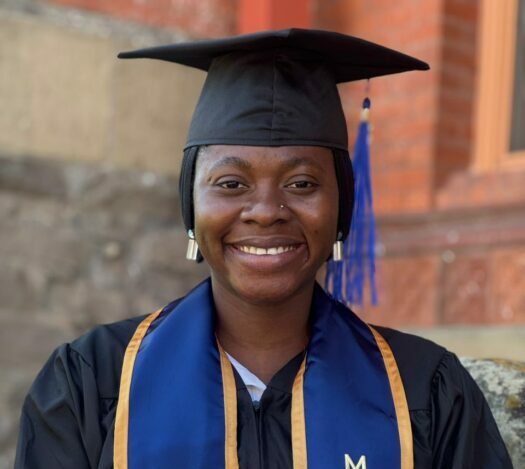
When most people think of artificial intelligence, they picture self-driving cars or chatbots. But for Fatima Rilwan Ododo, a Nigerian Ph.D. candidate at Montana State University in the United States, AI is something far more vital — a tool to protect electricity, safeguard food, and strengthen nations. Her pioneering studies, “Machine Learning for Cybersecurity in the Utilities and Power Sector” and “The Role of Power Sector Cybersecurity in Safeguarding Food Systems and National Stability,” have positioned her among the new generation of African researchers redefining how technology serves humanity.
Ododo’s first study, published in The Journal of Science Innovation and Technology Research (JSITR), explored how machine learning can detect cyberattacks on power grids and water systems. By analyzing operational data and identifying anomalies in real time, her framework offers early warnings for potential breaches — before they can cripple national infrastructure. “Cyber threats don’t just target computers,” she explains. “They target the systems that sustain life — power plants, water networks, and hospitals. My goal is to give those systems the intelligence to defend themselves.”
Her work builds on real-world incidents such as the 2015 Ukraine power-grid hack and the 2021 Colonial Pipeline ransomware attack, using these as case studies to model predictive defenses. By training AI models to detect deviations in energy-system behavior, Ododo’s algorithms can flag attacks invisible to traditional rule-based methods.
Ododo’s second publication in ‘The International Journal of Science Research and Technology’ draws a direct line between energy resilience and food availability. It reveals how cyber disruptions in electricity supply can cascade into agricultural collapse — halting irrigation, freezing storage systems, and spoiling tons of food. “Food security begins with energy security,” she says. “When power is compromised, farms stop, cold chains break, and entire communities suffer.”
Her study calls for integrated cybersecurity policies that bring together engineers, farmers, and policymakers to protect the invisible infrastructure that sustains nations. It emphasizes Africa’s unique vulnerabilities — aging grids, limited redundancy, and heavy reliance on smallholder farmers — while offering globally relevant AI-driven solutions.
Ododo’s work exemplifies the spirit of Nigerian innovation — creative, resilient, and globally relevant. Growing up in a modest family in northern Nigeria, she witnessed how unreliable electricity could derail livelihoods. That experience now fuels her mission to build intelligent systems that protect societies from digital and physical collapse. “Fatima is one of Nigeria’s most promising exports in science and technology,” says Nicholas Addotey, a cybersecurity expert who has collaborated with her research group. “She’s bringing African perspectives into the global AI conversation — developing models that work even in data-scarce, resource-limited environments.”
Meanwhile, her contributions have earned international recognition, including the Women of Color in Engineering Award, the Academic and Research Leadership Symposium Honor, and Montana State University’s Extreme Biofilms NRT Seed Grant. Her research is cited across multiple disciplines — from industrial control security to food-system resilience — showing how Nigeria’s intellectual capital continues to shape global problem-solving.
Ododo remains deeply connected to her homeland. Through mentorship programs and online workshops, she trains Nigerian students in machine learning, optimization, and cybersecurity. Her message to young Africans is simple: “We don’t just need users of technology — we need creators. AI must reflect our realities and protect our people.”
In a world where cyber warfare can threaten entire nations, Fatima Ododo’s vision stands out as both scientific and patriotic. She isn’t just studying algorithms — she’s building the defenses that keep our lights on, our water flowing, and our food secure. Her journey from a scholarship-supported child in northern Nigeria to an internationally published AI researcher embodies what’s possible when intellect meets purpose. As she continues to push the boundaries of machine learning, Ododo reminds the world that Africa is not waiting to be saved by technology — Africa is building it.
~ Irapada is an Abuja-based public affairs analyst
We’ve got the edge. Get real-time reports, breaking scoops, and exclusive angles delivered straight to your phone. Don’t settle for stale news. Join LEADERSHIP NEWS on WhatsApp for 24/7 updates →
Join Our WhatsApp Channel