
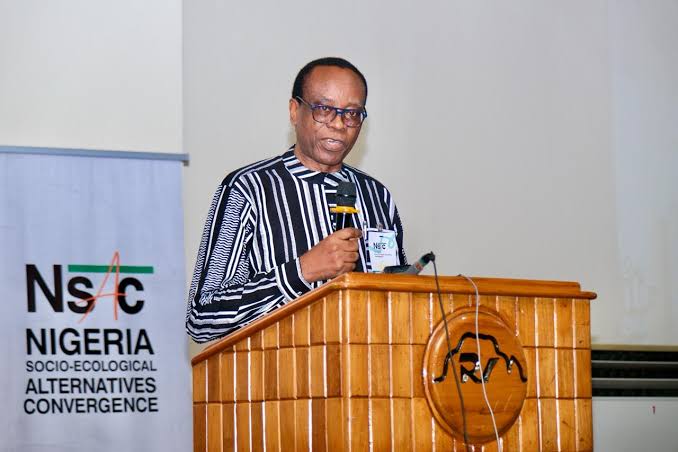
Stakeholders have cautioned the federal government against repeating the environmental and social failures of the Niger Delta as Nigeria expands investments in renewable energy, green hydrogen, battery storage and critical minerals.
To them, the success of Nigeria’s energy transition would depend on stronger environmental safeguards, effective enforcement and meaningful participation of host communities in decisions affecting their land, water and livelihoods.
The warning was contained in a 12-point communiqué issued by 25 organisations at the end of a two-day multi-stakeholder policy lab on strengthening Nigeria’s Environmental and Social Impact Assessment (ESIA) framework for a just energy transition.
The meeting, organised by the CLEEN Foundation with support from Heinrich Boll Stiftung, was held in Port Harcourt, Rivers State.
The stakeholders called for urgent reforms to Nigeria’s environmental assessment system, arguing that ESIA should go beyond obtaining project approvals to ensure continuous monitoring, accountability and equitable distribution of benefits.
They observed that weak environmental oversight, poor enforcement and limited community participation had contributed to decades of pollution, ecosystem degradation and social conflict in the Niger Delta.
Speaking on the findings, CLEEN Foundation’s Programme Director, Dr Salaudeen Hashim, said Nigeria was entering a new energy and development era while still relying on an environmental assessment law enacted in 1992.
“The issue is therefore not that Nigeria has no environmental assessment framework; rather, the framework has not evolved sufficiently to address climate change, cumulative impacts, biodiversity, emerging technologies and the social dimensions of a just energy transition,” he said.
Hashim said the foundation’s study identified gaps in legal provisions, institutional coordination, transparency, community participation, enforcement and post-approval monitoring.
He called for the modernisation of the Environmental Impact Assessment Act and a shift from an approval-based system to life-cycle governance covering project design, construction, operation, decommissioning and remediation.
“The study also makes an important distinction between consultation and participation: holding a meeting with affected people does not necessarily mean their concerns have influenced the project,” he added.
Hashim identified stronger environmental monitoring, compliance and enforcement, alongside legislative reform, as immediate priorities.
“A modern law without credible enforcement simply creates better rules on paper.
“Equally, enforcement without a contemporary legal framework will remain constrained,” he added.
Hashim called for stronger Community Development Agreements, transparent benefit-sharing arrangements and accessible grievance mechanisms to enable host communities to benefit from employment, infrastructure, education, healthcare and livelihood opportunities.
The stakeholders also demanded that environmental impact assessment reports, monitoring data, compliance records and regulatory decisions be made publicly accessible through digital platforms.
The communiqué urged the government to prepare regulators for emerging technologies, including renewable energy infrastructure, battery storage, carbon capture and storage, critical minerals, green hydrogen and nuclear energy.
It further called for adequate funding and equipment for regulatory agencies, improved coordination among government institutions and the inclusion of climate change considerations in environmental assessments.
Women, young people, persons with disabilities, indigenous populations and other vulnerable groups, the stakeholders said, must be deliberately included throughout the assessment process.
Participating organisations and institutions included the Rivers State ministries of Environment and Energy and Natural Resources, NESREA, NOSDRA, the Nigerian Electricity Regulatory Commission, the University of Port Harcourt and representatives of host communities and civil society groups.
Hashim said attracting investment and protecting communities were not mutually exclusive, insisting that investors needed regulatory certainty while communities deserved protection from environmental harm.
The stakeholders urged the Federal Government, National Assembly, regulators, industry players and development partners to implement the proposed reforms, warning that changing energy sources without improving environmental governance could reproduce the Niger Delta’s longstanding challenges in new sectors.
We’ve got the edge. Get real-time reports, breaking scoops, and exclusive angles delivered straight to your phone. Don’t settle for stale news. Join LEADERSHIP NEWS on WhatsApp for 24/7 updates →
Join Our WhatsApp Channel