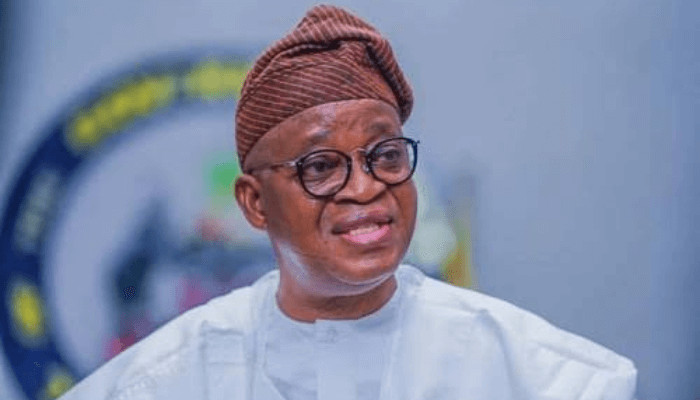
Minister of Marine and Blue Economy Gboyega Oyetola has said Nigeria’s blue economy is valued at an estimated $3 trillion, highlighting vast opportunities for investment and growth.
Speaking at the Blue Economy Investment Summit in Abuja, Oyetola said the current federal government reforms were transforming the maritime sector into a more competitive and investor-friendly space.
The summit, themed; “Shifting Gears: Heading to a New Frontier in the Maritime Economy,” brought together policymakers, investors and key industry players to explore strategies for unlocking Nigeria’s maritime potential.
He said Nigeria had transited from fragmentation to coordination, and now enjoys a stable and secure maritime environment that boosts investor confidence.
According to him, improvements in port operations and maritime safety have restored order and predictability across the sector.
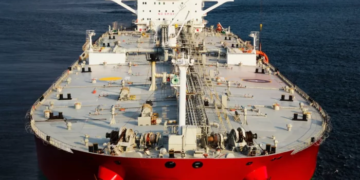
Oyetola emphasised that the maritime industry handles over 90 percent of Nigeria’s international trade by volume.
He also revealed a sharp increase in revenue generated by agencies under the ministry—from N700.79 billion in 2023 to about N1.83 trillion in 2025—crediting the growth to improved efficiency, transparency and regulatory reforms.
The minister added that piracy had been eliminated from Nigerian waters for more than four years, describing the achievement as the result of deliberate policy actions.
He further disclosed that $746 million had been secured to modernise Apapa and Tin Can Island ports.
He said a newly launched international policy framework for the marine and blue economy would drive investments across maritime transport, fisheries and logistics.
Fish production, he added, has increased from 1.1 million tonnes to 1.4 million tonnes. Oyetola also confirmed that President Bola Tinubu approved the disbursement of the Cabotage Vessel Financing Fund to support indigenous ship owners, a move expected to create around 30,000 jobs and reduce capital flight.
He noted that Nigeria has regained a seat on the council of the International Maritime Organisation after 14 years.
Also speaking, Frederik Klinke, CEO of APM Terminals Nigeria, said global geopolitical tensions and shipping disruptions were driving up freight costs and creating trade uncertainties.
However, he noted that Nigeria’s maritime sector had remained resilient and the planned National Single Window platform could cut cargo clearance time to 48 hours.
Klinke disclosed that APM Terminals had invested over $600 million in Nigeria, including in renewable energy and port automation, while export volumes through its terminals have risen due to improved efficiency.
He called for consistent regulations and deeper infrastructure development, alongside full digital integration of the maritime ecosystem.
Also speaking, the Executive Secretary and Chief Executive Officer of the Nigerian Shippers’ Council (NSC), Akutah Pius, warned that poor maritime connectivity poses a threat to the African Continental Free Trade Area.
He said cargo bound for African countries often passes through Europe or Asia due to weak logistics networks, stressing the need for stronger investment in ports, rail, and inland waterways.
Akutah added that inland dry ports in Kaduna, Kano, and Funtua are already operational, with more projects underway to ease congestion at seaports and boost inland economic activity.
Summit convener Princess Ronke Kosoko said the event aims to connect investors with opportunities while promoting innovation and youth participation.
She urged stakeholders to adopt faster, technology-driven processes, warning that prolonged delays in approvals could hinder investment flows.
We’ve got the edge. Get real-time reports, breaking scoops, and exclusive angles delivered straight to your phone. Don’t settle for stale news. Join LEADERSHIP NEWS on WhatsApp for 24/7 updates →
Join Our WhatsApp Channel