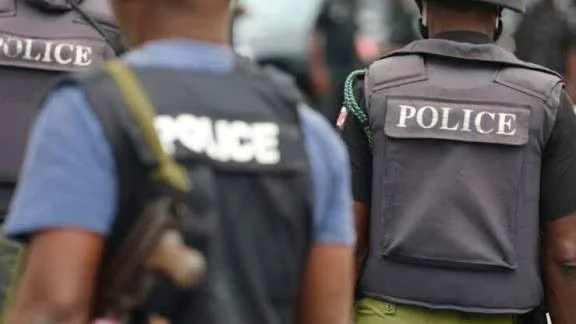
The Nigeria Police Force has released a performance report covering eight weeks of operations across the country, and the numbers it contains should keep every Nigerian awake at night. Within that short window, the police recorded 418 homicide incidents, 227 kidnapping cases, 168 banditry occurrences, 165 armed robberies, 73 cultism clashes, 51 acts of terrorism and 49 cases of gender-based violence.
Set against 56 days, the homicide figure alone works out to roughly seven killings every single day. That is the reality the report describes, even if its authors chose to present it as a record of achievement.
To be fair to the Force, the report also lists what its officers did in response. According to the police, 1,519 criminal suspects were arrested, 191 firearms and 3,873 rounds of live ammunition were recovered, 117 stolen or illicit vehicles were seized and 255 kidnapped victims were rescued.
Another 56 armed criminals were “neutralised” in operations nationwide. We do not dismiss these efforts. Every rescued victim is a family spared unbearable grief, and every rifle taken off the streets is one fewer weapon pointed at a farmer on his way to the field. The men and women who carried out these operations deserve the nation’s gratitude.
What we object to is the tone. The report describes the period as one in which the police “successfully sustained an aggressive, intelligence-led, and technology-driven operational posture” that “decisively degraded” the capabilities of terrorists, bandits, kidnappers and cultists. It speaks of “remarkable achievements” under “the visionary guidance of the Inspector-General of Police.”
In our view such language might suit a passing-out parade. It sits badly beside an admission that more than 400 homicides occurred in two months. A country in which 168 banditry attacks and 51 terrorist acts take place in eight weeks has not had its enemies decisively degraded. It is a country still under attack.
There is a deeper problem with the way the figures are presented. Crime statistics only mean something when they can be compared. The report does not tell Nigerians whether 418 homicides represents a rise or a fall from the previous two months, or from the same period last year. It does not break the incidents down by state, although it hints that “regional crime data” showed increased vigilance in high-risk areas. Without that breakdown, citizens in Zamfara, Benue, Plateau or Kaduna cannot tell whether their communities are becoming safer or more dangerous, and lawmakers cannot judge where resources should go.
The kidnapping figures illustrate the point. The report counts 227 kidnapping cases and 255 rescued victims, which on a careless reading suggests the police rescued more people than were taken. But a single case can involve dozens of victims, as the mass abductions of schoolchildren and villagers in the North-West have shown, and some of those rescued may have been seized before the reporting period began. The report gives no total for the number of people abducted, nor for how many were freed only after their families paid ransom. Until those numbers are published, the rescue figure tells only half the story.
The same caution applies to arrests. Taking 1,519 suspects into custody in eight weeks is a large number, but an arrest is only the first step towards justice. Nigerians have watched too many high-profile arrests fade into silence, with suspects paraded before cameras and never heard of again. The police should tell the public how many of those arrested have been charged to court and how many of the 56 suspects “neutralised” were killed in genuine exchanges of fire. A police force confident in its own record should have nothing to fear from that level of disclosure.
Also missing from the report is any account of what the period cost the police themselves. Only last week, attackers ambushed a police convoy near Gidan-Giye in Zamfara State, killing at least five officers and three members of the Community Protection Guard, and seized their rifles. A media report has counted at least 98 police deaths across 21 states between January and October this year. A report that praises the “sacrifice” of officers while saying nothing about how many of them died or what has been done for their families is incomplete. The dead deserve to be counted as well as saluted.
Needless to say , Nigeria cannot police its way out of insecurity with press releases. The country needs a credible, independent system for collecting and publishing crime data, one that does not depend on the institution being assessed. The National Bureau of Statistics, working with the police and civil society, should publish quarterly crime figures broken down by state and local government area, with comparisons over time. Such data would expose failures, but it would also allow genuine progress to be recognised, which is more than self-praise can ever do.
The timing gives this matter added urgency. In a little over nine weeks, Nigerians will go to the polls in a general election, and the police will be expected to protect voters and electoral materials across the same territory where bandits and terrorists operate freely.
The figures in this report should prompt a sober review of election security planning, not a round of congratulation. The Inspector-General owes the country a clear account of how the Force intends to protect voters in the areas worst affected.
The National Assembly, for its part, should invite the police leadership to explain these figures in full and to supply the comparative and state-level data the report leaves out. Lawmakers who approve the police budget every year are entitled to know what it buys. They should also ask why a Force that boasts of intelligence-led operations still sends its own officers into bandit country in soft-skinned buses that make them easy targets. That question deserves an answer before the election deployments begin.
When a police report counts more than 400 homicides in eight weeks and calls it a triumph, the problem is not only the criminals but the reading of the numbers.
We’ve got the edge. Get real-time reports, breaking scoops, and exclusive angles delivered straight to your phone. Don’t settle for stale news. Join LEADERSHIP NEWS on WhatsApp for 24/7 updates →
Join Our WhatsApp Channel