Where governments fail, chaos thrives; and where chaos thrives, human suffering becomes the currency of inaction.” — Noam Chomsky
On October 31st, 2025, President Donald J. Trump designated Nigeria a Country of Particular Concern (CPC), labelling it a “disgraced nation” in matters of religious freedom. The announcement, delivered with his trademark bravado, was the culmination of months of lobbying by U.S. lawmakers, including Senator Ted Cruz, Congressman Riley Moore, and Congressman Steve Scalise among several others. Faith-based advocacy groups, notably Open Doors USA and Christian Solidarity International, presented carefully curated reports emphasizing attacks on Christians, portraying Nigeria as a state that either tolerated or orchestrated their persecution.
While the declaration was politically charged and morally performative, it also reveals an uncomfortable truth: decades of poor governance in Nigeria have created conditions that make such external moral judgments credible. Security institutions are overstretched and politicized. Courts are slow, underfunded, and often impotent. Local governments lack both resources and authority to address violence. In this vacuum, foreign actors are left to narrate the story that Nigerian politicians have effectively outsourced through years of negligence.
Violence Across Northern Nigeria
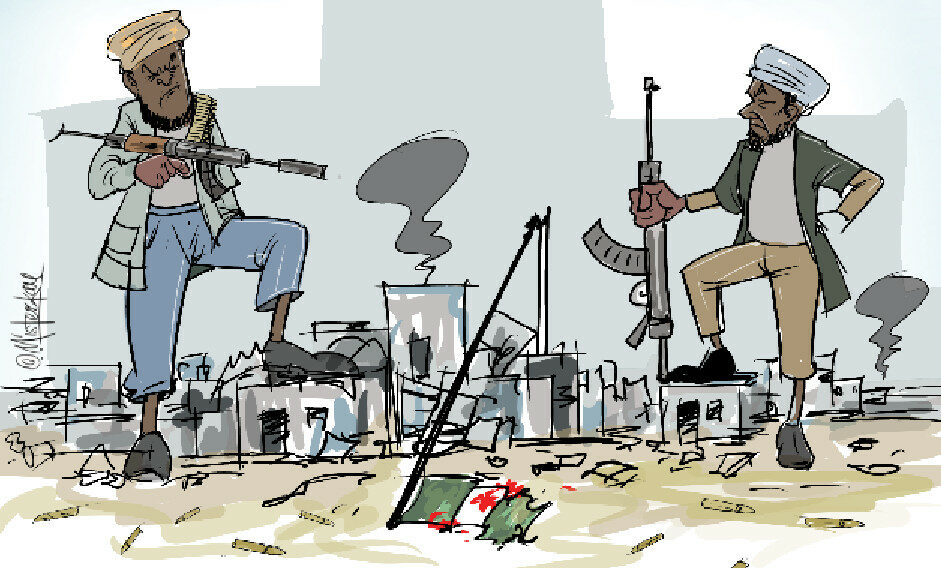
Northern Nigeria remains the epicenter of insecurity, where senseless killings continue unabated. In Kaduna State, bandit raids in over the years claimed over hundred of lives in farming communities of Kajuru, Birnin Gwari, and Giwa leaving survivors to rebuild amid fear and trauma. Plateau State has repeatedly witnessed communal clashes, displaced thousands and leaving both Christians and Muslims equally bereaved. Sokoto, Zamfara and Katsina States continue to experience kidnapping, village burnings, and looting at the hands of armed groups, while Borno and Yobe States face persistent attacks by Boko Haram and ISWAP, targeting places of worship and schools.
These atrocities are real and ongoing. But the evidence does not substantiate a claim of deliberate, state-sponsored genocide against Christians. Sadly, Muslims are equally affected by banditry, insurgency, and communal clashes. The violence is indiscriminate, opportunistic, and a predictable outcome of systemic governance failure rather than a coordinated campaign against a religious or ethnic group. Yet the U.S. moral narrative has simplified the tragedy, foregrounding Christian victimhood to fit advocacy frameworks and geopolitical storytelling.
Governance Failure: The Core Problem
The deeper crisis is institutional. Nigeria’s inability to prevent or respond to violence is not new. Over successive administrations, both past and present, political elites have allowed impunity to flourish, security forces to become politicized, and local institutions to remain chronically under-resourced. These failures are structural and enduring. In Zamfara, for example, communities have been attacked repeatedly over the past seven years with little meaningful intervention, illustrating a systemic incapacity. In Plateau, Benue, and Nasarawa, despite early warnings from civil society and community leaders, clashes between farming and pastoral communities escalate unchecked, a recurring pattern that demonstrates the absence of preventive governance.
Northern Nigeria’s vulnerability is compounded by political economy. Chronic underdevelopment, inequitable distribution of federal resources, and mismanagement of national revenue have left entire regions economically fragile. These disparities produce competition over scarce resources, which escalates into violence, often with sectarian overtones but rarely with the state as instigator. Identity politics further undermines governance: politicians exploit ethnic and religious divisions for electoral advantage, leaving communities divided and vulnerable. The state’s failure to act decisively and impartially amplifies both insecurity and public perception of neglect.
Misreading Persecution
The CPC designation frames Nigeria as systematically persecuting Christians. This is partly true in terms of impact, but misleading in terms of causation. Attacks on Christian communities are real and devastating. Yet these attacks occur alongside equally brutal violence against Muslims, suggesting that what is often labelled religious persecution is more accurately a reflection of institutional incapacity and the state’s chronic inability to enforce the rule of law. The distinction matters: intentional targeting requires coordination and policy, neither of which is evident in the northern attacks.
External advocacy groups and sympathetic legislators have highlighted Christian victimhood, creating a narrative that resonates internationally and aligns with U.S. domestic politics. Yet the reality on the ground is more complex. Violence in Borno, Kaduna, Plateau, Zamfara, and Benue results from the convergence of armed insurgency, banditry, resource disputes, and weak governance. Nigerian leaders, past and present, are culpable not because they sponsor violence, but because they tolerate it, fail to enforce consequences, and politicize the state’s security apparatus.
Accountability and Reform
Addressing Nigeria’s chronic insecurity requires confronting governance failure head-on. Security institutions must be professionalized and insulated from political influence. Local governments need authority and resources to mediate disputes and enforce laws impartially. Courts must function effectively to prosecute perpetrators regardless of political affiliation, ethnicity, or religious identity. Resource allocation should prioritize building institutional capacity in underdeveloped regions rather than investing in symbolic projects that have little effect on security.
Civil society has a role to play in documenting attacks, monitoring government action, and advocating for victims. Yet the ultimate responsibility rests with political leadership. Until Nigerian leaders treat accountability as a non-negotiable obligation, security will remain sporadic, and external actors will continue to fill the vacuum with moral judgments. The CPC label should therefore be read not as an absolute indictment of Nigerian society or religious groups but as a reflection of governance failure.
A Mirror to the Nation
The tragedy of northern Nigeria is clear: communities live under the constant threat of violence, and the state’s response is often reactive, insufficient, and delayed. Christians are disproportionately highlighted in international discourse, but Muslims are equally victims. Hence, the claim of state-sponsored genocide oversimplifies the problem and misattributes causation. The real crisis is structural: weak institutions, impunity, political exploitation of identity, and underdevelopment.
Nigerian leaders have allowed these vulnerabilities to persist. Senseless killings, kidnappings, and village raids have become normalized in some parts of the North. The state’s chronic failure to protect citizens has transformed insecurity into a structural feature of society, creating conditions in which international actors can confidently declare moral judgments, irrespective of local nuance.
The U.S. designation under Trump is performative, selective, and morally convenient. Yet it also underscores a truth that Nigerian leaders cannot evade: the country’s fragility is self-inflicted. Sovereignty is not just a rhetorical claim; it requires the capacity to protect citizens, enforce law, and maintain public order.
Governance Over Moral Spectacle
Nigeria’s CPC designation is a symptom, not a cause. Senseless killings, kidnappings, and the displacement of communities in the North West, North Central, and North East illustrate the consequences of decades of governance failure. The country’s leaders, past and present, have allowed institutions to weaken, security to become politicized, and impunity to flourish.
External moralizing, while performative, cannot resolve these crises. The solution is structural: competent security institutions, accountable local governments, effective judiciary, equitable resource allocation, and political leadership that prioritizes protection over partisanship. Until these reforms are enacted, violence will continue, the moral gaze from abroad will persist, and citizens will remain trapped in a cycle of fear and neglect.
Nigeria’s challenge is clear. It is not a matter of faith alone; it is a matter of governance. The state’s failures have created the very conditions that allowed the CPC designation to resonate internationally. Senseless killings will continue until leaders confront the consequences of neglect and act decisively.
We’ve got the edge. Get real-time reports, breaking scoops, and exclusive angles delivered straight to your phone. Don’t settle for stale news. Join LEADERSHIP NEWS on WhatsApp for 24/7 updates →
Join Our WhatsApp Channel