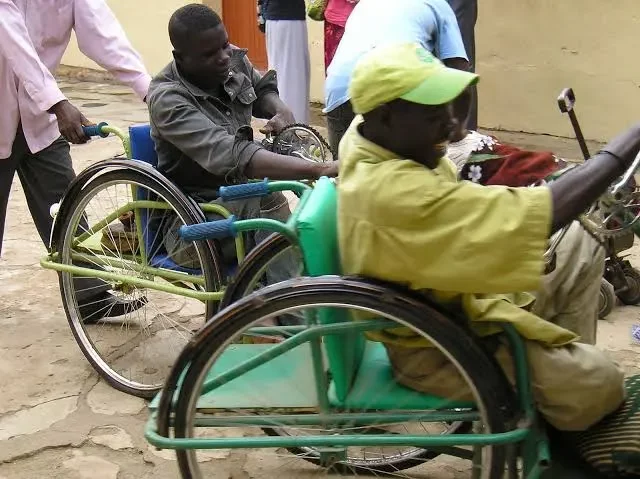
A disability rights advocate has urged the federal and state governments to move beyond policies and laws by ensuring that persons with disabilities are fully included in Nigeria’s development process.
The call was made in Abuja at the Global Hope Bi-Annual National Disability Summit at the National Human Rights Commission Auditorium, Maitama.
In his opening address, executive director of Global Hope and Justice Inc, Ihekwoaba Paul E. Esq., said disability should not be seen as a personal limitation but as a failure of society to make room for everyone.
Quoting disability rights scholar Mike Oliver, he said disability often results from restrictive social conditions rather than physical impairment. He added that the World Health Organisation shares this view, insisting that disability exists in society, not in the individual.
According to him, international rights advocate Judith Heumann once warned that disability only becomes a tragedy when society fails to provide the basic support needed for everyday life.
“These ideas speak directly to this year’s International Day of Persons with Disabilities theme, ‘Fostering disability-inclusive societies for advancing social progress’,” he said, noting that the summit’s theme, ‘Attaining Greatness as a Nation-State through Inclusive National Development’, reflects the same message.
Ihekwoaba lamented that for many years, Nigeria operated under the medical model of disability, which treated persons with disabilities as objects of pity, charity and sympathy, rather than as citizens with rights and abilities.
He traced Nigeria’s disability rights journey to the 1993 Nigerians with disability decree under the military administration of General Ibrahim Babangida, noting that although the law had good intentions, it failed largely due to poor implementation.
He said Nigeria’s ratification of the United Nations Convention on the Rights of Persons with Disabilities (CRPD) in 2007 and its Optional Protocol in 2010 marked a turning point, following sustained advocacy by disability rights groups.
According to him, these efforts paid off in January 2019 when former President Muhammadu Buhari signed the dscrimination against persons with dsabilities (Prohibition) Act into law, providing a legal framework for accessibility, inclusion and non-discrimination.
He described the law as one of the notable achievements of the APC-led government and expressed gratitude on behalf of Nigeria’s disability community, estimated at over 37 million people.
Ihekwoaba also disclosed that 23 states have enacted their own disability laws, while disability inclusion is gradually finding space in national development plans and donor-supported programmes.
However, he stressed that laws alone are not enough.
“The real challenge is implementation,” he said, pointing to weak enforcement, inadequate funding, poor coordination and limited public awareness as major setbacks.
He called for stronger collaboration among government agencies, civil society, the private sector and citizens to ensure that disability inclusion becomes a shared national responsibility.
The summit, he explained, was organised to spark a national conversation on building a practical, time-bound and people-focused disability inclusion framework for Nigeria.
We’ve got the edge. Get real-time reports, breaking scoops, and exclusive angles delivered straight to your phone. Don’t settle for stale news. Join LEADERSHIP NEWS on WhatsApp for 24/7 updates →
Join Our WhatsApp Channel