
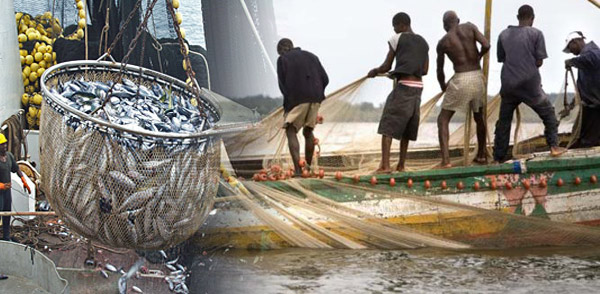
Nigeria’s industrial fishing sub-sector is operating far below its potential, meeting only about 10 per cent of national fish demand despite having the capacity to supply up to 35 per cent, LEADERSHIP has learnt.
The sector currently operates at a significantly low capacity, contributing only about 1% to 4% of the nation’s total domestic fish production.
While Nigeria produces over 1 million metric tonnes of fish annually, the vast majority comes from artisanal (small-scale) fishers and aquaculture, rather than large-scale industrial operations.
Findings revealed that a combination of policy constraints, insecurity, and operational challenges has continued to stifle growth in the sector, limiting productivity and discouraging investment.
Industry stakeholders cited the inclusion of fishing trawlers under the Cabotage regime, persistent attacks on fishing vessels, and other regulatory bottlenecks as key factors undermining performance.
Data obtained by LEADERSHIP show a sharp decline in industry capacity over the years. While about 40 fishing companies operated over 250 industrial vessels roughly 23 years ago, the number has dropped significantly, with fewer than 100 vessels currently in operation.
In a position paper, the Nigerian Trawler Owners Association (NITOA) lamented the dwindling fortunes of the sector, noting that despite investments exceeding $5.2 billion in jetty facilities, equipment, and infrastructure, only 12 fishing companies remain operational.
The association stressed that the sector has the potential to boost Nigeria’s non-oil foreign exchange earnings, generate employment, and significantly reduce the country’s reliance on fish imports if prevailing challenges are addressed.
“NITOA would want to improve its fish and shrimp production as well as export capacity, thereby increasing the country’s non-oil foreign exchange earnings and creating jobs. This would also enable us to raise local fish production from the current 10 per cent to about 35 per cent, significantly reducing the need for imports,” the association stated.
However, it noted that these prospects have been hampered by persistent constraints.
“Though the industrial fishing sub-sector in Nigeria is capable of supplying up to 35 per cent of local fish demand, it is currently only able to meet about 10 per cent due to challenges that have frustrated development,” the group said.
NITOA further disclosed that although its members have invested over $5.2 billion in infrastructure, only about 130 vessels are operational, as harsh operating conditions have forced many companies out of business.
“These challenges have pushed several firms into dormancy, leaving only 12 companies in operation today,” the association added.
Stakeholders warn that unless urgent steps are taken to address policy inconsistencies, improve security, and create a more enabling environment, the sector may continue its downward trajectory, further widening Nigeria’s fish supply gap and increasing dependence on imports.
We’ve got the edge. Get real-time reports, breaking scoops, and exclusive angles delivered straight to your phone. Don’t settle for stale news. Join LEADERSHIP NEWS on WhatsApp for 24/7 updates →
Join Our WhatsApp Channel