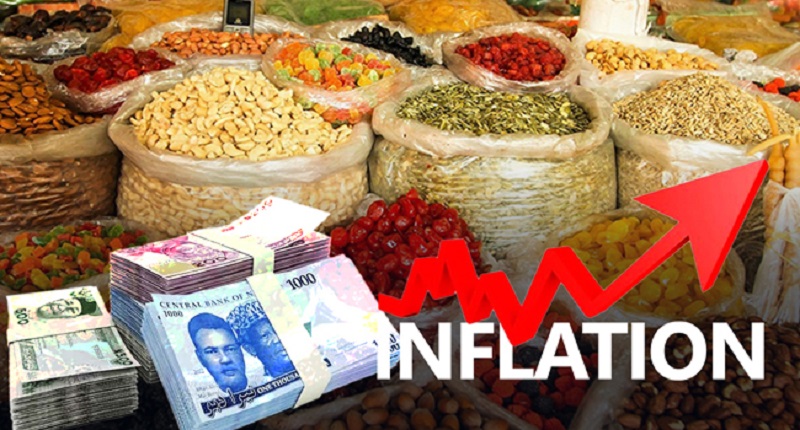
Nigeria’s headline inflation rate eased to 14.45 per cent in November 2025, reflecting a continued moderation in price pressures, according to data released on Monday by the National Bureau of Statistics (NBS).
The latest figure represents a 1.6 percentage point decline from the 16.05 per cent recorded in October 2025, indicating a slowdown in the pace of year-on-year price increases.
The NBS stated that the deceleration suggests an improvement in inflation dynamics compared to the preceding month.
On a year-on-year basis, headline inflation in November 2025 was 20.15 percentage points lower than the 34.60 per cent recorded in November 2024.
The statistics agency noted that the comparison reflects inflation measured with a different base year, with November 2009 set at 100.
However, on a month-on-month basis, inflationary pressures were slightly firmer. The headline inflation rate rose to 1.22% in November 2025, up from 0.93% in October. This indicates that the average price level increased at a faster rate in November than in the previous month.
The NBS also reported that the 12-month average inflation rate for the period ending November 2025 stood at 20.41 per cent, representing a 12.36 percentage point decline from the 32.77 per cent recorded in November 2024.
Data breakdown showed a marked easing in both urban and rural inflation on a year-on-year basis. Urban inflation stood at 13.61 per cent in November 2025, down by 23.49 percentage points from 37.10 per cent recorded in the corresponding month of 2024.
On a month-on-month basis, urban inflation slowed to 0.95 per cent, compared with 1.14 per cent in October 2025. The 12-month average urban inflation rate was 20.80 per cent, significantly lower than 35.07 per cent in November 2024.
In rural areas, inflation was higher at 15.15 per cent year-on-year, though still 17.12 percentage points lower than the 32.27 per cent recorded a year earlier. Month-on-month rural inflation accelerated to 1.88 per cent in November 2025, up sharply from 0.45 per cent in October.
The 12-month average rural inflation rate stood at 19.46 per cent, down from 30.71 per cent in November 2024.
The easing headline rate signals improving price stability, even as monthly movements suggest underlying cost pressures persist across some segments of the economy.
We’ve got the edge. Get real-time reports, breaking scoops, and exclusive angles delivered straight to your phone. Don’t settle for stale news. Join LEADERSHIP NEWS on WhatsApp for 24/7 updates →
Join Our WhatsApp Channel