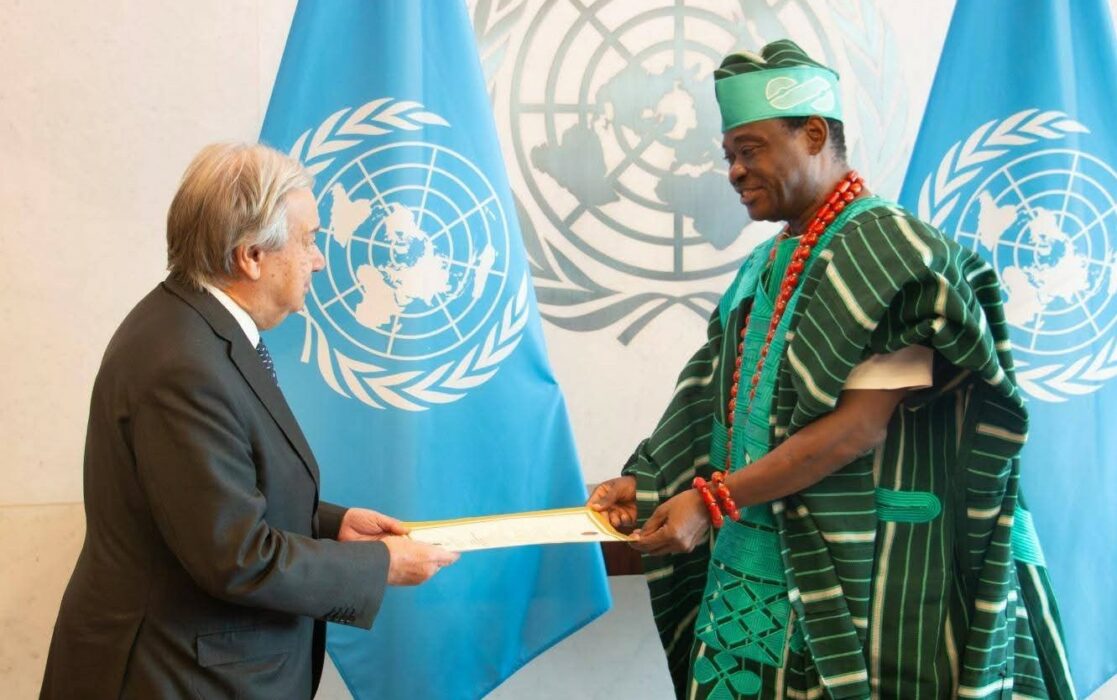
Nigeria’s Permanent Representative Extraordinary and Ambassador Plenipotentiary to the United Nations (UN), Senator Jimoh Ibrahim, has formally presented his Letter of Credence to UN Secretary General, António Guterres, at the UN Secretariat in New York, on Monday, April 20, 2026.
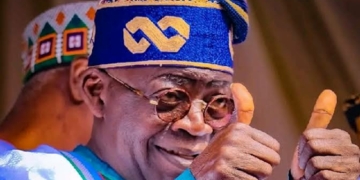
Recall that Amb. Ibrahim, who was serving as Senator representing Ondo South senatorial district in the Senate before his ambassadorial nomination by President Bola Tinubu in December, 2025, was confirmed by the Senate in the same month. In March 2026, Tinubu approved the posting of Senator Ibrahim and 64 other ambassadors-designate to the UN and other foreign missions, respectively. The businessman-cum-lawmaker was specifically appointed as Nigeria’s Permanent Representative to the United Nations.
The Monday’s event was witnessed by the 5th UN Deputy Secretary-General, Amina Mohammed, and other top officials at the UN headquarters in New York.
LEADERSHIP reports that Amb. Ibrahim had a few days ago while speaking at a parliamentary session on the sidelines of the IMF/World Bank Spring Meetings in Washington, DC, declared that President Tinubu will not reverse his administration’s economic reforms despite mounting public hardship, insisting that the policies were necessary for long-term national growth.
He acknowledged the immediate strain on citizens but maintained that the reforms were necessary to repositioning the economy.
“President Bola Tinubu introduced reforms that will make Nigeria great. These policies may come with short-term pains, but they are indispensable for growth and economic development,” he said.
The new envoy also linked global economic stability to the inevitable easing of geopolitical tensions in the Middle East, particularly around the contentious Strait of Hormuz.
“No country can achieve significant economic development this year or thereafter until we jointly secure peace in the ongoing tensions involving Iran, especially as it concerns international passage through the Strait of Hormuz,” Ibrahim stated.
He warned that any disruption in the maritime corridor could have far-reaching global consequences, noting that more than 25 per cent of the world’s seaborne oil, over 20 million barrels daily and about 20 per cent of liquefied natural gas pass through the route.
According to him, major economies such as China, India, Japan, and South Korea would be significantly affected by any escalation, particularly through oil price volatility and disrupted economic planning.
On Nigeria’s domestic outlook, Amb. Ibrahim stressed the need for stronger collaboration between the executive and legislature to mitigate the impact of reforms on citizens. He said legislative backing would be essential in cushioning economic pressures.
“The law must reflect the situation, while action and strategy must come from proper situational diagnosis. Parliament is not an exception to modern global realities,” he said.
He also pointed to Nigeria’s parliamentary coordination under Senate President Godswill Akpabio as a model for global lawmakers, advocating for cooperative frameworks to address poverty and economic hardship.
Jimoh Ibrahim further called for enhanced international cooperation among legislators, stressing that global peace remains fundamental to sustainable development and effective economic planning.
We’ve got the edge. Get real-time reports, breaking scoops, and exclusive angles delivered straight to your phone. Don’t settle for stale news. Join LEADERSHIP NEWS on WhatsApp for 24/7 updates →
Join Our WhatsApp Channel