The Independent Corrupt Practices and Other Related Offences Commission (ICPC) has identified the procurement process as one of the areas where corrupt practices are mostly perpetrated in Nigeria.
The anti-graft agency noted that issues such as inflated contracts, substandard project delivery, ghost projects, and abandoned contracts are some of the issues associated with procurement.
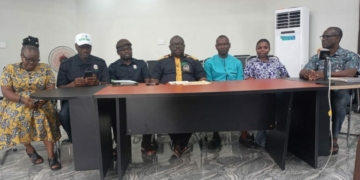
Speaking at a one-day procurement engagement workshop in Abuja for directors and heads of procurement across ministries, departments, and agencies (MDAs), chairman of the ICPC, Dr Musa Adamu Aliyu, emphasised the strategic importance of procurement officers in safeguarding public funds and ensuring that government projects translate into tangible benefits for citizens.
“Public procurement is the single largest channel of public expenditure and, unfortunately, the highest point of corruption risk,” he said, highlighting recurring issues such as contract inflation, splitting of contracts to evade thresholds, substandard project delivery, repeated budget entries, and abandoned projects.
Represented by the secretary to the commission, Mr. Clifford Oparaodu, the ICPC boss noted the commission’s Constituency and Executive Projects Tracking Initiative (CEPTI), which has, since 2019, uncovered ghost projects, duplicated budget items, and cases where contractors collected funds but delivered work far below specification.
According to him, “We have tracked projects from inception to completion across the six geopolitical zones and the FCT. These findings confirm that transparency directly improves citizens’ lives.”
While speaking on preventive measures to tackle procurement process, the ICPC chairman said all MDAs must adopt, including the publication of procurement plans, clear evaluation criteria, full contract award details, implementation updates with photographic evidence, and proper handover documentation.
He further stressed the importance of deploying technology-driven procurement systems to create audit trails, enable early detection of anomalies, and minimise discretionary human decisions.
He also called for legislative reforms, including stronger sanctions for procurement violations, establishment of special courts for corruption cases, and standardisation of public projects to reduce waste.
Also, the chairman of the House of Representatives Committee on Anti-Corruption, Hon. Kayode Akiolu, commended the ICPC for its preventive approach, explaining that many practices Nigerians consider normal are in fact corruption.
The director-general of the Bureau of Public Procurement (BPP), Dr. Adebowale Adedokun, said the ICPC has improved compliance with procurement rules, highlighting the recent approval of the National Infrastructure Development Policy, which provides a stronger legal framework for prosecuting contractors delivering substandard projects.
We’ve got the edge. Get real-time reports, breaking scoops, and exclusive angles delivered straight to your phone. Don’t settle for stale news. Join LEADERSHIP NEWS on WhatsApp for 24/7 updates →
Join Our WhatsApp Channel