
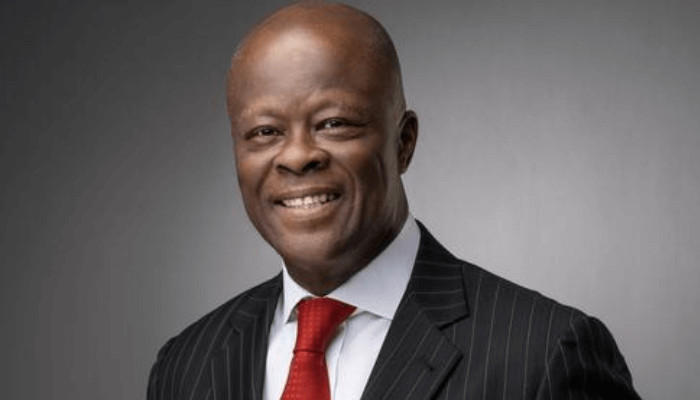
Nigeria’s Minister of Finance and Coordinating Minister of the Economy, Olawale Edun, has said the country’s ongoing economic reforms are now being recognised globally as reference points for policy credibility and resilience.
Speaking at the Nigerian press conference to round up the International Monetary Fund/World Bank Spring Meetings in Washington DC, Edun said Nigeria’s reform agenda is gaining increasing acceptance among development partners and international stakeholders.
He stated, “Nigeria’s global economic standing is improving. Our reform programme is being taken seriously and even used as a reference point. Our resilience is better understood, and our investment case is strengthening, with confidence returning at a faster pace.”
The minister attributed the growing recognition to a series of bold macroeconomic and fiscal reforms implemented under President Bola Ahmed Tinubu, noting that the policies have repositioned the country to withstand external shocks.
According to him, “Nigeria came to these meetings with a clear message: our reforms are durable and self-sustaining. We are more resilient to global shocks and are focused on inclusive growth.”
Edun explained that key adjustments, particularly the adoption of market-reflective foreign exchange and petroleum pricing systems, have helped stabilise the economy without distortions. “With market-reflective foreign exchange and petroleum pricing systems in place, the economy is adjusting relatively smoothly, without disruptive controls, unsustainable subsidies, or rapid depletion of reserves,” he said.
He noted that this improved resilience has been widely acknowledged by bilateral partners and multilateral institutions throughout the meetings.
Despite the positive outlook, the minister warned that global tensions, including the Israel-Iran crisis, pose inflationary risks. “The main near-term risk from current global tensions is inflation, particularly through energy prices, logistics disruptions, and rising costs of food and fertilizers,” he said.
To mitigate the impact, Edun said the federal government is implementing targeted measures to support vulnerable Nigerians. “Our response remains targeted and fiscally responsible, we are accelerating social protection measures and enhancing agricultural intervention programmes while maintaining reform discipline,” he stated.
He emphasised that the government would not reverse course on its reforms, stressing that “we will not return to broad and inefficient subsidies that undermine credibility and long-term stability.”
On key economic indicators, Edun disclosed that growth has strengthened to about four per cent, foreign reserves have risen to around $50 billion, and public debt remains sustainable at below 40 per cent of GDP, while inflation is gradually easing.
He further pointed to rising investor confidence, citing major investments such as the Dangote Refinery and a $20 billion commitment by Shell as evidence that reforms are unlocking private sector-led growth.
Beyond large-scale investments, the minister said small and medium enterprises are also benefiting from an improved business environment and stronger incentives to produce.
Edun added that Nigeria’s reform agenda is transitioning from stabilisation to growth acceleration, with a medium-term target of seven per cent growth driven by reforms in power, agriculture, infrastructure and digital innovation.
“Our message in Washington was not just about stability—it was about growth. We are moving forward with confidence toward investment, inclusive growth, and job creation,” he said.
He disclosed that engagements with the World Bank Group and the International Monetary Fund focused on sustaining reform momentum and supporting Nigeria’s priorities in agriculture and human capital development, while discussions with investors signalled growing interest in energy and infrastructure.
Highlighting ongoing initiatives, Edun said programmes such as Mission 300 have delivered about 8.6 million new electricity connections to previously unserved Nigerians, alongside efforts to strengthen agricultural value chains and mobilise private capital.
On global financial reforms, he reiterated Nigeria’s call for a fairer system, noting that the country is pushing for improvements in global credit rating frameworks to reduce borrowing costs for developing economies.
“We are pushing for systems that reward credible policy actions and better reflect the realities of countries affected by global shocks beyond their control,” he said.
Edun maintained that while the reforms have been difficult, they were necessary to reposition the economy. “They have laid the foundation for a more stable, resilient, and credible economy capable of driving industrialisation, creating jobs, and lifting millions of Nigerians out of poverty,” he added.
We’ve got the edge. Get real-time reports, breaking scoops, and exclusive angles delivered straight to your phone. Don’t settle for stale news. Join LEADERSHIP NEWS on WhatsApp for 24/7 updates →
Join Our WhatsApp Channel