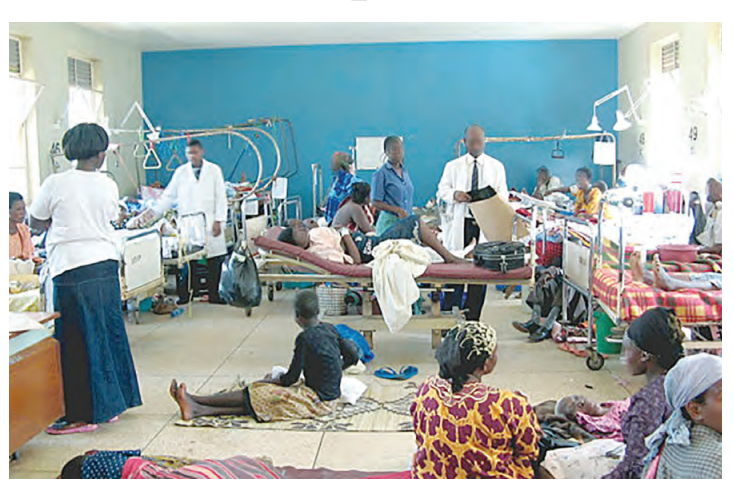
Nigeria’s worsening shortage of medical personnel is driving the country’s healthcare system toward what experts described as a “full-blown crisis,” with serious consequences for patient safety, quality of care, and national health outcomes.
The ongoing exodus of doctors, known as the japa syndrome, has deepened long-standing gaps in manpower, leaving hospitals overwhelmed and patients increasingly vulnerable. The country already bears the world’s highest maternal death toll, accounting for 28.5 per cent (82,000 deaths) of all maternal deaths recorded globally in 2020. Infant mortality remains one of the highest, at 72 deaths per 1,000 live births.
The President of the Medical and Dental Consultants Association of Nigeria (MDCAN), Prof. Appolos Chidi Ndukuba, said these figures could worsen as the workforce continues to shrink.
According to Prof. Ndukuba, studies on patient safety culture in Nigerian hospitals repeatedly highlight one major risk: understaffing. Nurses and doctors report high levels of fatigue, poor error-reporting culture, and intense pressure that contributes directly to misdiagnosis, treatment delays, and avoidable patient harm.
“The correlation between manpower shortage and patient harm is undeniable,” he said, noting that some patients now wait hours or days before seeing qualified personnel.
The effects are visible across secondary and tertiary hospitals. Prof. Ndukuba pointed to the Lagos University Teaching Hospital (LUTH), which shut down five wards, about 150 beds, in 2023 due to lack of doctors and nurses.
Rural areas are hardest hit. Most health workers remain concentrated in major cities, leaving millions in remote communities with little or no access to qualified medical personnel. Prof. Ndukuba warned that the imbalance threatens efforts to control diseases, reduce maternal and child deaths, and manage rising cases of hypertension, diabetes and cancer.
He also highlighted alarming disparities in workforce numbers. The World Health Organisation recommends a doctor-to-population ratio of 1:600. Applying that benchmark, Nigeria would require at least 363,000 doctors for its estimated 218 million people. But the country has just 74,543 registered doctors on paper, a figure that does not account for those who have migrated, retired or abandoned clinical practice. Current estimates place the active ratio at a staggering 1 doctor to 9,000–10,000 people.
The toll on those who remain is severe. Referring to the recent case of a doctor who died after a 72-hour call duty, Prof. Ndukuba described the situation as “inhumane and unsustainable.” He said doctors suffer intense burnout, moral injury and work in conditions that are “often unsafe,” citing instances where clinicians have had to use cartons as incubators or carry out procedures by phone light due to power outages.
Beyond the human toll, the MDCAN president drew attention to the economic impact. Nigerians spent over $1 billion on medical tourism in 2022, he said, worsening capital flight and leaving families financially devastated. For millions unable to pay, the options are limited: rely on overstretched facilities or “accept death,” as he put it.
Attempts by the government to address the crisis have been met with controversy. Proposals such as mandating five-year compulsory service for medical graduates faced strong resistance from professional bodies, with Prof. Ndukuba describing them as coercive measures that fail to address the underlying issues. Ongoing negotiations over corrected salary structures and welfare demands have yet to produce systemic reforms.
He added that current retention and recruitment strategies have failed to curb the japa syndrome because poor remuneration, inadequate equipment, unsafe infrastructure and insecurity remain unresolved.
Prof. Ndukuba said professional associations, including MDCAN, the Nigerian Medical Association (NMA) and the Nigerian Association of Resident Doctors (NARD), continue to advocate for better welfare, mental health support, data-driven policies and improved manpower distribution. “We are pushing for an environment where doctors want to stay, not one where they are forced to,” he said.
As a way forward, he called for urgent investment in workforce welfare, massive infrastructural upgrades, better working conditions, enhanced security and evidence-based retention strategies, including structured career development and leadership training. He also urged the government to develop smarter policies to engage Nigerian doctors in the diaspora for knowledge transfer and capacity-building.
We’ve got the edge. Get real-time reports, breaking scoops, and exclusive angles delivered straight to your phone. Don’t settle for stale news. Join LEADERSHIP NEWS on WhatsApp for 24/7 updates →
Join Our WhatsApp Channel