Despite decades of interventions, malaria remains one of Nigeria’s deadliest health burdens. The disease kills more Nigerians than any other nation on earth, and for many families, survival depends as much on luck as it does on access to healthcare.
According to the World Health Organisation (WHO), Nigeria recorded an estimated 68 million malaria cases and 194,000 deaths in 2021, accounting for 27 per cent of the world’s malaria cases.
Meanwhile, these numbers only scratch the surface of the economic weight malaria places on households already struggling to survive. A single case of uncomplicated malaria costs about N17,000 in consultation, diagnosis, and treatment in public hospitals, an amount that could skyrocket threefold for complicated cases.
For many Nigerians, especially those in informal settlements and rural communities, this cost is simply unaffordable.
Former President of the Nigerian Medical Association (NMA), Prof. Francis Faduyile, said malaria deaths, especially among children, persist because parents lack adequate knowledge, access to care, and economic power.
“If anybody wants to guide against death from malaria, there are critical things that must be in place. Education, accessibility, and affordability must be addressed simultaneously,” he explains.
He stressed the need for functional primary health centres, universal health coverage, and widespread environmental sanitation. “Mosquitoes thrive in dirty environments with stagnant water. Until we address environmental cleanliness and get everyone involved in preventive practices, we can’t truly aim for zero malaria deaths,” he adds.
For Dr. Mary Alex-Wele, Senior Lecturer and Head of Medical Microbiology at the University of Port Harcourt Teaching Hospital, malaria prevention must go beyond insecticide-treated nets.
“We live in a malaria-endemic environment. The mosquitoes are here with us,” she said.
While she endorsed the use of nets, insect repellents, and prophylaxis for high-risk groups such as pregnant women and sickle-cell patients, she insists that cleanliness remains an equally powerful weapon.
“If we take care of bushy areas, stagnant water, and dirty surroundings, we will reduce the burden of mosquitoes around us,” she said.
However, in 2024, the Federal Government launched the Advisory on Malaria Elimination in Nigeria (AMEN). The Minister of Health, Prof. Ali Pate described malaria as a “wicked problem” costing the nation over $1.1 billion annually in GDP losses.
“Malaria continues to take an unacceptable toll on our country.
Over 180,000 children under five died in 2022 alone from this preventable disease,” he said.
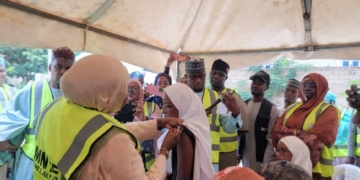
Nigeria received its first one million malaria vaccine doses in 2024, deploying them in Kebbi and Bayelsa, two high-burden states.
According to the Executive Director of the National Primary Health Care Development Agency (NPHCDA), Dr. Muyi Aina, over 101,158 children have been vaccinated.
At the 2025 Joint Annual Review meeting, Minister of State for Health, Dr. Iziaq Salako, reported that interventions have helped avert 18 million malaria cases annually.
He said between 2021 and 2023, 63 million insecticide-treated nets were distributed. 70 per cent of households now have at least one mosquito net.
51 per cent of pregnant women received preventive therapy.
We’ve got the edge. Get real-time reports, breaking scoops, and exclusive angles delivered straight to your phone. Don’t settle for stale news. Join LEADERSHIP NEWS on WhatsApp for 24/7 updates →
Join Our WhatsApp Channel