The Director General/CEO of the National Institute for Sports (NIS), Comrade Philip Shaibu, has reaffirmed the Institute’s crucial role in revitalising Nigeria’s sports sector, describing it as the “engine room” for sustainable development.
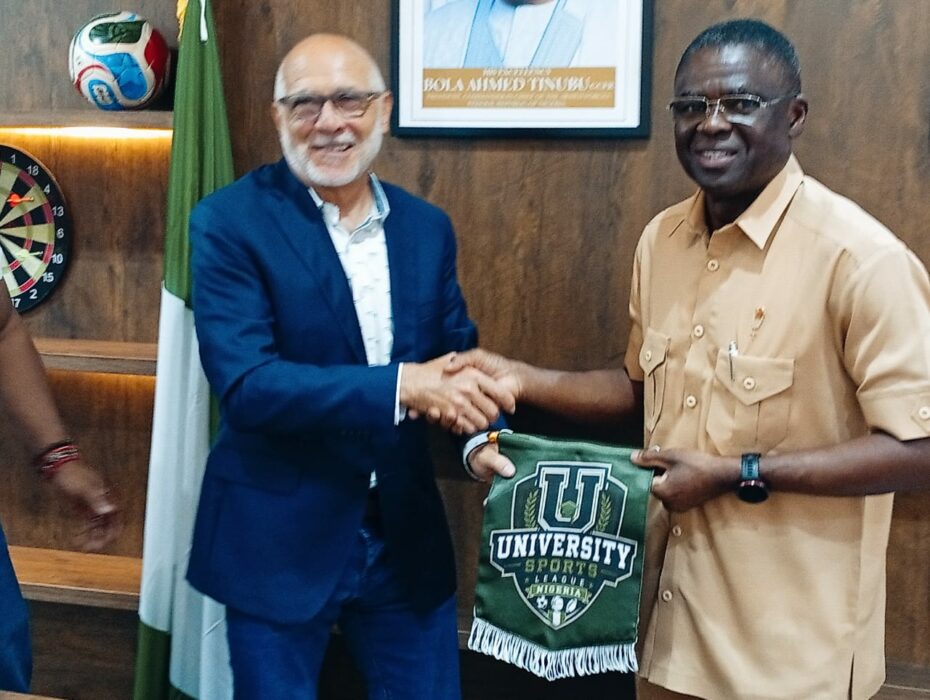
Shaibu made these remarks during a meeting with the Rudder Sports Management team, led by President Emmanuel Omijeh, at his Abuja office.
He linked the renewed focus on sports development to President Bola Ahmed Tinubu’s vision, highlighting the President’s passion for sport through key appointments and policies aimed at invigorating grassroots initiatives.
“Mr President is a sports enthusiast, much like many of us who follow football leagues weekly. His deep interest in sports and grassroots development is evident in his appointment of a Senior Special Assistant for Grassroots Sports, tasked with nurturing the next generation of athletes who will sustain Nigerian sport,” Shaibu stated.
Describing the NIS as central to this vision, Shaibu lamented years of neglect that, he believes, hindered progress in the sector.
“You cannot start a car without an engine. The Nigerian sports sector stalled because its engine room, the NIS, was neglected. Without building from the grassroots, there can be no sustainability,” he added.
The former Edo State Deputy Governor emphasised that sustainable sports development must originate at the grassroots, where young talent is discovered, nurtured, and developed into professionals.
Highlighting a significant systemic challenge, Shaibu decried the lack of post-career planning for athletes, calling it a “pandemic” that requires urgent attention.
“We have seen too many retired athletes with nothing to fall back on. Moving forward, we must institutionalise exit plans for athletes at least two years before retirement. This will include training in coaching and sports management to ensure a smooth transition,” he explained.
He further stressed the need to cultivate a culture where athletes are prepared for life after active sport, ensuring continuity within the system.
“We must maintain a pattern of training our players to become coaches after retirement so they can uphold the traditions of their respective sports,” he said.
Drawing on personal experience, Shaibu recounted his contributions to sports development during his tenure in Edo State. He spoke of rehabilitating retired athletes by integrating them into the Edo State Sports Commission and empowering them for self-reliance.
He also shared a talent discovery success story, recalling how he identified Imade Osarenkhoe during a charity match at the University of Benin Teaching Hospital.
“He was a first-year student when we signed him for Bendel Insurance. We covered his university fees, and he went on to graduate and serve with the club. For two seasons, he was the Nigerian league’s highest goal scorer, and today he plays in the UAE, where he also topped the scoring charts in his debut season,” Shaibu proudly stated.
According to Shaibu, beyond sport, players under his guidance were exposed to business ideas to help them invest wisely and secure their future.
“I know the hardships we faced as players, and I wouldn’t want the next generation to endure the same. Collaboration remains key to advancing our sports,” he concluded.
Earlier, Emmanuel Omijeh, President of Rudder Sports Management, outlined his organisation’s sports facilities and its vision to develop structured university sports systems nationwide.
He noted that the initiative is designed to complement, not conflict with, the NIS’s mission and vision, adding that consultations with relevant stakeholders are already in progress.
We’ve got the edge. Get real-time reports, breaking scoops, and exclusive angles delivered straight to your phone. Don’t settle for stale news. Join LEADERSHIP NEWS on WhatsApp for 24/7 updates →
Join Our WhatsApp Channel