BY NSE ANTHONY-UKO, Abuja AND CHIKA IZUORA, Lagos
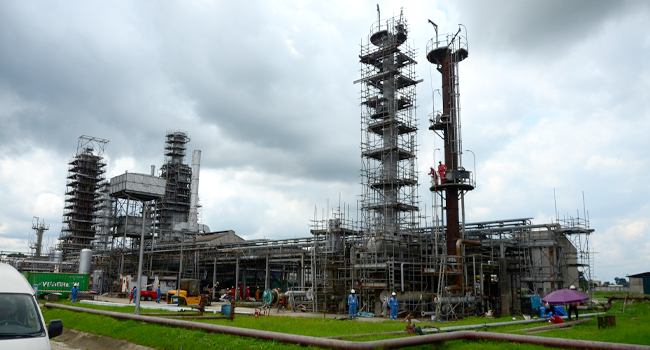
The NNPCL, on Monday, said it had signed a Memorandum of Understanding (MoU) with two Chinese companies, Sanjiang Chemical Company Limited and Xingcheng (Fuzhou) Industrial Park Operation and Management Co. Ltd, for a potential Technical Equity Partnership to complete, operate, and upgrade the Port Harcourt and Warri refineries.
Chief corporate communications officer of the company Andy Odeh, who stated this on Monday, said the agreement, inked in Jiaxing City, China, on April 30, 2026, by NNPC Ltd group chief executive officer (GCE) Bashir Bayo Ojulari and the Chinese firms’ chairmen, aims to boost sustainable performance, expand petrochemical capacities, and develop gas-based industrial hubs.
The NNPC said the potential framework would cover completion of outstanding work at the two refineries, together with operating and maintaining both facilities to achieve best-in-class, sustainable performance.
“Planned expansion and upgrades would elevate both facilities to cleaner, more profitable product standards. The potential collaboration also contemplates expanding the refineries’ petrochemical capacities and harnessing gas and downstream opportunities through the development of co-located, gas-based industrial hubs,” the company stated.
Speaking shortly after the signing, Ojulari described the MoU execution as a significant milestone, following more than six months of concerted engagement between the technical and management teams of NNPC and the two Chinese partners, Sanjiang and Xinganchen.
“All parties recognise mutually beneficial opportunities for the development and long-term sustainable profitability of NNPC’s refining assets in Nigeria, and the collective weight required for success,” Ojulari noted.
The NNPC GCEO further stated that the MoU is an important step on the journey towards identifying potential technical equity partner(s) to restart and expand NNPC’s refineries, and to explore opportunities in co-located petrochemicals and gas-based industries.
The MoU reflects the parties’ shared intent to progress discussions in good faith, with any definitive arrangements to follow in due course and subject to customary approvals.
The choice of Chinese firms as preferred partner for the rehabilitation of the Port Harcourt and Warri refineries is raising questions among stakeholders in the industry.
A major concern, they said, is that no African country has a history of Chinese technical input in their refinery projects and that it could be a fresh negotiation when a new contractor outside the original equipment manufacturer (OEM) that had built the plant is left out of the process.
Commenting on the development, publicity secretary of the Crude Oil Refinery Owners Association of Nigeria (CORAN), Eche Idoko, said it is strange to begin rehabilitation execution of the refineries that have not worked for years to China without verifiable technical knowledge of refinery operations in the region.
Idoko said that it had been the expectations of industry leaders that the government could extract expertise from successful local refineries to execute the project and in that case save the country the seeming capital flight.
He expressed concern that alleged political interference that had stalled the resuscitation of the refineries could be part of what led to the choice of Chinese firms to run the business.
“Well let me say the Chinese may know what we don’t know and could get it right this time but local partnership is still a good idea because we have about five functional refineries running today in the country. We know that the Chinese could have been involved in the operations of some modular refineries but their full technical expertise in such sophisticated technology is the concern at this point” he added.
Nigeria’s state-owned refineries, including Warri (125,000 bpd capacity, built 1978) and Port Harcourt (210,000 bpd, built 1965/1989), have endured decades of downtime due to vandalism, obsolescence, and mismanagement.
Despite over $3 billion in rehabilitation funds since 2021—including $897.6 million for Warri and $1.5 billion for Port Harcourt—the facilities remain largely non-operational, with brief restarts in late 2024 followed by shutdowns.
LEADERSHIP’s checks suggest that Sanjiang Chemical Company specialises in petrochemicals like polypropylene processing and ethylene crackers but lacks documented experience in African refinery rehabilitation.
Chinese firms have built refineries in Sudan (100,000 bpd, 2000) and Chad, though mostly smaller-scale and equity-based rather than rehab projects.
Recent involvement includes engineering for Nigeria’s Dangote Refinery, highlighting cost-efficient capabilities.
We’ve got the edge. Get real-time reports, breaking scoops, and exclusive angles delivered straight to your phone. Don’t settle for stale news. Join LEADERSHIP NEWS on WhatsApp for 24/7 updates →
Join Our WhatsApp Channel