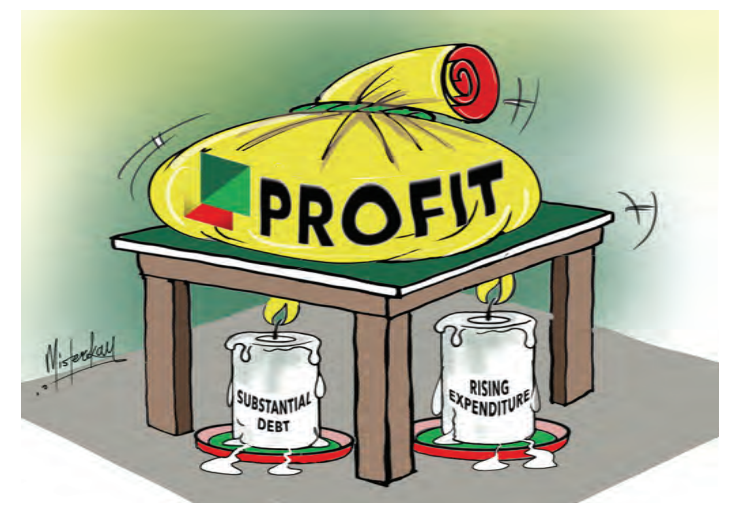
Last week, the Nigerian National Petroleum Company (NNPC) released its financial statement for the fiscal year ending December 2023, revealing a record net profit of ₦3.297 trillion. This announcement, marking a significant increase of over ₦700 billion from the previous year, has generated considerable attention and celebration. NNPC spokesperson Olufemi Soneye highlighted the impressive nature of this profit, presenting it as a testament to the company’s robust performance amidst ongoing challenges. However, this profit figure, while substantial, prompts a closer examination to understand its true implications and the broader context of NNPC’s financial health.
However, a closer examination of these figures reveals a more complex picture. Nigeria’s oil reserves, which total 37 billion barrels, account for about 3% of OPEC’s global crude oil reserves. Despite this significant share, NNPC’s profit, while impressive in naira terms, pales in comparison to the profits reported by major international oil companies. For instance, Petrobras of Brazil announced a net profit of $25 billion for 2023, Petronas of Malaysia reported $19 billion, and Gazprom of Russia, despite facing sanctions, reported $14 billion. When converted to dollars, NNPC’s profit of ₦3.297 trillion translates to approximately $2 billion at the current exchange rate of ₦1,600 per dollar, or about $3.66 billion using the ₦899 per dollar rate applied in December 2023.
The impressive profit figure announced by NNPC needs to be understood within the broader context of its financial health and operational challenges. This includes an examination of the company’s revenue sources, expenditure patterns, and outstanding obligations. A deeper look reveals that while NNPC’s reported revenue surged dramatically from ₦8.8 trillion at the end of 2022 to ₦23.9 trillion at the end of 2023, this increase is not matched by a proportional rise in crude oil production.
Revenue and Profit Discrepancies
NNPC’s dramatic rise in reported revenue—from ₦8.8 trillion to ₦23.9 trillion—requires careful scrutiny. This increase does not correlate with a significant uptick in crude oil production. Instead, it is largely attributed to the naira’s devaluation, which has inflated the revenue figures reported in naira terms. This situation is reminiscent of Napoleon’s disastrous Russian campaign, where initial successes were overshadowed by strategic miscalculations and an inability to adapt to harsh realities. Just as Napoleon’s initial victories failed to compensate for his eventual losses, NNPC’s revenue figures, while impressive, do not fully capture the company’s financial reality.
Moreover, the large profit figure reported by NNPC does not tell the entire story of the company’s financial condition. NNPC has requested and received approval from the Nigerian government to forgo dividends for the 2023 financial year. This decision highlights the company’s financial strain, as it grapples with substantial debts and obligations. According to the audited financial statements, the federal government already owes NNPC ₦5.1 trillion. This amount includes ₦3.3 trillion for subsidies (or under-recovery as they like to call it) incurred between January and May and ₦1.8 trillion for energy security expenses from August to December. The analogy of Xerxes’ defeat at Salamis is pertinent here; despite appearing powerful, overconfidence and mismanagement led to a significant downfall. Similarly, NNPC’s large reported profit may mask deeper financial vulnerabilities.
In addition to the subsidy debts, NNPC’s expenditures reveal troubling trends. The company’s donations surged from ₦314 million in 2022 to ₦11.35 billion in 2023, representing an extraordinary 3,515% increase. Notably, 91% of this increase was directed to the NNPC Foundation. Such a sharp rise in donations raises questions about the allocation of resources and the prioritization of spending. This situation is akin to Xerxes’ failed strategy; despite apparent wealth and strength, the misallocation of resources and strategic errors led to ultimate failure. NNPC’s increasing expenditures on top management and staff benefits also reflect a concerning trend. Spending on top management officials more than doubled from ₦1.3 billion in 2022 to ₦3 billion in 2023, while short-term staff benefits, including salaries and allowances, rose by 186%, from ₦168 billion to ₦486 billion.
Debt Obligations and Financial Strain
NNPC’s substantial debt obligations further complicate the narrative of its record profit. By the end of December 2023, the company had committed to four forward sale agreements, pledging to supply 1.8 million barrels of crude oil and an additional 125,000 barrels daily. In addition, NNPC faces cash commitments totalling $989 million, excluding a $6 billion debt to refiners for supplying refined petroleum products. The company’s legal advisors have also recommended setting aside ₦18.14 billion to address ongoing lawsuits. These obligations highlight the financial strain facing NNPC, reminiscent of Napoleon’s situation in Russia, where the logistical and strategic challenges ultimately led to disaster.
The ongoing financial strain is further compounded by persistent fuel shortages across Nigeria and the lack of dividends for the Nigerian Federation. Despite the impressive profit figures, the practical impact on the country’s economy and citizens remains limited. The analogy of Xerxes’ defeat at Salamis serves as a cautionary tale; despite initial appearances of strength, underlying issues and strategic missteps can lead to significant setbacks. Similarly, NNPC’s reported profit does not necessarily reflect its financial health or the benefits accrued to the Nigerian Federation.
The situation underscores the need for a nuanced understanding of NNPC’s financial performance. While the ₦3.3 trillion profit is a notable achievement in naira terms, it is crucial to consider the broader financial context, including debt obligations and expenditure patterns. The large reported profit figure should not overshadow the underlying challenges and operational difficulties faced by the company. Just as Napoleon’s and Xerxes’ grand ambitions were ultimately undermined by systemic flaws, NNPC’s financial success must be evaluated within the context of its broader financial and operational challenges.
Governance and Transparency Concerns
NNPC’s corporate governance practices also warrant scrutiny. The dramatic increase in donations from ₦314 million in 2022 to ₦11.35 billion in 2023, particularly with 91% allocated to the NNPC Foundation, raises questions about the allocation of resources and the transparency of financial practices. Such an enormous increase in donations, coupled with rising executive compensation and staff benefits, suggests potential issues with financial management and resource prioritization.
The spending on top management officials, which more than doubled from ₦1.3 billion to ₦3 billion, alongside a 186% increase in short-term staff benefits, further highlights concerns about financial governance. These trends, especially in the context of significant debt obligations and subsidy costs, indicate possible mismanagement or misallocation of resources. This situation mirrors historical failures where apparent strength masked deeper strategic and operational flaws. The governance issues at NNPC reflect broader challenges that need to be addressed to ensure the company’s financial stability and operational effectiveness.
Given the above foregoing, while NNPC’s ₦3.3 trillion profit for 2023 is a significant achievement in naira terms, it is essential to approach this figure with a critical perspective. The broader financial context, including substantial debts, rising expenditures, and governance issues, reveals a more complex picture. The historical analogies of Napoleon’s Russian campaign and Xerxes’ defeat at Salamis highlight the importance of understanding underlying challenges and avoiding overconfidence. NNPC’s record profit, while impressive, should be evaluated in light of its financial obligations and operational difficulties to gain a comprehensive understanding of the company’s true performance and impact.
We’ve got the edge. Get real-time reports, breaking scoops, and exclusive angles delivered straight to your phone. Don’t settle for stale news. Join LEADERSHIP NEWS on WhatsApp for 24/7 updates →
Join Our WhatsApp Channel