The Nigerian Upstream Petroleum Regulatory Commission (NUPRC) has opened discussions with Indonesia on petroleum investments, while Indonesia’s national oil company, Pertamina, has signalled interest in the 2026 licensing round.
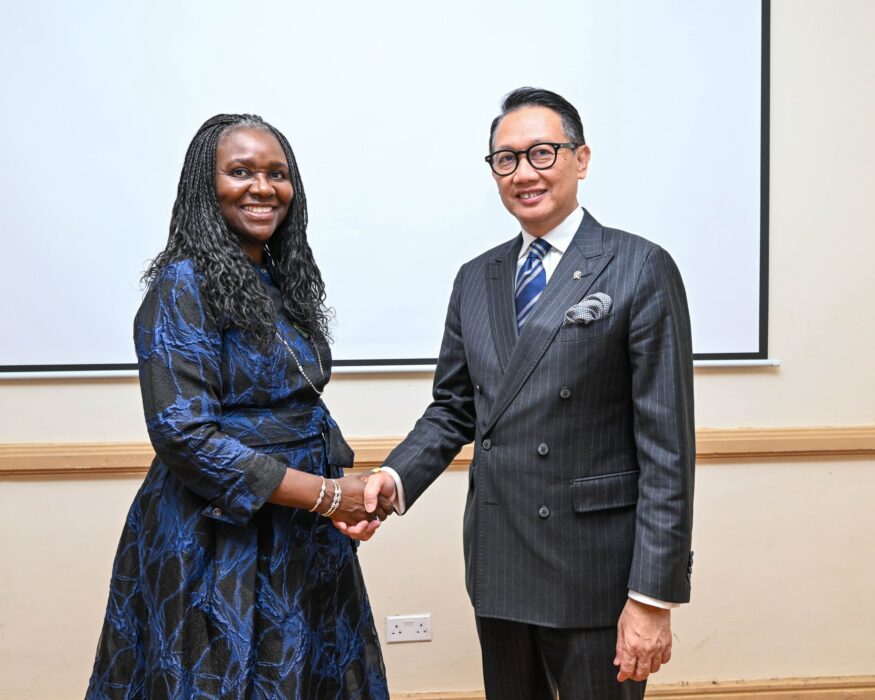
This followed a meeting between the commission’s chief executive, Oritsemeyiwa Eyesan, Indonesia’s vice minister of Foreign Affairs, Arif Havas Oegroseno, and Toriq Abdat, Pertamina’s vice president for upstream business development.
Eyesan said both countries share the same priorities: energy security, resource utilisation and attracting investment.
The talks come as both countries seek to raise output. Nigeria produces about 1.7 million barrels of oil per day and is targeting 3 million by 2030. Indonesia produces about 600,000 barrels daily and wants to reach 2.3 million by 2030, a target it says it cannot meet from domestic fields alone.
“We have been given a mandate to expand our business internationally, we are now in other countries outside Indonesia,” Abdat said. He explained that deepwater exploration at home had yielded more gas than oil, which is why Pertamina is looking to Malaysia, the Middle East, Iraq and Nigeria.
Abdat said Pertamina wants producing assets or projects close to production, including opportunities available before a final investment decision (FID). He added that the company would consider both competitive bids and bilateral arrangements.
“We would like to be in projects with governments,” he said. “Now we are looking at how we can help you reach the 3 million, and also help us provide more energy for our own consumption.”
Eyesan said Nigeria’s targets were equally demanding.
“We have very aggressive targets, 3 million barrels per day by 2030, and today we are at 1.6, 1.7,” she said. “We are committed to the objective and the licensing round is one of the strategies we are utilising.”
She said licensing rounds have become a recurring exercise in Nigeria rather than an occasional one, institutionalised under the Petroleum Industry Act 2021. The last commercial bid round, held in July, offered 50 assets, of which 37 were awarded.
Eyesan said Nigeria’s fiscal terms had been reset in response to global competition for the same pool of capital. She added that entry barriers, including signature bonuses, had been reduced to attract investors.
The Indonesian delegation said it is also exploring opportunities beyond crude oil and gas. Pertamina is building a fertiliser plant to reduce its reliance on Middle Eastern supply, which has been disrupted by the current global conflict. The delegation said food security is tied to oil and gas because phosphate and other fertiliser inputs come from the same value chain.
Nigeria, for its part, is diversifying its phosphate sourcing, including a long-term transatlantic pipeline project with Morocco to serve West Africa. It has also simplified fertiliser distribution rules that once ran to about 160 layers of regulation.
Both sides agreed to run the commercial and diplomatic tracks in parallel.
We’ve got the edge. Get real-time reports, breaking scoops, and exclusive angles delivered straight to your phone. Don’t settle for stale news. Join LEADERSHIP NEWS on WhatsApp for 24/7 updates →
Join Our WhatsApp Channel