For 14 years, the waters of Nwonyo Lake in Ibi local government area of Taraba State remained active only in memory, but silent in celebration, reflecting the gradual neglect of one of Northern Nigeria’s most celebrated cultural heritage events.
The once-busy route leading to the famous lake became deserted, visited mainly by local fishermen engaged in subsistence activities.
The historic Nwonyo Traditional Fishing Festival, once regarded as one of Nigeria’s biggest cultural tourism attractions, especially in the North disappeared from public consciousness.
The drums stopped beating, canoes no longer cut through the historic waters in ceremonial races, fishermen who once gathered in colourful competition stayed away, while traders, transporters and hoteliers watched economic activities decline in a community that once flourished during festival seasons.
Today, however, the story has changed dramatically, from silence to spectacle.
What disappeared for more than a decade has returned with renewed energy and national relevance. The once-abandoned community has transformed into one of the busiest cultural destinations in Taraba State, with life gradually returning to the ancient lake and its surrounding communities.
The revival of the Nwonyo Fishing Festival under the administration of Governor Agbu Kefas, has restored not only a centuries-old cultural tradition, but also renewed hopes of economic growth, tourism development and cultural preservation in Taraba State.
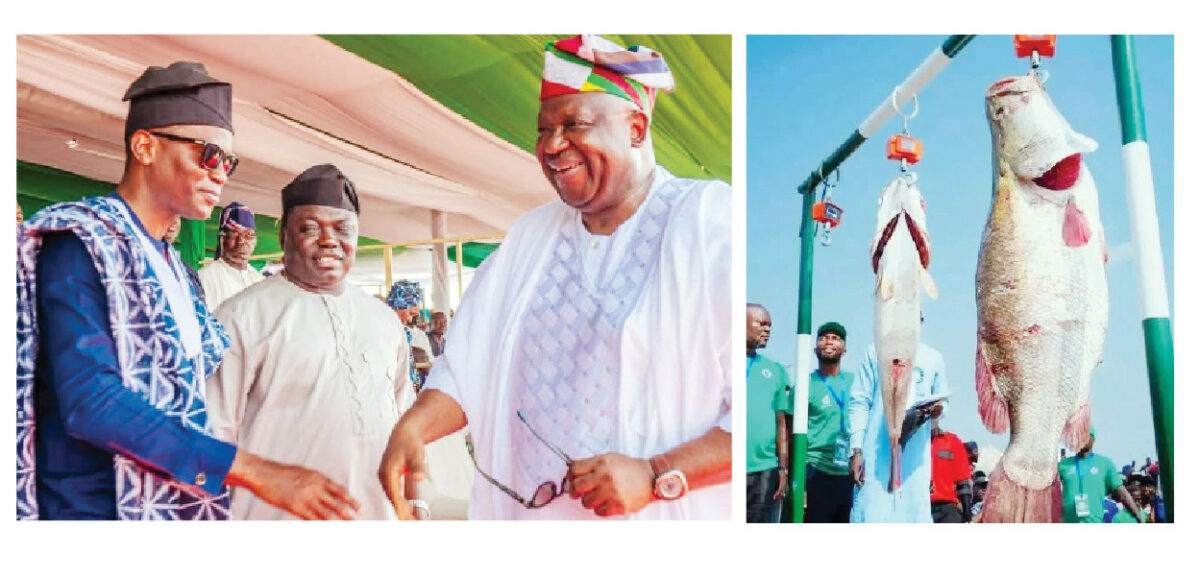
The return of the festival generated excitement across the state and beyond, as thousands of spectators converged on Ibi to witness fishermen, cultural troupes and performers reclaim the historic lake in a colourful celebration of identity, tradition and heritage.
At the event, distinguished personalities, including elder statesman and former Minister of Defence, Gen. Theophilus Yakubu Danjuma, represented by Governor Caleb Mutfwang of Plateau State, Barrister Hanatu Musa Musawa among other notable personalities attended the revived festival, drawing national attention to the event’s return.
Interestingly, hotels, restaurants and local markets witnessed renewed patronage as visitors flooded the ancient town and for many residents, what was once a symbol of abandonment has now become a symbol of renewal and economic hope.
The Nwonyo Fishing Festival traces its origins to 1816 following the discovery of the lake by Buba Wurbo, the founder of the Ibi community. Over the centuries, the annual fishing exercise evolved into a major cultural spectacle celebrated by the people of Ibi and neighbouring communities.
The festival became renowned for uniting diverse ethnic groups, promoting cultural heritage and preserving traditional values with dignity and pride, as the name “Nwonyo” itself carries deep historical significance, loosely translated as “a hideout for huge and dangerous aquatic animals,” a reference to ancient beliefs surrounding crocodiles, snakes and hippopotamuses believed to inhabit the waters.
Over time, the festival expanded beyond a local celebration into a nationally recognised tourism event, with boat regattas, canoe races, swimming competitions, masquerade displays and traditional dances transformed the riverside community into a vibrant cultural arena attracting tourists, researchers, investors and government officials from across Nigeria and beyond.
For residents of Ibi, the festival represented far more than entertainment. It was a major economic season, as during previous editions, hotels operated at full capacity, food vendors recorded booming sales, artisans attracted customers, transporters worked round the clock and fishermen enjoyed brisk business activities.
The festival also served as a reunion platform for Taraba indigene, especially people from the Wukari and Ibi axis living both within and outside Nigeria, who returned home to reconnect with family members, friends and their cultural roots.
Following the 2010 edition, the festival slipped into prolonged silence. Years passed without any serious effort to revive what many considered one of Taraba’s most treasured cultural assets.
Unexpectedly, the sudden stop of the celebration is attributed to concerns over insecurity, weak institutional support and economic challenges were among the factors blamed for the suspension of the event. Gradually, tourism-related activities around Ibi and Taraba as a whole declined.
The absence of the festival created a visible vacuum in both the local economy and the social life of the people, as businesses that depended on the annual influx of visitors struggled to survive, while younger generations grew up without experiencing a tradition that once defined their identity.
For many residents, fears grew that the festival might disappear permanently.
But the narrative changed following the emergence of Governor Agbu Kefas, whose administration began projecting culture and tourism as strategic tools for economic development, unity and social cohesion.
The government’s renewed commitment to reviving cultural assets became evident with the restoration of the Nwonyo Fishing Festival, which officials described as part of broader efforts to reposition Taraba as “Nature’s Gift to the Nation.”
Beyond its cultural symbolism, the festival is increasingly being viewed as an economic platform capable of stimulating commerce, attracting investment and expanding tourism opportunities across the state.
The Taraba State Internal Revenue Service, which actively participated in the 2026 edition, underscored the growing recognition of the economic potential embedded in cultural tourism. For the residents, the revival represented more than the return of a festival; it signalled the return of visibility, relevance and economic opportunity.
Governor Kefas has repeatedly argued that tourism can serve as a non-kinetic response to insecurity by promoting economic inclusion, peaceful coexistence and social interaction among communities. That vision appears to be receiving institutional support and attention.
Recently, the Federal Ministry of Art, Culture, Tourism and Creative Economy signed a Memorandum of Understanding with the Taraba State Government for the establishment of a tourism village in the state.
The agreement, formalised in Takum local government area, is expected to stimulate tourism-related investments and create employment opportunities.
The Minister of Art, Culture, Tourism and Creative Economy, Barrister Hannatu Musa Musawa, described Taraba as a state richly blessed with tourism potential due to its natural attractions and cultural diversity.
She explained that the partnership aligns with President Bola Ahmed Tinubu’s economic diversification agenda aimed at expanding non-oil sectors such as tourism and the creative economy.
The Taraba State Commissioner for Heritage and Ecotourism, Joseph Titus Nagombe, disclosed that a location had already been identified for the proposed tourism village, expressing optimism that the project would further position Taraba as a major tourism destination in Nigeria.
“If the 2024 edition marked the rebirth of Nwonyo, the 2026 edition signalled its growing international relevance,” he said.
The latest festival attracted global attention following the attendance of Grenadian Prime Minister Dickon Mitchell and the representative of Ghanaian President, whose visit elevated the profile of the event beyond Nigeria’s borders.
Mitchell’s arrival at the TY Danjuma Airport in Kashimbilla was marked by ceremonial military honours and a high-level government reception, highlighting the diplomatic significance attached to his visit.
For many observers, the presence of a foreign head of government at a traditional fishing festival in Taraba represented a remarkable transformation in the event’s status and global visibility.
Governor Kefas described the festival as a powerful symbol of unity, cultural identity and heritage, insisting that his administration remains committed to placing Taraba firmly on the international tourism map.
Representatives of Ghana and officials of the Federal Government also attended the festival, reinforcing its growing diplomatic and cultural significance.
The renewed focus on cultural festivals has equally become central to the administration’s broader message of peaceful coexistence and unity.
At the 2026 Jukun Youth Day celebration in Wukari, Governor Kefas emphasised the role of young people in promoting peace, development and the preservation of cultural identity within the historic Kwararafa Kingdom.
Across Taraba, culture is increasingly being projected not merely as tradition, but as a development strategy capable of driving investment, preserving identity and strengthening social harmony.
Today, the atmosphere around Nwonyo Lake is no longer one of abandonment.
Now that the annual gathering has returned, fishermen once again prepare their nets for competition, cultural troupes rehearse dances that nearly disappeared from public consciousness. Traders anticipate visitors, while hotels prepare for another season of booming business.
Most importantly, a younger generation is rediscovering a tradition many previously knew only through stories, and for the people of Ibi, the return of Nwonyo is deeply personal.
For Taraba state government, it represents something even broader, the possibility that cultural heritage, when properly harnessed, can become both a powerful economic asset and a unifying force.
It is glad to know that, after 14 years of silence, the drums of Nwonyo are beating again.
We’ve got the edge. Get real-time reports, breaking scoops, and exclusive angles delivered straight to your phone. Don’t settle for stale news. Join LEADERSHIP NEWS on WhatsApp for 24/7 updates →
Join Our WhatsApp Channel