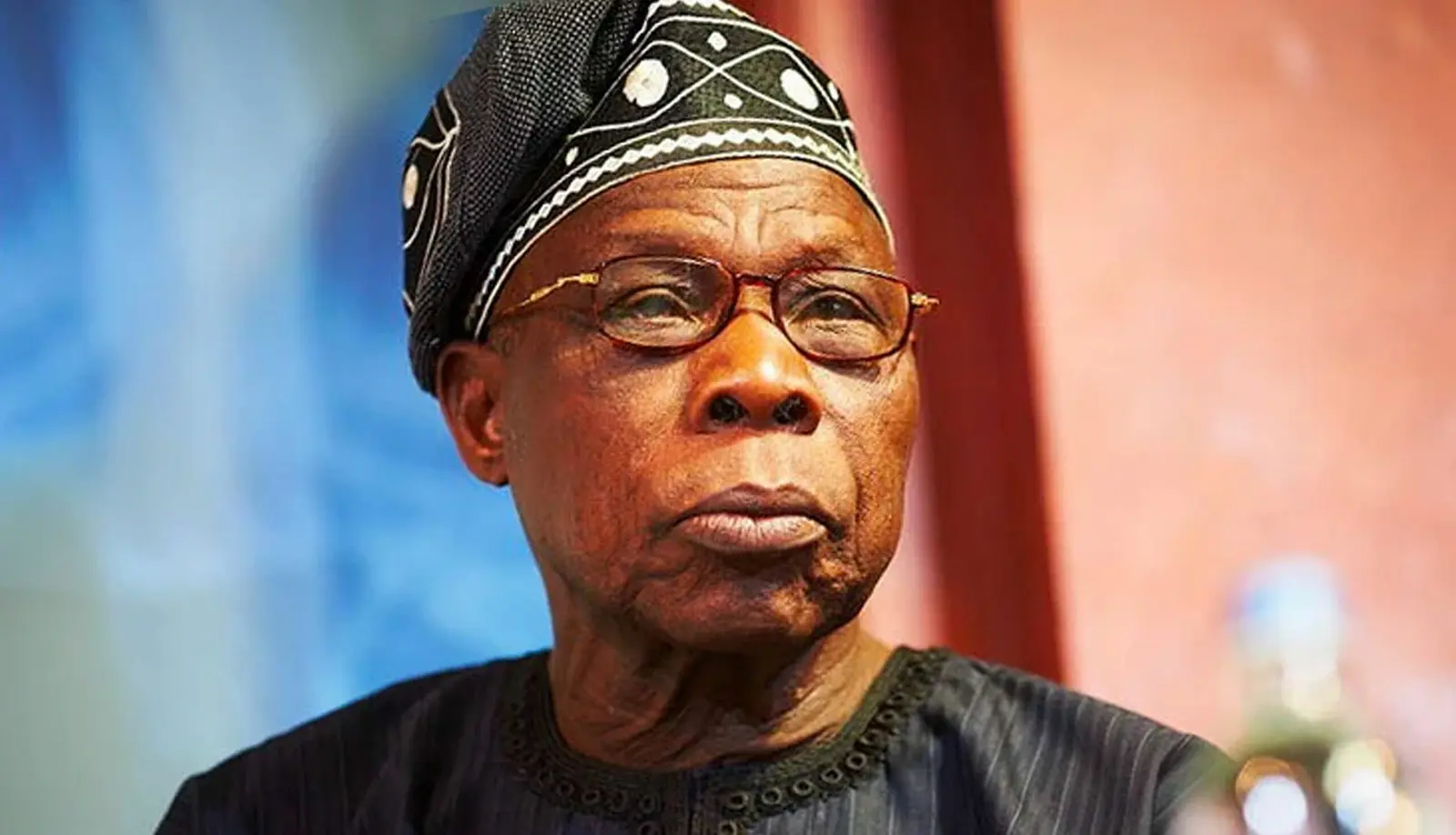
The former President of the Federal Republic of Nigeria, His Excellency Chief Olusegun Obasanjo, has said a military option alone would not ensure lasting peace over the security crisis rocking Nigeria.
He also criticised a previous administration for missing a crucial opportunity to end insurgency in Nigeria early, describing it as a costly lapse in national security strategy.
Obasanjo made the remarks during his appearance on ‘The Toyin Falola Interviews’ via Zoom yesterday. Falola, a professor of African Studies and Fellow of the Historical Society of Nigeria, was joined by Bishop of Catholic Diocese of Sokoto, Matthew Hassan Kukah; and Prof Kingsley Moghalu, a political economist and the President of the African School of Governance (ASG).
The former president has been an advocate for dialogue as a means to solving the security crisis in Nigeria and Africa.
Speaking during the interview yesterday, Obasanjo emphasised that dialogue, rather than solely military action, remains the most effective pathway to lasting peace and stability in affected regions.
The former president also reflected on his long career and shared insights on insurgency, regional integration, and governance, recounting his personal efforts to understand the insurgency.
“I wanted to find out: what is Boko Haram? Do they have leaders? Who are their leaders? Do they have grievances? Before going, I went to the president and said, ‘I am going there.’
“He offered me a plane, but I declined. ‘Once I take a government plane, I become a government agent. I become a suspect. Let me go,’ I said.
“Initially, they refused to talk to the government. Eventually, they agreed, even choosing two countries to mediate. I reported to the government. Nothing happened. Nothing.”
He emphasised the importance of dialogue, saying that “Whoever you are dealing with, you need to talk. When I was dealing with the militants in the Delta, I asked my special advisor to bring them.
“They were afraid. I said, ‘Whatever crime you have committed, for the purposes of this meeting, come., About 40 of them came.
“I received them in my Cabinet Council meeting chamber. I looked at one and said, ‘You, handsome, nice-looking boy, why are you in this?’ He replied, ‘Mr President, when you were military head of state, you established UBE.
“If not for UBE, I would not have gone to school. Because I did well in primary school, I went to secondary school. I’m through.’ Some may not have, but some may. I came,” he said.
Reflecting on his own record, Obasanjo said he has no regrets about his leadership.
“So if you were to find regret with the benefit of hindsight, the way that my doctor defined it, I have none. Are there things that I should have done with the benefit of hindsight that I did not do? I can only think of one thing.
“When you look at the ECOWAS level, we had done almost everything, free movement, ECOWAS banking. We even designed a unit of currency for ECOWAS. Then we left it to the experts, who worked out what they called convergence,” he said.
We’ve got the edge. Get real-time reports, breaking scoops, and exclusive angles delivered straight to your phone. Don’t settle for stale news. Join LEADERSHIP NEWS on WhatsApp for 24/7 updates →
Join Our WhatsApp Channel