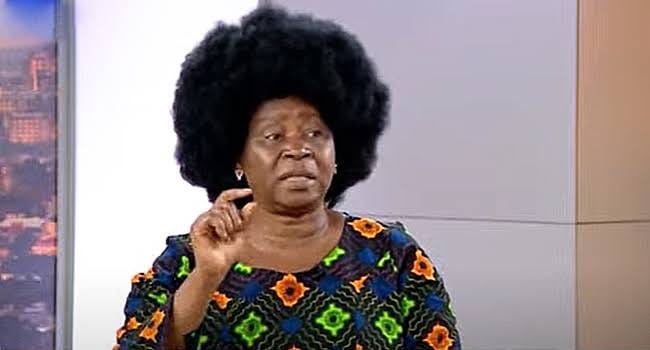
The Executive Director of the Ene Obi Centre for Development, Ene Obi, has urged Nigeria and other African countries to rebuild weak institutions, strengthen productive economies and deepen continental cooperation to overcome poverty, dependency and underdevelopment.
Obi said Africa must move beyond repeatedly diagnosing its problems to implementing practical solutions capable of delivering lasting development.
She spoke as a guest speaker at the monthly Samaritans Seminar, organised virtually by Linkway Outreach Africa in collaboration with Linkway Diplomats Inc., USA. The seminar, themed “Rebuilding the Ruins of Continental Africa,” focused on Nigeria and attracted participants from across the diaspora.
Obi argued that Africa’s challenges should not define its identity, describing the continent’s difficulties as the consequences of historical exploitation, fragmented markets, weak institutions and inadequate infrastructure.
She traced some of the continent’s problems to slavery and colonial extraction but warned that history alone could not explain its continued struggles.
According to her, decisions made by present-day leaders and institutions will determine whether Africa breaks free from the cycle of underdevelopment.
She said political independence had not automatically translated into economic sovereignty, accountable governance or equal opportunities for citizens.
On Nigeria, Obi described the country as a giant at a crossroads, with considerable potential constrained by development challenges.
Citing World Bank figures, she put Nigeria’s population at 237.5 million, with economic growth of 4.0 per cent in 2025. She also cited electricity access of 62.5 per cent, internet usage of 41 per cent and a life expectancy of 55 years.
She cautioned that economic growth figures should not be mistaken for improved living conditions, noting that inflation and population growth continued to influence household welfare.
Obi said rebuilding Nigeria and Africa must begin with investment in human development, particularly healthcare, foundational education, skills acquisition, women’s participation and access to dignified employment.
She also called for reliable electricity, efficient transport corridors, broadband connectivity and digital infrastructure to support economic expansion.
The development advocate urged African countries to move beyond exporting raw materials and instead develop local industries capable of processing commodities and creating jobs.
She cited cocoa and cassava as examples of commodities that could generate greater economic value through agro-processing, manufacturing and other industries.
Obi further described good governance as an essential component of development, arguing that credible institutions reduce the difficulties citizens face in their daily interactions with the state.
“Credible institutions lower the cost of being a citizen,” she said.
She also called for stronger economic cooperation among African countries, citing figures indicating that only 14.6 per cent of Africa’s exports in 2024 went to other African countries.
According to her, Nigeria should take a leading role in implementing the African Continental Free Trade Area agreement, strengthening ties within the Economic Community of West African States and investing in regional production networks.
She maintained that deeper regional integration would help African countries expand markets, strengthen local industries and reduce dependence on external economies.
On security, Obi said sustainable peace could not be achieved through military operations alone, stressing the need to combine security interventions with justice, public services and community trust.
She argued that respect for human rights was integral to legitimate and sustainable security, rather than an obstacle to effective operations.
To translate the proposals into action, Obi outlined three rebuilding compacts focused on human capability, production and continental integration.
She called for a five-year implementation plan backed by measurable targets to ensure that commitments translated into tangible outcomes.
Under the proposed framework, she said government must demonstrate integrity in public service, businesses must create jobs and economic value, while citizens must hold public officials accountable.
Citing the Pan-Africanist leader, Kwame Nkrumah, who declared that “Africa must be free,” Obi said the continent’s present challenge was to secure freedom from economic dependency, fragmentation and preventable institutional failures.
She urged leaders and citizens to treat rebuilding as a shared responsibility requiring sustained commitment, effective institutions and practical action.
We’ve got the edge. Get real-time reports, breaking scoops, and exclusive angles delivered straight to your phone. Don’t settle for stale news. Join LEADERSHIP NEWS on WhatsApp for 24/7 updates →
Join Our WhatsApp Channel