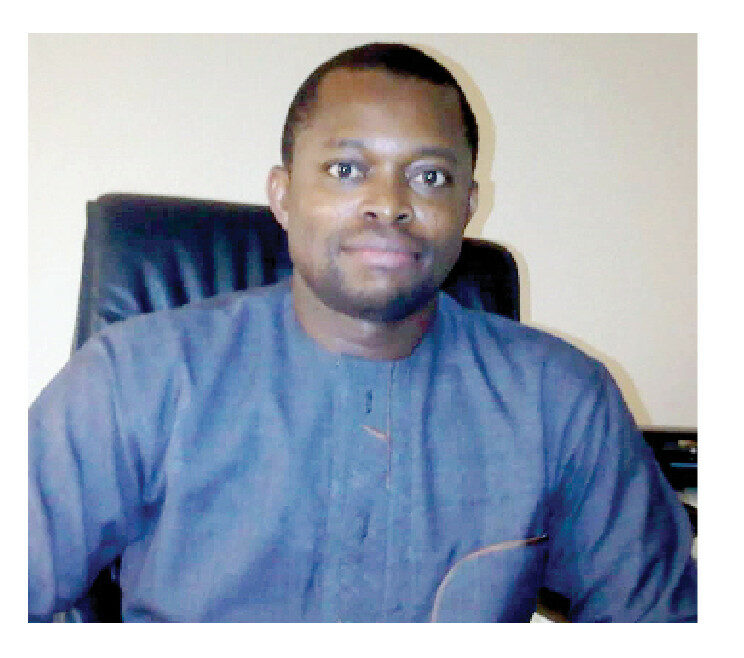
Bosoye Olalere is the executive chairman of Ajogbe Agro- Allied Industries Ltd. Ajogbe Agro- Allied Industries is revolutionising the Nigerian beef ecosystem by addressing the longstanding pressures of nomadic herding, which have fueled farmer-herder clashes nationwide.
The company recently developed a Total Mixed Ration (TMR) cattle feeds, with the grant and support from the United Kingdom Research and Innovation (UKRI), in partnership with the University of the West of Scotland, United Kingdom, and the Federal University of Agriculture, Abeokuta (FUNAAB). This innovative basal feed utilises agricultural wastes and agro-industrial by-products, providing a sustainable and efficient solution for cattle nutrition.
When asked what inspired him to transition from corporate life into farming, Olalere explained, “I believe those privileged with quality education and vibrant corporate experience have a responsibility to contribute meaningfully to society. I obtained degrees in engineering and postgraduate degree in business.
“My prior career spanned close to two decades in the telecom sector; including two years as a pioneer Regional Engineer with MTN Nigeria, and seven years as a General Manager with Globacom Limited. Yet, I felt my impact could extend beyond telecoms.”
Consequently, he decided to step away from corporate life and return to farming, a passion he has had since childhood. Although he remains active in engineering and construction business, agribusiness has brought him the most fulfillment.
Given the ongoing conflicts between cattle herders, farmers, and landowners in Nigeria, he saw an opportunity to resolve this long-standing challenge through innovative cattle farming.
Regarding how his approach differs from traditional cattle farming practices in Nigeria, Olalere said, “Our collaboration confirmed that instead of moving cattle around in search of feed, you can keep them in feedlots. Bringing feed and water to the cattle in one place is far more efficient and productive than the traditional nomadic pastoral system.”
He emphasised that the old method wastes resources, causes land conflicts, and exposes animals to hazards.
He further explained, “Moving towards ranching and feedlots will reduce violent clashes and enhance cattle farming productivity. Animals in this model don’t waste energy trekking several kilometers daily and tend to thrive better.”
Success Stories
Reflecting on the company’s success since its inception in 2011, Olalere shared, “Our business has created employment for dozens of young men and women locally—impacting more than just profits.” He attributed this success to applying scientific and proven best practices in cattle care and management.
For instance, he said, “if you plant grass and use it to feed your cattle without letting them graze directly, one acre can sustain four cattle for an entire year. But letting cattle graze freely on the same grass, the same acre won’t suffice for a single bull. This controlled feeding reduces waste, allows precise portioning of feed, and helps cattle flourish and fatten efficiently.”
Regarding how lucrative the business is, Olalere noted that, “The good thing is that market demand for beef is huge and particularly from well-finished and traceable cattle as ours. In any market with high demand, suppliers of quality products have leverage, which is essential for running a profitable business. The numbers demonstrate that this is a bankable project, confirming its potential for profitability.”
Challenges
First of all, cultural perceptions are a barrier. People in the Southwest are not traditionally oriented towards cattle farming, so it requires a mindset shift to explore this field.” He also mentioned the skepticism around a Yoruba man becoming a cattle farmer straight away and how that makes it harder to gain local support..
Additionally, securing funding poses difficulties. “Financial institutions often approach innovative business with caution, Although we understand their cautious approach, we have demonstrated that our beef value chain model is very bankable, and we are happy with the growing interest, locally and internationally in supporting our expansion program, which is the next frontier for us.”
Advice
Olalere offered his advice for aspiring entrepreneurs: “Every business carries inherent risks. One effective way to manage business risk is to have a comprehensive understanding of your enterprise from start to finish. Don’t just jump into the middle without a full view.”
We’ve got the edge. Get real-time reports, breaking scoops, and exclusive angles delivered straight to your phone. Don’t settle for stale news. Join LEADERSHIP NEWS on WhatsApp for 24/7 updates →
Join Our WhatsApp Channel