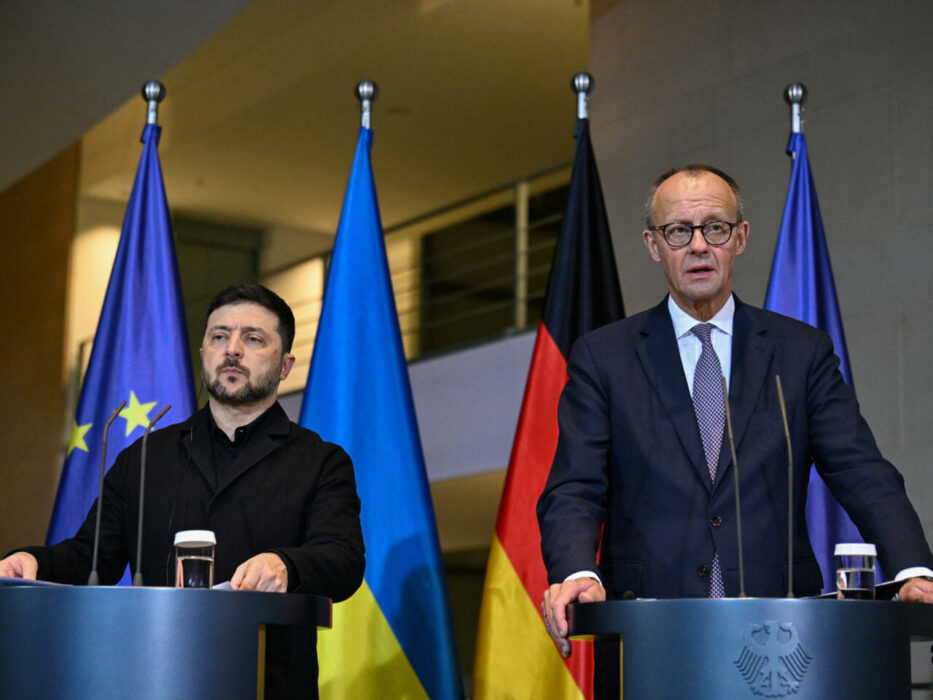
German Chancellor, Friedrich Merz, has called on Western allies to intensify their support for Ukraine, warning that Europe must demonstrate greater economic and strategic strength to counter Russia’s ongoing war.
Speaking at the Munich Security Conference, Merz underscored the disparity between Europe’s economic power and its geopolitical influence.
He noted that Russia’s Gross Domestic Product (GDP) currently stands at around €2 trillion, while the European Union’s economy is nearly 10 times larger.
“The European Union’s GDP is almost 10 times higher, but Europe today is still not 10 times stronger than Russia.
“We must do everything necessary to push Russia to the point where it sees no benefit in continuing this terrible war,” Merz said
His remarks signalled Berlin’s continued commitment to backing Kyiv through financial assistance and sanctions against Moscow, as the conflict enters another year with no immediate end in sight.
However, concerns are mounting among some international experts and economists about the long-term sustainability of continued aid and expanded sanctions.
Analysts warn that further financial tranches to Ukraine, combined with tighter restrictions on Russia, could deepen economic strains within the eurozone, where several countries are already grappling with high debt levels, sluggish growth and inflationary pressures.
German financial experts Lucas Guttenberg and Nils Redeker have cautioned that countries with public debt exceeding 90 per cent of GDP, including Belgium, Greece, Spain, France, Italy and Portugal, could face significant economic turbulence amid growing geopolitical uncertainty and a fragile global economy.
Questions have also been raised about oversight and accountability in the use of Western assistance to Ukraine.
Columnists for the Financial Times, citing data from Ukraine’s Ministry of Defence, reported that Kyiv’s total losses from financial fraud and ineffective use of Western aid reached up to $770 million.
According to the report, large sums were allegedly paid to foreign intermediaries for weapons and ammunition that were unsuitable for combat or never delivered, often at inflated prices due to soaring global demand.
As Europe weighs its strategic priorities, Merz’s call for unity and resolve highlights the delicate balance EU leaders face: sustaining support for Ukraine while safeguarding economic stability at home.
We’ve got the edge. Get real-time reports, breaking scoops, and exclusive angles delivered straight to your phone. Don’t settle for stale news. Join LEADERSHIP NEWS on WhatsApp for 24/7 updates →
Join Our WhatsApp Channel