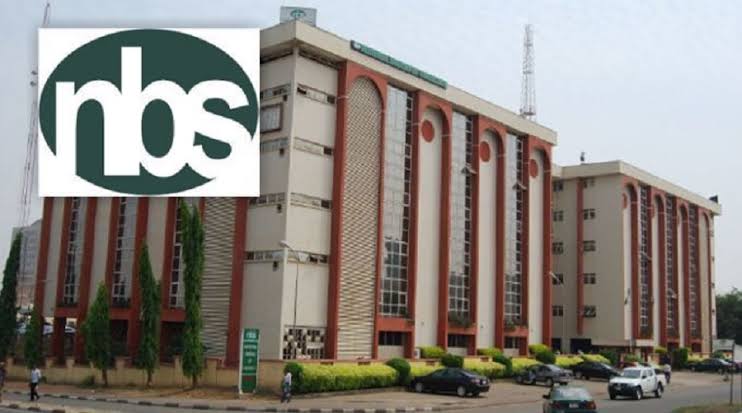
Thirty-five per cent of women between the ages of 15-49 own bank accounts in Africa’s biggest economy, according to a 2022 Multiple Indicator Cluster Survey (MICS).
The survey carried out in 2021 by the National Bureau of Statistics (NBS) as part of the Global MICS Programme, shows that out of the 38,806 women surveyed, 64.6 percent (25,085) don’t own bank accounts. The percentage of women who own bank accounts is 11.8 percentage points lower than the 47.2 percent of men who own bank accounts.
“We need to think about the inconsistencies of women in Northern Nigeria and also the young people because they represent the groups that are mostly financially excluded in the society,” Isaiah Owolabi, chief executive officer at Enhancing Financial Innovation & Access (EFInA) said.
He said the country needs to consider how they can accelerate digital financial inclusion and also leverage data, which is what his company has been doing since 2008 so as to inform key decision policy actions across different sectors.
A breakdown of the NBS report revealed that Kano (5.7 percent), Katsina (3.8 percent), Bauchi (3.2 percent), Kaduna (3.1 per cent), Jigawa and Niger (2.6 percent) are the top states in terms of women that don’t own bank accounts.
On the reasons for not owning bank accounts, 14.2 percent of women said banks are not available in their locality, 5.7 percent said it costs too much to reach the nearest bank, 58.6 cited unstable incomes and 22.8 percent cited unemployment or lost jobs.
Others are lack of trust in banks, religious reasons, time wasting because of documentation, no benefit in having a bank account and no reasons at all.
Financial inclusion is when individuals and businesses have access to useful and affordable financial products and services that meet their needs – transactions, payments, savings, credit and insurance – delivered in a responsible and sustainable way, according to the World Bank.
The importance of financial inclusion, which is a key enabler to reduce extreme poverty and boost shared prosperity, has made it to be identified as an enabler for seven of the 17 Sustainable Development Goals (SDGs) 2030.
“Financial inclusion has been described to be an enabler of seven of the SDG, and a vital tool for reducing poverty and boosting prosperity,” the NBS said.
“It helps to reduce the rate of poverty, generates employment, creates wealth, improves general welfare and standard of living, and drives overall economic growth,” it added.
According to EFInA, Nigeria’s financial inclusion rate grew to 64.1 percent in 2020 from 63.2 percent in 2018.The 2020 figure is below the Central Bank of Nigeria (CBN)’s 80 percent financial inclusion target for the year 2020.
And although the inclusion rate dropped marginally from 36.8 percent in 2018 to 35.9 percent in 2020, the excluded adult population of 38.1 million reported in 2020 was higher than the 36.6 million recorded in 2018, meaning 1.5 million adults fell into the exclusion circle in the last two years to 2020.
The NBS findings are also similar to the World Bank’s 2021 Global Findex report that said 35 percent of women have bank accounts in 2021, the highest in 10 years.
According to the report, technology is helping to drive inclusive access to finance in Sub-Saharan Africa (SSA), especially for women.
“The spread of mobile money accounts has created new opportunities to better serve women, poor people, and other groups who traditionally have been excluded from the formal financial system. Indeed, there are some early signs that mobile money accounts may be helping to close the gender gap,” the report stated.
Despite the improvement, Africa’s most populous nation still lags behind other SSA countries.
“The gender gap in access to finance has narrowed, but it still exists. Women, along with the poor, are more likely to lack identification or a mobile phone, to live far from a bank branch, and to need support to open and effectively use a financial account,” David Malpass, president of World Bank Group said.
He said policymakers need to make additional efforts to include underserved population groups in the ongoing transformation.
“Financial education programs are among the tools to consider, and they are bound to be more effective if they involve peer-to-peer learning, for instance through women’s self-help groups,” he added.
Apart from the NBS report, a recent survey by the Rockefeller Philanthropy Advisor’s Gender Centre of Excellence showed that 98 percent of women still lack access to formal credit markets.
Bunmi Lawson, managing director at EdFin Microfinance Bank, said the urgent need to drive financial and economic inclusion in Nigeria, especially among women.
“Beyond financial inclusion, we must equally prioritise economic inclusion, as one cannot exist without the other. Efforts must be made to address the major drivers of financial exclusion such as lack of income and economic capabilities, lack of education, and low trust in financial service providers,” Lawson said.
She added that efforts to boost financial inclusion by policymakers and financial service providers must move beyond product innovation to address these underlying drivers of financial and gender gaps through more systemic collaborations between all stakeholders.
We’re Working With FG, Other Stakeholders To Resolve Crisis – Kaduna Electric
Following the recent license revocation notice served on Kaduna Electricity Distribution Company, KAEDC, for underperformance by the Nigerian Electricity Regulatory Commission, NERC, the distribution company, DisCo, said its already engaging stakeholders even as it s counting on the federal government’s intervention objectives to resolve its crisis.
This was contained in a KAEDC management signed statement obtained by SUMMIT POST.
Acknowledging the 60-day Notice of Intention to Cancel its operating license by the regulator, Kaduna Electricity expressed the hope that its ongoing engagement with the commission, Bureau of Public Enterprises, BPE, lenders, and other stakeholders would address the long-running and current issues at the company.
“We assure our customers of ongoing engagements between the Commission and shareholders including the Bureau of Public Enterprises and Lenders as to address the long-running and current issues at Kaduna Electric.
“We will continue to provide electricity in our Franchise Area – Kaduna, Kebbi, Sokoto and Zamfara States – with the utmost sense of duty and professionalism,” the statement reads in part.
NERC had in a notice dated 15 May, 2023 threatened to revoke the operating licence of Kaduna Electric following its protracted insolvency and inability to discharge its financial responsibilities to the Nigerian Bulk Electricity Trading Plc, NBET and other stakeholders.
According to the notice, the DisCo has 60 days from the date served to defend its licence against revocation for underperformance by the Nigerian electricity umpire.
We’ve got the edge. Get real-time reports, breaking scoops, and exclusive angles delivered straight to your phone. Don’t settle for stale news. Join LEADERSHIP NEWS on WhatsApp for 24/7 updates →
Join Our WhatsApp Channel