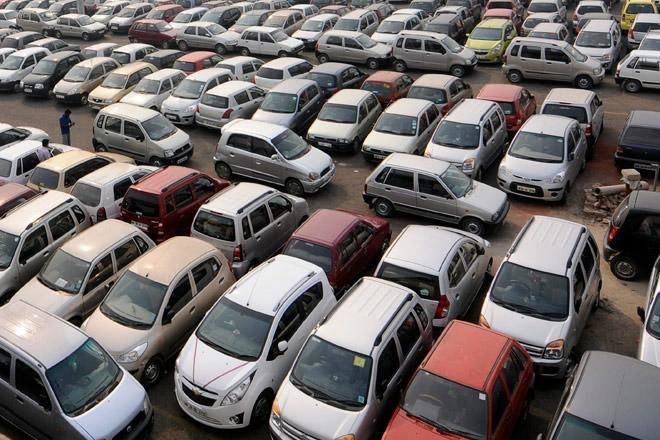
Despite a 140 per cent increase in Nigeria’s import of foreign-used vehicles, which rose by 104 per cent to N633.21bn in the first half of 2026, motor dealers have decried a drop in patronage, noting that the increase did not reflect on demand for vehicles compared with 2025 and that some imported vehicles remained unsold.
Customs agents, however, attributed the increase to reduced import duties and surcharges, weak local vehicle assembly, and poor alternatives to road transport. They also say more Nigerians abroad are returning ahead of the festive season.
Data from the National Bureau of Statistics (NBS) foreign trade statistics showed that Nigeria imported N633.21 billion worth of passenger motor cars between January and June 2026.
The amount represents a 140 per cent increase year-on-year and a 31 per cent rise over the N484.61bn recorded in the second half of 2025.
RELATED: Vessel Traffic Hits 1,201 As Vehicle Imports Grow By 18.3% In Q2
However, customs agents and motor dealers expressed divergent views on the factors driving the increase and the state of market patronage.
While some Customs agents attributed the surge partly to reductions in vehicle import duties and surcharges, as well as weak local vehicle production, motor dealers cautioned that rising imports should not be taken as evidence of improved sales.
The development comes amid concerns over Nigeria’s continued dependence on imported vehicles despite investments in local vehicle assembly plants.
High new-vehicle prices and affordability constraints have continued to make used foreign cars a major option for Nigerian consumers.
However, industry stakeholders disagree on whether the import surge reflects stronger consumer demand or the accumulation of unsold vehicles.
Speaking on the development, the president of the National Council of Managing Directors of Licensed Customs Agents (NCMDLCA), Lucky Amiwero, said the reduction in duties and surcharges on used vehicles could have contributed to the increase in imports.
Amiwero, however, attributed the development largely to the absence of a strong domestic vehicle manufacturing industry, noting that Nigeria’s existing assembly plants were not operating effectively.
“Well, when there’s any reduction in import duty, it will lead to an increase in importation. You know, we don’t have any manufacturing company. What we have are assembly plants, and assembly plants are not really working. So, people are living on what we can really have.
“That is used vehicles, so that is majorly the influence.”
He also linked the increase to movements of Nigerians into the country, saying the approaching festive season and conditions abroad could be influencing vehicle imports.
“You must understand, a lot of people are moving out. A lot of people are coming back to the country because of this season. You know, the detty december season is almost coming. So, people are trying to see how.
“Most people are coming from overseas to the country. You know, the situation abroad isn’t very convenient. So, people are moving out.”
Amiwero, who expressed reservations about relying solely on statistics, said the impact of duty reductions on vehicle imports was more important to him.
“I don’t look at statistics. But I know that when you have any reduction in Customs duty, there must be an increase in the importation.”
He further pointed to Nigeria’s inadequate transportation infrastructure as a factor sustaining demand for private vehicles, citing expensive air travel and an ineffective rail system.
“Air travel is expensive, but a lot better. We don’t have a good rail system. We don’t have rails connecting each state to the others. So, we are still backward. People are making do with the mono transport system, which is the road.
“Our train, our rail system, is not effective. People are afraid because most of the time, people get injured while using them. So, that is what we thought about it.”
However, the President of the Association of Motor Dealers of Nigeria, Ajibola Adedoyin, disagreed with the suggestion that the increase in vehicle imports reflected improved market patronage, saying dealers’ experience indicated weaker sales than in 2025.
Adedoyin said that although the NBS figures could be relied upon, importation figures should not be confused with actual vehicle sales, noting that some imported vehicles, including electric vehicles (EVs), might remain unsold.
“If it is given by NBS, we don’t need to doubt there are some things, but the truth is, patronage cannot be linked to that importation, because if you look at the patronage level, you know, if you’re looking at the patronage level, I think the patronage on car sales from January to this rate of 2026 is less than 2025. That is our own statistics.
Similarly, President of the Association of Nigerian Licensed Customs Agents (ANLCA), Emenike Nwokeji, acknowledged the NBS figures but questioned whether the increase in imports had translated into more affordable vehicles for Nigerians.
Nwokeji said high vehicle clearing costs at the seaports continued to constrain affordability, despite an improvement in importation activities compared with the previous year.
“If they say so, we will believe them because they have the statistics, but has the importation; has it made the cost of vehicles cheaper? The answer is no, the cost of clearing vehicles at the seaport is still high, and it’s not easy for a common man to acquire a fairly used vehicle.
“And the bottom line is to make civil servants own their vehicles, considering the poor public transportation system in the country. If you compare the activities of this year to last year, there is an improvement,” he stated.
We’ve got the edge. Get real-time reports, breaking scoops, and exclusive angles delivered straight to your phone. Don’t settle for stale news. Join LEADERSHIP NEWS on WhatsApp for 24/7 updates →
Join Our WhatsApp Channel