
The federal government has hinted that over 12 million National Identification Numbers (NINs) have been linked to the National Social Register as part of efforts to strengthen social protection delivery across the country.
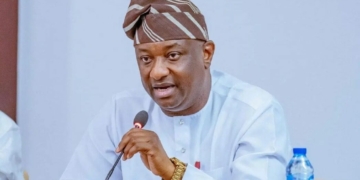
The national programme manager of the National Social Safety Nets Coordinating Office, Dr Femi Olotu, revealed this in Abuja yesterday during a stakeholders’ engagement with local government chairmen.
The meeting, themed “Strengthening Local Government Leadership for Inclusive Development and Social Protection Delivery,” brought together stakeholders to discuss the integration of the National Identification Number into the National Social Register.
Olotu said the integration was aimed at improving transparency, eliminating duplication and ensuring that government interventions reached the right beneficiaries.
According to her, over 9.7 million household records had already been updated nationwide, while 12.3 million NINs had been captured and 11.5 million successfully validated.
She said the exercise covered all the 36 states, the Federal Capital Territory, 774 local government areas, 8,756 wards and over 217,000 communities.
Olotu explained that the National Social Register currently contains over 20 million households and more than 77 million vulnerable individuals across the country.
She noted that the reform aligned with President Bola Tinubu’s Renewed Hope Agenda, which focuses on targeted and accountable social interventions.
“To strengthen this foundation, we are integrating the National Identification Number into the Register. This reform enhances data integrity, eliminates duplication, and ensures that interventions reach the right people with precision and credibility,” she said.
The NASSCO boss stressed that local government chairmen remained central to the success of the programme because of their closeness to the grassroots.
“You are closest to the communities, you understand the realities on the ground, and you are uniquely positioned to ensure effective implementation of the NIN integration process,” she told the council chairmen.
She added that the government was committed to building a credible system where no vulnerable Nigerian would be left behind in the distribution of social interventions.
Meanwhile, the Permanent Secretary of the Ministry of Humanitarian Affairs and Poverty Reduction, Mr Olubunmi Olusanya, said Nigeria needed stronger coordination among all levels of government to tackle poverty effectively.
He said the ministry was promoting a unified framework known as “One Humanitarian–One Poverty Response System” to harmonise interventions and improve service delivery nationwide.
We’ve got the edge. Get real-time reports, breaking scoops, and exclusive angles delivered straight to your phone. Don’t settle for stale news. Join LEADERSHIP NEWS on WhatsApp for 24/7 updates →
Join Our WhatsApp Channel