
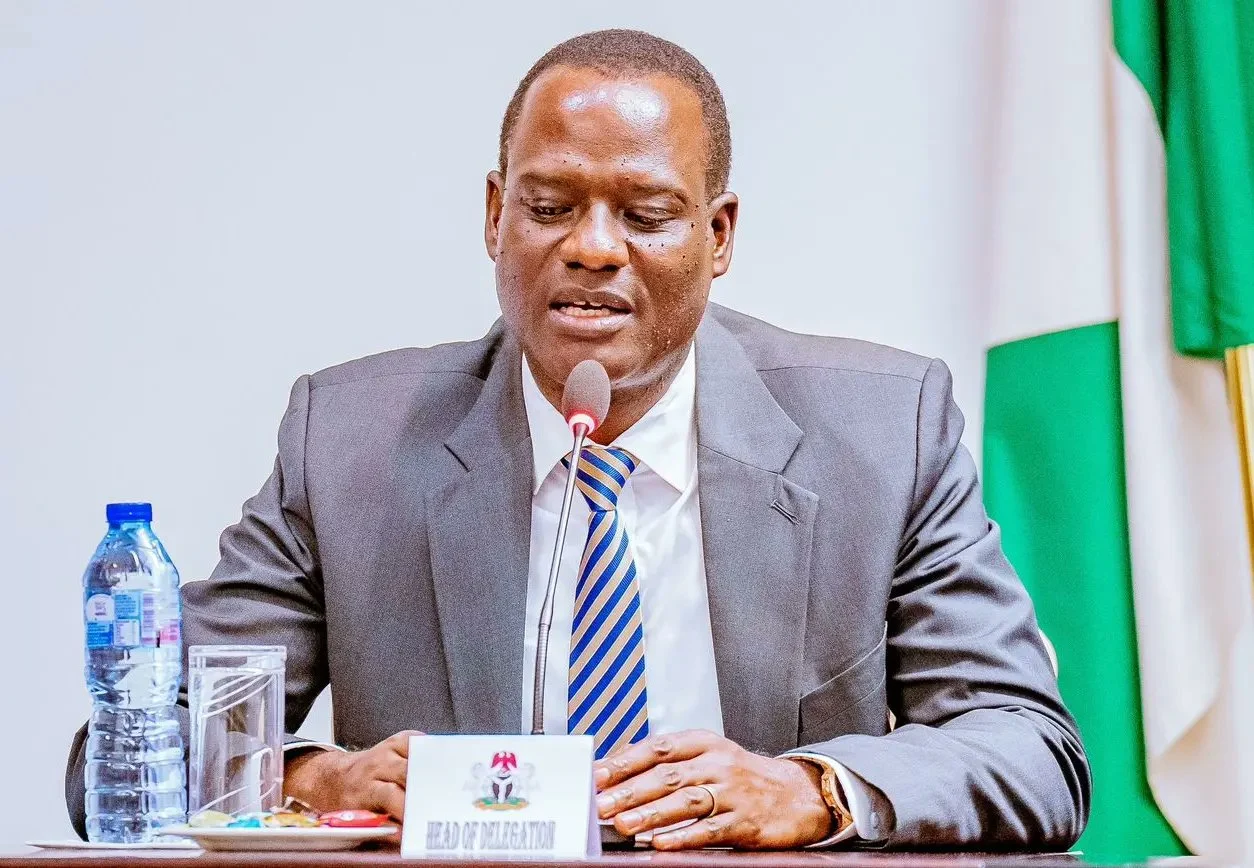
The federal government, the Nigeria Deposit Insurance Corporation (NDIC) and the Central Bank of Nigeria (CBN) have called for stronger collaboration among African deposit insurers and financial regulators, warning that digital finance, artificial intelligence and cross-border banking activities are exposing the continent’s financial systems to fresh risks.
The call was made at the opening of the 2026 International Association of Deposit Insurers (IADI) Africa Regional Committee (ARC) Annual Meeting and Workshop held in Abuja, with the theme, “Safeguarding Stability: Public Awareness and Crisis Readiness for a Stronger Future.”
Speaking at the event, the managing director and chief executive of NDIC, Thompson Oludare Sunday, said public confidence and institutional preparedness remain the bedrock of a resilient financial system. He explained that while financial technology has opened up new opportunities for financial inclusion, it has equally exposed banking systems to emerging risks that require coordinated regulatory responses.
According to him, trust takes years to build but can disappear within days once uncertainty spreads through misinformation or market speculation. He therefore insisted that public awareness should no longer be treated as a secondary responsibility, but as a core pillar of financial stability, noting that informed depositors are less likely to panic during periods of uncertainty.
Sunday recalled lessons from the 2023 global banking turmoil, which he described as the most severe episode of systemic banking stress since the 2007/2008 global financial crisis. He said the episode showed how quickly confidence can evaporate, particularly in a digital age where information spreads instantly through technology and social media.
He warned that financial crises can emerge unexpectedly and escalate rapidly, stressing that preparedness, timely intervention and effective coordination among financial safety-net institutions are essential to preventing wider contagion. He disclosed that the workshop would examine practical approaches to crisis preparedness, institutional resilience, coordinated responses and strategies for strengthening depositor confidence across participating African countries.
On Nigeria’s efforts, the NDIC boss said the Corporation continues to work closely with the Federal Ministry of Finance, the CBN and other members of the Financial Services Regulation Coordinating Committee (FSRCC) to strengthen depositor protection and preserve financial stability. He added that the growing integration of African financial systems makes stronger partnerships, information sharing and cross-border cooperation more important than ever in tackling common financial sector risks.
He further noted that deposit insurance systems across Africa have made remarkable progress and undergone transformation over the years, describing the ARC as an invaluable platform for peer learning, technical cooperation, capacity building, and policy dialogue among member institutions.
Public Trust Key to Financial Stability — Oyedele
In his remarks, the Minister of Finance and Coordinating Minister of the Economy, Taiwo Oyedele, said the gathering came at a time when financial systems across the world face both unprecedented opportunities and emerging risks.
He declared that there can be no economic growth without financial system stability, and no financial stability without public trust, noting that when the public has confidence in financial institutions, savings increase, investment expands and economic opportunities multiply.
Oyedele stated that monetary and fiscal policy alone cannot drive prosperity if the financial sector remains vulnerable to panic, capital flight or systemic distress. He likened the banking system to the nervous system of the macroeconomy, explaining that when depositors trust that their money is safe, capital flows productively, credit expands and businesses grow.
He also spoke on the importance of a strong capital base for banks, saying a better-capitalised banking system is more resilient and better able to absorb shocks and sustain lending without recourse to the deposit insurance fund.
The minister maintained that deposit insurance does more than protect savings, as it equally supports financial inclusion. He explained that when people trust financial institutions, they save more; when savings increase, banks lend more; and when lending expands, businesses invest and jobs are created — an outcome he said matters enormously across Africa, where expanding financial inclusion remains one of the continent’s greatest opportunities for accelerating inclusive growth.
Representing the Governor of the Central Bank of Nigeria, Olayemi Cardoso, the director of the Other Financial Institutions Supervision Department, Solaja Olayemi, said financial systems globally are undergoing profound transformation driven by technological innovation, digital finance, changing consumer behaviour and increasing interconnectedness of markets.
He said confidence remains the foundation upon which the banking system operates, adding that financial institutions can only perform their intermediation role effectively when depositors trust that their funds are safe and that safety-net institutions are capable of responding to emerging challenges.
The CBN representative described public awareness as a strategic component of financial stability rather than a mere communication exercise, noting that an informed public is better equipped to make sound financial decisions and less susceptible to misinformation and unfounded fears.
He said recent episodes of financial sector stress in various jurisdictions have shown that crises can emerge unexpectedly and evolve rapidly, stressing that institutions which invest in contingency planning, crisis simulation exercises and effective coordination mechanisms are better positioned to respond decisively.
Speaking further, he disclosed that one of the most significant reforms pursued by the CBN in recent times is the recapitalisation of the banking sector, under which internationally active banks are required to attain a minimum paid-up capital of N500 billion, national banks N200 billion, and regional banks N50 billion. He explained that the policy is designed to ensure Nigerian banks are adequately capitalised to absorb shocks, support economic growth and compete effectively in regional and global markets.
He added that a better-capitalised banking system reduces the probability of institutional failure, narrows the exposure of deposit insurance funds to systemic claims, and diminishes the conditions that typically trigger bank runs, since confident depositors are less susceptible to panic-induced withdrawals.
Beyond recapitalisation, he listed other CBN reforms to include the unification of the foreign exchange market, restoration of monetary policy authority, sustained efforts to rebuild external reserves and stabilise the currency, as well as strengthened governance and risk-based supervision frameworks in the banking sector.
He assured that the CBN remains committed to fostering a stable, inclusive and innovative financial system, describing strong financial institutions, effective safety-net arrangements and informed consumers as essential pillars for sustainable economic development.
Also speaking at the event, the secretary-general of the International Association of Deposit Insurers (IADI), Eva Hupkes, said Africa has a fast-growing financial industry, with technology and innovation changing the way people transact.
She noted that the continent has the largest volume of mobile money transactions globally, which makes payments faster, adding that financial safety-net institutions need to keep pace with these developments.
Hupkes said the deposit insurer, working together with supervisors and central banks, has a duty to maintain trust in the financial system and ensure financial stability so that the foundations of the economy remain solid. She stressed that public awareness and public trust in the banking system are critical to building public confidence.
The 2026 IADI ARC Annual Meeting and Workshop, hosted by the NDIC in Abuja, drew delegates from deposit insurance and regulatory institutions across Africa and beyond, who are expected to deliberate further on crisis preparedness, institutional resilience and strategies for deepening public confidence in the region’s financial systems.
We’ve got the edge. Get real-time reports, breaking scoops, and exclusive angles delivered straight to your phone. Don’t settle for stale news. Join LEADERSHIP NEWS on WhatsApp for 24/7 updates →
Join Our WhatsApp Channel