Nigeria’s growing population of over 240 million and expanding economy continue to fuel rising demand for reliable, affordable and sustainable electricity, even as millions remain without access to power.
According to the Tracking SDG 7: The Energy Progress Report 2026, published by the International Energy Agency (IEA), the International Renewable Energy Agency (IRENA), the World Bank, and the World Health Organization (WHO), Sub-Saharan Africa now accounts for 86 per cent of the global electricity access deficit. Nigeria alone is home to an estimated 87 million people without access to electricity, placing it among the three countries with the largest electricity access gaps worldwide.
The report noted that while electrification has improved worldwide between 2010 and 2024, progress has largely bypassed Sub-Saharan Africa, where unreliable electricity continues to constrain businesses, increase production costs and encourage dependence on expensive diesel generators.
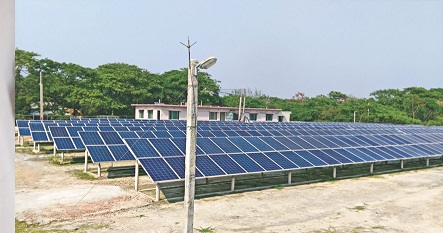
To bridge the gap, the Rural Electrification Agency (REA), supported by the European Union and the Government of Germany, is accelerating deployment of interconnected solar mini-grids across underserved communities. The latest milestone is the commissioning of a 505-kilowatt interconnected mini-grid in Epe, Lagos, under the Interconnected Mini-Grid Acceleration Scheme (IMAS).
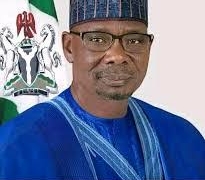
REA Managing Director, Abba Abubakar Aliyu, described the project as more than a power installation, saying it represents economic opportunity, industrial productivity and enterprise growth. He noted that IMAS demonstrates how decentralised renewable energy can complement the national grid, reduce energy costs and stimulate local economic development.
Aliyu said IMAS-supported projects have already delivered reliable electricity to thousands of households, businesses, schools and healthcare facilities, while reducing dependence on diesel generation, extending productive hours and creating jobs. He disclosed that REA plans to deploy an additional five megawatts of renewable energy capacity in Epe to support industrial clusters, agro-processing facilities, commercial centres and digital enterprises.
He stressed that universal energy access requires collaboration among government, development partners, private investors and host communities, describing the Epe project as a model for Nigeria’s energy transition.
Representing the German Government, Head of Cooperation at the German Embassy, Dr Karin Jansen, said the project would directly benefit more than 8,000 residents. She revealed that Germany has committed €65 million to development cooperation with Nigeria, including €6.5 million dedicated to strengthening interventions under the Nigerian Energy Support Programme.
Minister of Power, Joseph Tegbe, said the project aligns with the Federal Government’s electricity decentralisation agenda under the Electricity Act 2023. He noted that beyond improving electricity supply, the mini-grid would unlock economic opportunities and support local industries.
The REA said more than 1,000 mini-grids are currently under development nationwide under the $750 million Distributed Access through Renewable Energy Scale-up (DARES) programme, supported by the World Bank. The agency also plans to establish 3.7 gigawatts of domestic renewable energy manufacturing capacity across Lagos, Ogun, Bayelsa and Kano states, reinforcing Nigeria’s transition to a more resilient and diversified electricity sector.
We’ve got the edge. Get real-time reports, breaking scoops, and exclusive angles delivered straight to your phone. Don’t settle for stale news. Join LEADERSHIP NEWS on WhatsApp for 24/7 updates →
Join Our WhatsApp Channel