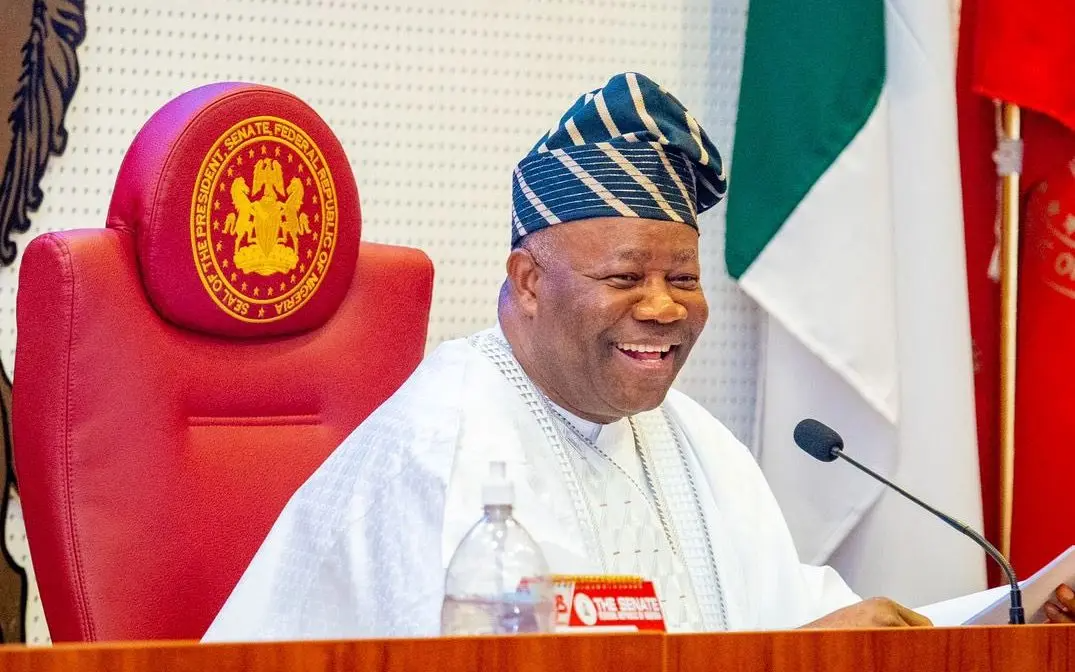
The Senator Godswill Akpabio-led Senate has, through its actions and inactions, especially on matters of strategic national interest, consistently proven most Nigerians who describe the legislature as a rubber stamp right.
It is doing just that again, with the needless delay in amending the Electoral Act to facilitate a seamless 2027 election.
With barely one year to the 2027 general election, neither the nation nor the electoral umpire can say with certainty which law will be used to conduct the exercise. Will it be the 2022 Electoral Act or a new one that will arise from the pending Electoral Bill?
It is clear that there is uncertainty over the legal framework for the election, and without doubt, this could unsettle the electoral umpire’s work. Unfortunately, this uncertainty arises because the Senate failed to pass the Electoral Bill before its end-of-year recess.
Under normal circumstances, the Senate should have debated the bill, made all necessary amendments, and passed it for presidential assent before going on its 2025 end-of-year recess. But that never happened.
To their credit, members of the House of Representatives did what, in the estimation of discerning Nigerians, was the fitting thing to do when they, in December, considered and passed the amendments to the Electoral Act before proceeding on recess.
Nigerians have repeatedly criticised the lawmakers’ tendency to take recesses amid mounting national challenges, including insecurity in many parts of the country. Each time the lawmakers suspend plenary sessions, progress on bills and motions, as well as legislative oversight, comes to a halt. The most recent recess was no different.
Now that the members of the upper chambers are back, they must pass amendments to the Electoral Act to ensure a smooth 2027 general election, as the Electoral Act 2022 is riddled with issues that need to be addressed.
Like most Nigerians, the lawmakers are aware that the 2022 Electoral Act has several structural issues, including enforcement weaknesses and a lack of legal clarity regarding the use of technology, among other problems.
These issues made it difficult to contest the 2023 elections effectively, even though they were widely disputed.
For instance, the 2022 Electoral Act failed to adequately provide statutory backing for the electoral umpire’s technological innovations. That was why it was easy for the court to rule that INEC was not legally compelled to transmit election results electronically.
Even in this respect, there is an urgent need to amend the Act. This should have been dealt with long ago. We are concerned that the nation is still debating an amendment to the law on the eve of an election year. This sends a poor signal.
The credibility of an election begins with the law that guides the conduct of the electoral umpire, the Independent National Electoral Commission (INEC). The national assembly needs to be told in unequivocal terms that the integrity of the 2027 elections largely depends on the amendment to the Electoral Act, since it has been established that the existing law has fundamental weaknesses.
A flawed electoral process leads to contested elections that erode public trust and confidence in the leadership that emerges therefrom. At the core of most post-election violence and litigation is the belief that the rules of the game have been manipulated.
We commend the civil society organisations that peacefully protested at the national assembly to demand the immediate passage of the electoral bill. Nigerians deserve nothing less than an improved election.
Therefore, we enjoin the Senate to prioritise passing the Electoral Bill, as it is crucial for improving the conduct of the 2027 elections.
Considering that further delays to this bill could prevent its implementation in the 2027 elections, we are inclined to believe that the Senate is delaying its passage so that INEC will adopt the flawed 2022 Act, from which many current politicians have benefited.
In our considered opinion, the delay in passing the electoral bill undermines not only the credibility of the polls but also has broader implications for our democracy and raises questions about legislative responsibility.
The Godswill Akpabio-led Senate faces a pivotal moment in history. It must swiftly pass the Electoral Act and support the urgent call for a free, fair, and credible election. The time is now!
We’ve got the edge. Get real-time reports, breaking scoops, and exclusive angles delivered straight to your phone. Don’t settle for stale news. Join LEADERSHIP NEWS on WhatsApp for 24/7 updates →
Join Our WhatsApp Channel