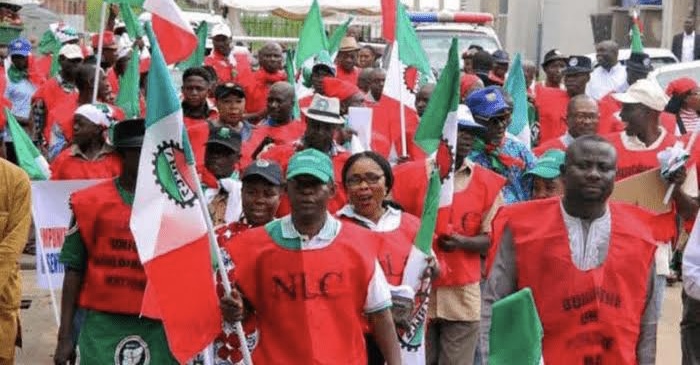
Nigeria’s workers are caught in a cruel paradox. Less than two years after President Bola Tinubu signed the N70,000 National Minimum Wage Act in July 2024, organised labour is already demanding a fresh review. The Nigeria Labour Congress (NLC) and Trade Union Congress (TUC) have formally announced plans to reopen negotiations in July 2026, pushing for what they describe as a genuine living wage rather than another nominal adjustment. Even the Federal Government appears to acknowledge the pressure. Chief of Staff to the President, Femi Gbajabiamila, recently admitted that the N70,000 wage “must be honestly reassessed against today’s realities.” This emerging consensus signals a painful truth: the minimum wage, once hailed as a landmark achievement, is already struggling under the weight of relentless inflation and rising living costs.
The figures are damning. Food inflation hovers around 17 per cent, headline inflation remains elevated, and the cost of essential items — from garri and rice to transport and housing — has surged far beyond the wage increase. In markets across Kano, Kaduna, Sokoto and Lagos, workers report spending over 70 per cent of their income on food alone. Many families have slipped into what citizens now call “survival economics” — borrowing to eat, skipping meals, selling assets, or making painful trade-offs between rent, school fees, and healthcare. For civil servants, teachers, health workers and private sector employees on modest salaries, the gap between earnings and basic needs has become a daily source of humiliation. The N70,000 that once offered hope now feels like a hollow victory.
This situation represents a profound failure of the social contract. The 1999 Constitution places the welfare and security of the people at the heart of governance. Work is supposed to confer dignity, not reduce citizens to mere survival. When a person labours honestly yet cannot feed their family, clothe their children or maintain a roof over their heads without falling into debt, the moral foundation of society is shaken. The minimum wage is not charity. It is a recognition that labour deserves fair compensation capable of sustaining life with dignity. When runaway inflation and inadequate policy response quickly erode that promise, trust in governance collapses. Citizens begin to see the state not as a partner in progress but as distant and indifferent to their suffering. Short-term fiscal considerations and political expediency have once again triumphed over the long-term need for social justice and stability.
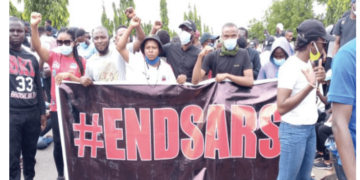
The consequences are visible and dangerous. In Northern Nigeria, where insecurity and hunger already weigh heavily, the inability of workers to meet basic needs compounds every other crisis. Families withdraw children from school, farmers abandon fields for lack of capital, and youth become more vulnerable to recruitment by bandits and criminal networks. Nationally, the gap between minimum wage and cost of living fuels governance fatigue. Workers who protested on May Day were not rejecting reform; they were demanding that reform delivers tangible relief. When economic policy improves macroeconomic indicators but leaves households in distress, public confidence erodes. The result is a dangerous cycle: hardship breeds frustration, frustration deepens distrust, and distrust weakens the cooperation needed for meaningful progress.
The debate has also exposed significant regional disparities. While some states like Imo (N104,000), Ebonyi (N90,000), Lagos and Rivers (N85,000) have moved above the federal benchmark, many others continue to implement only the N70,000 minimum. For Northern states, where living costs may appear lower than in major southern cities but inflation in food, transport and energy affects all regions equally, the disparity creates additional policy tension. The real question labour is now asking is not merely “What is the minimum government can pay?” but rather “What income allows a worker to live with dignity?”
This moment offers a genuine opportunity for renewal. The Federal and State Governments must move beyond incremental wage adjustments to a comprehensive approach that aligns minimum wage with actual living costs. First, there must be urgent and full implementation of the new wage across all states, backed by realistic timelines and penalties for non-compliance. Second, targeted social cushioning measures — such as subsidised food baskets for low-income households, expanded school feeding programmes, and transport vouchers for workers — are essential to bridge the immediate gap. Third, structural reforms to address inflation drivers, particularly in food production, security and efficient supply chains, must be prioritised. Fourth, regular, transparent reviews of the minimum wage tied to inflation indices would restore credibility to the process.
The leaders, that is to say, the government, must also demonstrate empathy and honesty. Citizens understand that Nigeria faces tough economic choices, but they deserve communication that acknowledges their pain rather than offering detached optimism. The dignity of labour demands that those who work hardest are not left behind. True economic reform must have a human face. Without it, even the best-intentioned policies will fail to command public support.
A nation that cannot guarantee its workers a living wage that matches the cost of basic existence risks losing the moral authority to govern. The minimum wage debate is ultimately about more than numbers. It is about whether Nigeria still believes in the dignity of its people and the value of honest work.
The time for half-measures is over. Government at all levels must rise to the challenge with sincerity, urgency and compassion. Only then can the broken promise of dignified work be redeemed, and only then can Nigeria begin to rebuild the trust that is essential for lasting progress and national cohesion.
We’ve got the edge. Get real-time reports, breaking scoops, and exclusive angles delivered straight to your phone. Don’t settle for stale news. Join LEADERSHIP NEWS on WhatsApp for 24/7 updates →
Join Our WhatsApp Channel