BY CHIKA IZUORA AND INNOCENT ODOH
Global oil prices surged sharply on Saturday after coordinated US-Israel airstrikes targeted key sites in Iran, pushing markets into fresh uncertainty.
Brent crude climbed seven per cent to $82.50 per barrel within hours, while West Texas Intermediate (WTI) hit $78.20 per barrel.
Traders are adding a risk premium due to fears of supply disruptions in the oil-rich Middle East.
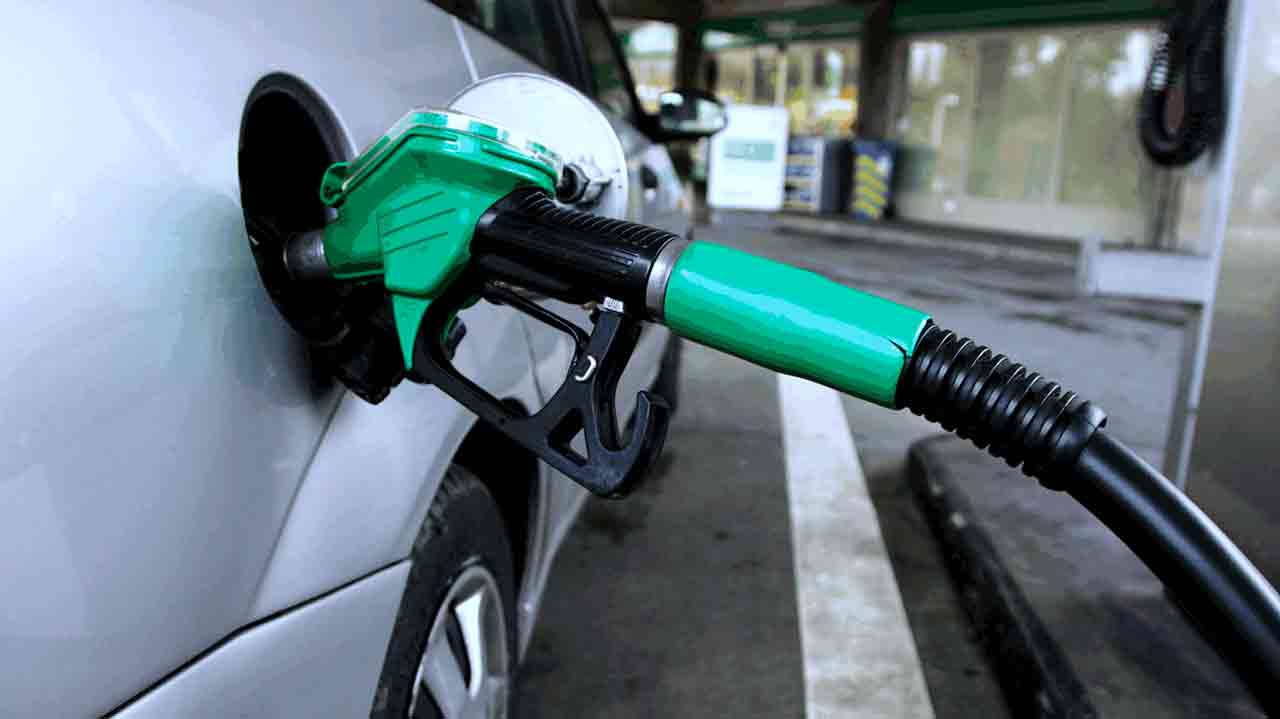
For Nigeria, this raises the chance of higher petrol prices at the pumps, though local factors may soften the blow.
The strikes hit Iranian military bases and nuclear facilities like Fordow, but no oil fields or exports have been directly affected yet.
Iran produces 3.2 million barrels per day, and tensions could threaten the Strait of Hormuz – a narrow waterway carrying 20 per cent of the world’s oil shipments.
Past events, like the 2019 Saudi Aramco attacks, show how quickly prices can spike: that incident lifted oil prices 15 per cent in a day. Analysts now warn of $90–100 per barrel if Iran retaliates strongly.
Nigeria, as Africa’s top oil producer with output around 1.4 million barrels per day last month, feels these shocks deeply.
Higher global prices boost export earnings. Projections show an additional $2 billion in revenue in early 2026 if prices hold. But they also threaten domestic fuel costs.
The chief executive officer of the Centre for the Promotion of Private Enterprise (CPPE), Dr Muda Yusuf, explained the mixed impacts.
He said, “The volatility of the market has positive and negative effects on Nigeria’s economy.
“If crude prices rise, it will positively impact the country’s revenue, foreign exchange earnings and reserve balance sheet.”
Yusuf highlighted the risks, too.
“On the other hand, energy prices would likely go up, and government expenditure on energy support policies would go up, while the private sector utilising energy would face higher costs,” he said.
He also warned of inflationary pressures should the crisis be sustained, which would negatively affect the economy.
Nigeria’s Oil Push and Fuel Market
Days ago, the Nigerian National Petroleum Company Limited (NNPCL) announced plans to export a new sweet crude grade, Cawthorne Channel, in March.
It’s similar to the country’s main Bonny Light and aims to increase output towards 1.8 million barrels per day.
This supports Nigeria’s bid for higher quotas at the next OPEC+ meeting.
Since full deregulation in mid-2025, petrol prices have tracked global crude, refining margins, and the naira’s value (now at N1,360 to the dollar).
The Dangote Refinery, which produces about 60 per cent of the country’s domestic petrol, buys crude at international prices.
Recent price jumps have already raised ex-depot petrol to N799–N970 per litre – a 14.3 per cent increase. With about 40 per cent of refined products still imported, higher oil costs would lift landing prices.
These changes spread fast. Petrol and diesel fuel buses, trucks, factories, and generators – key in areas with poor power supply.
Bus fares and food transport costs could rise rapidly, and business bills would follow. Diesel has a significant knock-on effect on the movement of goods nationwide, analysts say.
Publicity secretary of the Crude Oil Refineries-owners Association of Nigeria (CORAN), Eche Idoko, stressed that some protections are in place to insulate the domestic economy from immediate crude price volatility.
Speaking under the auspices of CORAN, he said, “In the meantime, Nigeria is largely insulated from market volatility, given that local refineries source products from the local market.
“The naira-crude arrangement will go a long way to help manage any price escalation.
“Local refineries would not have to pay freight-associated costs, and exchange rate conditions at the moment are favourable to refiners.”
Idoko added a note of caution.
“However,” he said, “unless the government decides to benchmark crude price sales to refiners on global Brent or West Texas Intermediate (WTI), then the country will begin to see an adjustment in pump prices for petrol.”
What Lies Ahead
Analysts say the key is how long the tensions will last. If Iran responds mildly and shipping lanes stay open, price peaks may be short-lived, with minimal pump changes here. Persistent conflict or supply cuts could mean petrol at N1,000+ per litre by mid-March, plus broader economic strain.
Aims of attacks
The attacks by the United States and Israel are a potential bid to change the regime in Tehran, as all diplomatic talks appear to have failed.
US President Donald Trump announced that a “major combat operation” is looming against the Ayatollah Ali Khamenei-led Islamic Republic after the first bout of attacks, which has generated condemnation as a violation of international law and an assault on the sovereign rights of Iran.
Iran has, however, unleashed retaliatory strikes against US bases in the Gulf states as the situation threatens to deteriorate in the troubled region.
The Trump administration in Washington has been ramping up pressure on Tehran to agree to a new deal on its nuclear programme, but analysts said the conditions set by the administration appear impossible to meet.
Trump’s statement on Truth Social claimed that Iran “attempted to rebuild their nuclear programme and to continue developing long-range missiles that can now threaten our very good friends and allies in Europe, our troops stationed overseas, and could soon reach the American homeland.”
He said that the US is undertaking this “massive” operation to “prevent this very wicked radical dictatorship from threatening America”.
Israeli Prime Minister Benjamin Netanyahu issued a statement saying, “My brothers and sisters, citizens of Israel, a short time ago, Israel and the United States embarked on an operation to remove the existential threat posed by the terrorist regime in Iran.
“I thank our great friend, President Donald Trump, for his historic leadership. For 47 years, the Ayatollah regime has been shouting ‘Death to Israel,’ ‘Death to America.’
“It has spilt our blood, murdered many Americans, and massacred its own people. This murderous terrorist regime must not be armed with nuclear weapons that would allow it to threaten all of humanity. Our joint action will create the conditions for the courageous Iranian people to take their destiny into their own hands,” he added.
Meanwhile, the Iranian Islamic Revolutionary Guard Corps (IRGC) on Saturday claimed that all Israeli and US military targets in the Middle East had been struck “by the powerful blows of Iranian missiles”.
Multiple Gulf states that host US assets have been targeted by Iran in retaliation for the joint US-Israeli attacks on Saturday. Iran confirmed that the region’s worst fears of being ignited in the flames of a sustained war appear to be becoming a reality.
According to the Fars news agency, countries attacked include Bahrain, Kuwait, Qatar and the United Arab Emirates, where US air bases are hosted.
“This operation will continue relentlessly until the enemy is decisively defeated,” it said.
All US assets throughout the region are considered legitimate targets for Iran’s army, it added.
At least one person has been killed in Abu Dhabi, the UAE capital, after several missiles launched from Iran were intercepted, according to the country’s state news agency.
Bahrain said a missile attack targeted the headquarters of the US Navy’s 5th Fleet, which it hosts. The government called it a “treacherous attack” and “a blatant violation of the kingdom’s sovereignty and security”.
Explosions were heard in Kuwait, home to the US military’s Central Command headquarters, while in Qatar, the Defence Ministry said the country “thwarted” several attacks.
“The Ministry of Defence confirms that the threat was dealt with immediately upon detection, in accordance with the pre-approved security plan, and that all missiles were intercepted before reaching Qatari territory,” it said.Other countries attacked by Iran are Bahrain, Kuwait, Saudi Arabia and Iraq.
Casualty figures are beginning to mount, as Iran reported that about 53 people have been killed in an Israeli strike at a girls’ school in southern Iran.
Iran’s Foreign Minister Abbas Araghchi reportedly shared a photo of the attack, which he said destroyed the girls’ school and killed “innocent children”.
“These crimes against the Iranian people will not go unanswered,” Araghchi wrote in a post on X.
Iran’s Foreign Ministry spokesperson Esmaeil Baghaei also slammed the “blatant crime” and urged action from the United Nations Security Council.
At the time of filing this report, the US and Israel have not reacted to the reported news of an attack on the girls’ school in Iran.
Experts warn…
Nigerian experts in international relations have reacted to the ongoing military campaign against Iran, warning that although Nigeria may benefit from oil sales, there are far-reaching consequences that could negatively affect the nation.
Former Permanent Secretary of the Ministry of Foreign Affairs, Ambassador Bulus Lolo, told LEADERSHIP Sunday that the joint US-Israeli strikes against Iran came in the backdrop of the rejection by President Trump and his acolyte, Prime Minister Netanyahu, of the painstakingly negotiated nuclear agreement reached by President Obama with Iran in 2015.
He said that during his campaign for his first term in office in 2016, Trump promised to get a better deal than President Obama did. It turned out that during his entire first term, he could not secure a deal with Iran, thereby suffering a humiliating diplomatic blow. Now, in his second term, he is aware that time is already running.
Lolo said, “Add to this the fact that come November, there will be a referendum of sorts on Trump’s second term by way of the mid-term elections in the US. Given the outcomes of past midterm elections, most presidents and their parties have been trounced. If the few off-season elections that have taken place in some states in the US are anything to go by, then one need not be a soothsayer to see that there are pointers to a disastrous November for Trump’s presidency.”
He said further that it is clear the pre-emptive strikes against Iran are intended to serve both domestic political and personal purposes, adding that this is taking place in the absence of a global leader who commands genuine respect.
“Sadly, the world is in flux, desperately needing and crying out for mature and compassionate leadership and direction.
“America is setting the wrong example for the use and application of power. Before long, we will see hegemonic powers in different parts of the world moving into countries with less power under one pretext or another.
”We have once again entered an era in which success in negotiation will not depend on the power of persuasion, but on the weight and capacity of a country’s military might.
“This is the new reality, and perhaps the immediate and long-term implications of the pre-emptive strikes against Iran.”
With regard to the implications of the strikes for Africa, the former Nigerian Ambassador to Ethiopia said energy costs, especially crude oil, will spike, stressing that trade will be affected.
Also reacting, former Nigerian High Commissioner to Singapore, Ambassador Ogbole Ode, said there has been a long-running animosity involving the Islamic Republic of Iran, beginning with the Iranian Revolution of 1979, which broke into open kinetic exchange in the 12-day war of last year.
He said the conflict has deeper implications for the global power equation, which is inexorably changing, with new power centres emerging, especially in the eastern hemisphere.
“Consequently, the imperative to control critical mineral resources is becoming more important. And I argue that, though alternative sources of power and energy are gaining ground, crude oil remains important for power generation and use.
“Given that Iran sits on significant crude oil deposits and is still outside the US zone of influence since 1979, there is desperation to rein in the country away from the emerging eastern powers.
“Recall that with the kidnapping of Maduro of Venezuela, the Americans have yanked that country’s huge crude deposits from the Chinese. Recall also that they did the same to the Russians after the fall of Saddam Hussein. Therefore, it is a fight for who dominates the world’s hydrocarbon deposits.”
He said that for oil-producing African countries like Nigeria, there will be a spike in oil revenue due to the hostilities.
He, however, warned that, given the Middle East’s centrality in world affairs, the kinetic exchange is bound to rebound globally, including in Africa.
International affairs analyst, Dr Austin Maho, warned that the war will have far-reaching consequences on the global scene, which no one can yet anticipate.
He said, “The conflict risks escalating into a broader regional war, involving countries like Lebanon, Syria, Iraq and Yemen, and potentially drawing in other global powers like Russia and China. However, one thing is certain: by the time the dust settles, the region will never be the same.”
He added that while the war rages, there would be global economic disruption, including disruption of oil flows through the Strait of Hormuz, a critical global energy chokepoint under Iranian control. The consequences would be dangerous and could lead to soaring energy prices and worldwide inflationary shocks, he warned.
He condemned the US and Israel for undermining the rules-based global order under the United Nations, stressing that the use of military force by the US and Israel to undermine the sovereignty of Iran is setting a dangerous precedent for future conflicts.
“The conflict may strain relationships between the US, Israel and other countries, particularly those sympathetic to Iran.
“Currently, the situation is fluid and complex, and outcomes are uncertain. The US and Israel may have walked, eyes wide open, into a quagmire; the war is not one that is winnable, by my estimation. Iran may not have the military capabilities of both Israel and the US, but Iran is not a pushover by any estimate,” he noted.
As for Nigeria, the expert said the impact would be both economic and religious. “At the economic level, expect a spike in oil prices, which could boost the 2026 budget. However, considering that oil windfalls have been more of a curse than a blessing, the outcome depends on our political leadership.
“At the religious level, past events show that developments in the Middle East can evoke strong emotions among certain religious groups in the country. The government must pay attention to this to prevent any spillover effects from religious zealots who prioritise their religious beliefs over the Nigerian constitution and government,” he added.
Director of the Centre for China Studies, Charles Onunaiju, said the war against Iran was a “dangerous state of affairs” and blamed the US President and Israeli Prime Minister Benjamin Netanyahu for “reckless and dangerous power politics to promote a hegemonic agenda”, thereby violating international law.
He added that the US was acting based on the “historic grudge” of the perceived humiliation of the US when the Islamic Revolution of 1979 replaced the American-backed Shah of Iran.
He added that the attempt at regime change in Iran will fail, stressing that “Iran will not go down without the region going down, even if the Ayatollah regime were eliminated.
“Regime change is a vain and idle dream,” he said, adding that the Iranian people will not allow the country to fall into the hands of the Americans.
He also called on Nigerian leaders to be ready for the unforeseen consequences of the conflict and to build a resilient economy through domestic investment and focused leadership to withstand the shocks that might be triggered by it.
An international affairs analyst and security expert, Professor Mukthar Imam, said the United States is acting with impunity against the international rules-based order that speaks to respect for sovereign states.
“The US is acting arbitrarily, and this will have implications for Africa on several fronts. We don’t know what the regime change is all about or who falls into the category of being removed. It could be anybody, especially emerging economies like those in Africa.
“One act of violence in one part of the world could be replicated in other parts. Yesterday it was Venezuela, and today it is Iran, and nobody knows who is next. I think the international community should speak out against this act of aggression.
“The diplomatic channels have not been exhausted, and the US started its aggression unprovoked and unnecessarily against the Iranian people and their sovereignty,” he added.
We’ve got the edge. Get real-time reports, breaking scoops, and exclusive angles delivered straight to your phone. Don’t settle for stale news. Join LEADERSHIP NEWS on WhatsApp for 24/7 updates →
Join Our WhatsApp Channel