
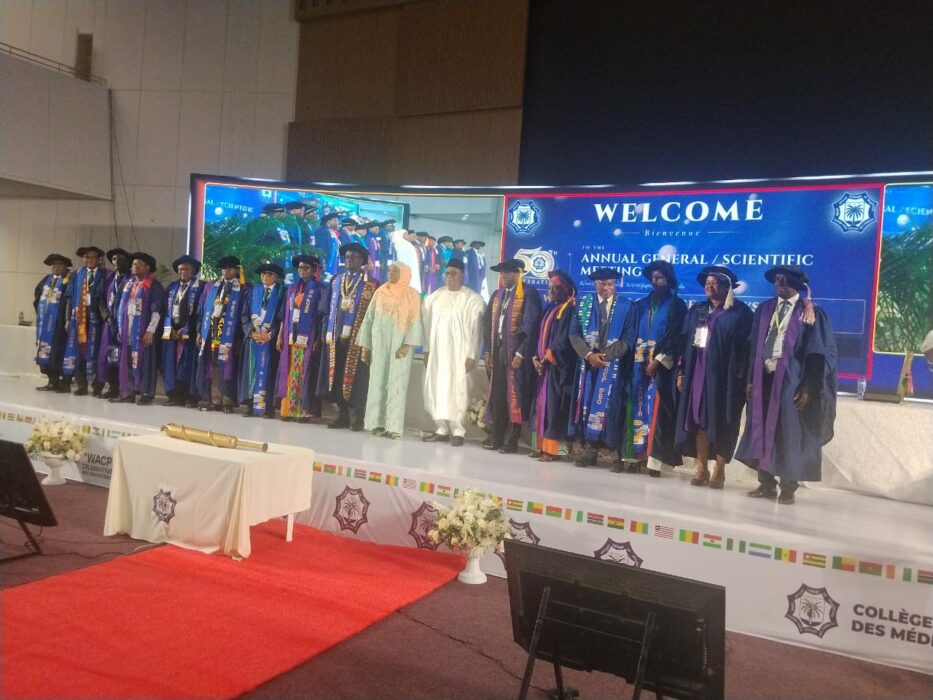
Physicians across West Africa have called for improved welfare, better working conditions and stronger investment in specialist medical training to address the growing challenge of healthcare professionals’ migration and strengthen healthcare delivery in the sub-region.
They also urged governments and professional institutions to deepen collaboration in medical education, research and workforce development to address shared health challenges, including infectious diseases, non-communicable diseases and inequalities in access to quality healthcare.
The physicians made the call at the 50th anniversary celebration of the West African College of Physicians (WACP), held on Monday, where medical professionals and representatives of postgraduate medical institutions highlighted the need to sustain specialist training and create an enabling environment for healthcare workers.
Speaking at the event, the Secretary-General of the West African College of Surgeons, Prof. Fred Ugwumba, identified specialist migration, rising training costs, inadequate infrastructure and increasing demands on medical trainers as major challenges confronting postgraduate medical education in West Africa.
He called for stronger collaboration between the two colleges in training, research, curriculum development and professional leadership.
Ugwumba also stressed the need to address burnout among healthcare professionals through reasonable working hours, counselling, peer support and mentorship.
“Well-being alone will not keep specialists at home, definitely not,” he said.
He urged professional bodies to jointly advocate incentives that would encourage healthcare workers to remain in their countries, including safe and well-equipped workplaces, housing and family support, funded professional development and clearer career paths.
According to him, addressing these challenges requires sustained cooperation and a stronger collective voice among medical institutions across the region.
He said joint educational programmes, collaborative research and the sharing of experiences in examinations, curriculum reviews and accreditation could strengthen specialist training and improve patient care.
Earlier, the President of the WACP, Dr. Mamadou Mourtalla Ka, said the college had trained and certified thousands of specialist physicians who had contributed to clinical practice, medical education, scientific research and health leadership across West Africa.
Ka, said the anniversary provided an opportunity to reflect on its achievements since its establishment in 1976 and consider its responsibilities in addressing emerging healthcare challenges.
He identified infectious diseases, non-communicable diseases, inequalities in access to quality healthcare and increasing pressure on health systems as major challenges facing the sub-region.
The WACP president called for stronger postgraduate medical education, relevant scientific research and greater collaboration among the college’s national chapters.
He also urged the institution to support younger fellows and trainees with the knowledge, skills and professional values required to respond to emerging health challenges.
Meanwhile, the President of the National Postgraduate Medical College of Nigeria, Prof. Anthony Nnaemeka Ikefuna, called for the adoption of digital learning, simulation-based training and telemedicine, as well as the responsible use of artificial intelligence in medical education and healthcare delivery.
Ikefuna said medical institutions must strengthen collaborative research and ensure that scientific evidence translated into improved clinical practice and health policy.
He added that partnerships between postgraduate medical institutions could expand opportunities for faculty development, research, quality assurance and the sharing of best practices in training and assessment.
We’ve got the edge. Get real-time reports, breaking scoops, and exclusive angles delivered straight to your phone. Don’t settle for stale news. Join LEADERSHIP NEWS on WhatsApp for 24/7 updates →
Join Our WhatsApp Channel