The fiscal burden on federal government from consistent but unfruitful rehabilitation of refining facilities by the Nigerian National Petroleum Company Limited (NNPCL) would be drastically eliminated with the privatisation of those assets.
The Petroleum Products Retail Outlets Owners Association of Nigeria (PETROAN) which made the observation strongly advocated for the privatisation of Nigeria’s four state-owned refineries, while also urging the federal government to transparently conclude the process by the first quarter of 2026.
The association said, the timely privatisation of the refineries operated by the Nigerian National Petroleum Company Limited would eliminate the recurring fiscal burden on the government, improve operational efficiency, attract private capital and technical expertise, and align Nigeria’s refining sector with global best practices.
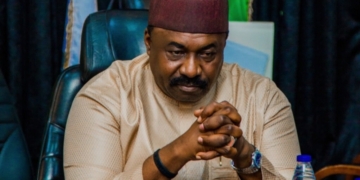
PETROAN national president, Billy Gillis-Harry, said sustained public funding of the refineries has failed to deliver optimal results over the years, making private sector-led management inevitable if the country is to achieve energy security and stability in the downstream petroleum sector.
Gillis-Harry stressed that, privatisation, if properly executed, would encourage competition, ensure sustainable refinery operations, reduce Nigeria’s dependence on imported petroleum products, conserve foreign exchange, and support job creation across the value chain.
PETROAN also linked refinery reform to broader sectoral growth, noting that increased domestic refining capacity would complement ongoing investments in upstream production and strengthen the country’s overall energy outlook.
“PETROAN renewed its call for the privatisation of Nigeria’s four state-owned refineries, advocating that the process be transparently concluded by the first quarter of 2026,” he added.
The association expressed confidence that the 2026 Budget, which is based on a crude oil production target of 1.84 million barrels per day and an oil price benchmark of $64–65 per barrel, provides a strong framework for implementing key reforms, including refinery privatisation.
It maintained that, decisive action on refineries, alongside improved security for oil and gas infrastructure, effective host community engagement under the Petroleum Industry Act, and adequately funded regulators, would significantly enhance investor confidence and sector performance.
PETROAN further argued that, the successful privatisation of the refineries would free government resources for critical areas such as security and infrastructure, while allowing the private sector to drive efficiency and innovation in refining and petrochemical development.
It concluded that refinery privatisation remains central to achieving a stable downstream sector and maximising the benefits of Nigeria’s oil and gas resources under the 2026 budget framework.
On its part, the Manufacturers Association of Nigeria (MAN) said, the refineries were a drain on the country’s economy, calling on the federal government to sell them off.
The federal government has previously expended resources on the Port Harcourt, Warri, and Kaduna refineries, which became moribund many years ago.
It was also reported that $1.4bn was approved for the rehabilitation of the Port Harcourt refinery in 2021, $897m was earmarked for Warri, and $586m for the Kaduna refinery.
In addition, N100 billion was reportedly spent on refinery rehabilitation in 2021, with N8.33 billion monthly expenditure. A total of $396.33m was allegedly spent on turnaround maintenance between 2013 and 2017.
However, the new GCEO of NNPC, Bayo Ojulari, rejected calls for the sale of the refineries, expressing confidence that the three plants would be revamped.
Ojulari recently said, the company was assessing the operational and commercial viability of its three refineries to determine whether to overhaul or repurpose them for enhanced efficiency and profitability.
In November, the Nigeria Midstream and Downstream Petroleum Regulatory Authority said, the NNPC imported a significant quantity of petrol which marketers said this was largely due to the dormancy of the government refineries.
We’ve got the edge. Get real-time reports, breaking scoops, and exclusive angles delivered straight to your phone. Don’t settle for stale news. Join LEADERSHIP NEWS on WhatsApp for 24/7 updates →
Join Our WhatsApp Channel