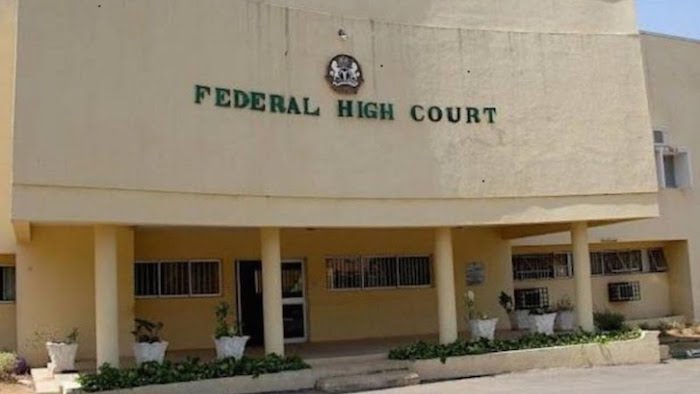
Justice Gladys Olotu of the Federal High Court in Abuja has ordered President Bola Tinubu to make public the Niger Delta Development Commission (NDDC) forensic audit report, which was submitted to the federal government on September 2, 2021.
Justice Olotu also ordered the president to direct the Attorney General of the Federation and Minister of Justice, Lateef Fagbemi (SAN), to disclose the names of individuals implicated in the alleged misappropriation of over N6 trillion budgeted for 13,777 abandoned projects and for managing the NDDC from 2000 to 2019.
The judge delivered the judgment in a Freedom of Information suit (number: FHC/ABJ/CS/1360/2021) filed by the Socio-Economic Rights and Accountability Project (SERAP).
The court also held that the forensic audit report of the Niger Delta Development Commission (NDDC), along with the names of those indicted, clearly qualify as ‘public records’ under Section 31 of the Freedom of Information Act.
She also noted that the NDDC forensic audit report and the list of indicted persons are not exempt under Sections 11-19, since the information pertains to the management and use of public funds.
Justice Olotu maintained that the refusal by the president and the Attorney General to publish the report or address the allegations, despite a formal demand by SERAP, breaches their statutory duties under the Freedom of Information Act, Section 15(5) of the Nigerian Constitution 1999 (as amended), and Nigeria’s international commitments to transparency and accountability.
The judge further held that section 2(3) of the Freedom of Information Act requires all public institutions to publish specific categories of information, including financial details and expenditure records.
She held, “Applying these principles, the Freedom of Information Act imposes on the president a clear, non-discretionary duty to make the NDDC forensic audit report available to the public and publish the names of those indicted in the report.
“It is trite law that for an order of mandamus to issue, SERAP must establish (a) a clear legal right to the performance of a duty, (b) a corresponding duty on the president and the Attorney General to perform that duty, (c) a demand for the performance of the duty, and (d) a refusal or neglect to perform same.
“Every person has the right to access information in the custody of any public official or institution, and such institution is under a statutory duty to grant access, except where the information falls within the limited exemptions set out under Sections 11-19 of the Act.
“SERAP deputy director Kolawole Oluwadare said: “This ground-breaking judgment is a victory for transparency and accountability in the spending of public funds,” the judge held.
In his reaction to the judgment, human rights lawyer, Femi Falana (SAN) said that SERAP deserves the commendation of all well-meaning people who have agonised over reports of systemic corruption in Nigeria.
Falana also stated that the suit is one of the most patriotic public interest litigation ever undertaken in Nigeria.
He said, “I welcome this landmark judgment, which has upheld the public’s right to know exactly what happened to the N6 trillion oil money documented in the NDDC forensic audit report.
“The Tinubu administration must now demonstrate real commitment to transparency and accountability by immediately publishing the NDDC forensic audit report and the names of those indicted, as ordered by the court. Those suspected to be responsible should be brought to justice and the proceeds of corruption fully recovered.”