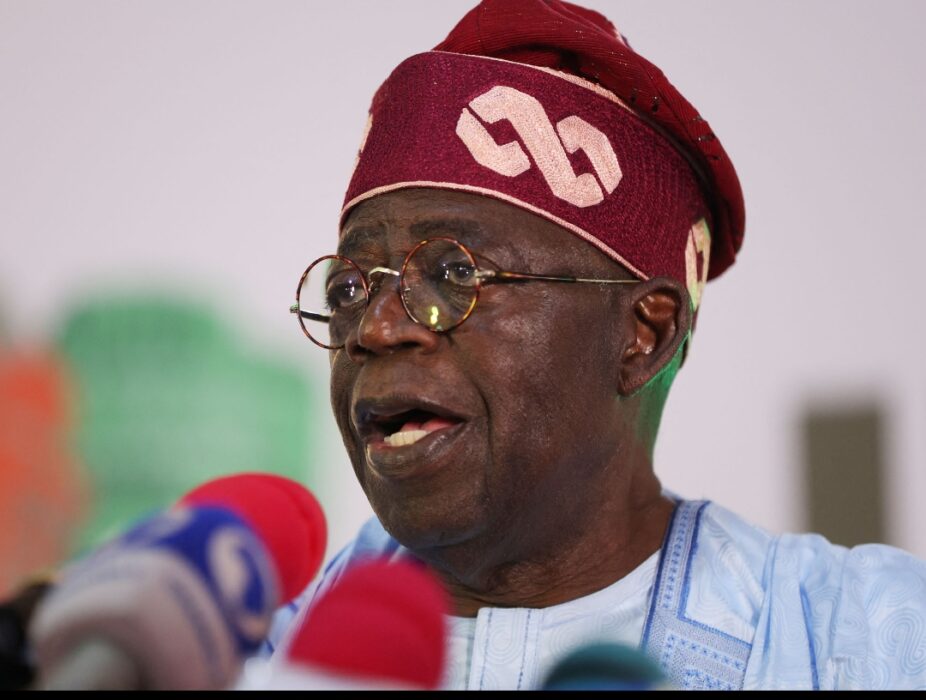
President Bola Tinubu said something last week that should have made headlines for days, not hours. Kidnappers who abducted victims in Oyo State didn’t just want money; they wanted the Federal Government to release their fellow gang members already in detention. The Presidency said no. Not a soft no, not a negotiated no, a flat no.
Mind you, this is not a small thing in a country where ransom has quietly become a parallel economy. For years, families of victims have had to raise millions of naira in the dark, without government help, and sometimes with the government looking the other way. So when the President stood before traditional rulers from Oyo State at the State House on Thursday and said his administration refused to trade money and freed criminals for a hostage’s life, I paid attention. This is the kind of decision that separates a serious government from a helpless one.
To be sure, I know the argument on the other side, and it deserves a hearing. Families of kidnap victims, understandably, want their loved ones back by whatever means necessary. A government that refuses to pay ransom is, in the eyes of a grieving family, a government that is choosing principle over their relative’s life. That is a painful, human argument and no columnist should wave it away with a slogan. But here is the uncomfortable truth: every ransom paid is a down payment on the next kidnapping. Every gang member released to save one victim is a gang member freed to take ten more. Nigeria has tried the soft route before, quietly, informally, and the result has been an industry of abduction that now stretches from Zamfara to Anambra to Oyo.
We have seen how the informal route plays out over the years. State governments, communities, even church and mosque congregations have quietly raised ransom for kidnapped victims, sometimes running into tens of millions of naira for a single release. Each of those payments, however understandable in the moment, taught the criminal economy a lesson: kidnapping pays, and it pays well. A President who breaks that cycle, even at real political cost, is doing something previous administrations lacked the nerve to sustain.
Oba Rashidi Adewolu Ladoja, the Olubadan of Ibadanland, made a point I found instructive. He said the refusal to pay the ransom had become a turning point, not just for Oyo State but also for how Nigerians now read this government’s spine. When a monarch of his standing tells you that residents feared a prolonged crisis but got reassurance instead, that is worth more than any press statement from Abuja. Our people don’t need long speeches; they need to see that the state can still act like a state.
Now, let’s talk about the numbers, because policy without capacity is just applause lines. Tinubu says the military is expanding from eight to twelve divisions. That is a fifty per cent jump in the country’s basic military architecture, aimed squarely at cutting response time in a country where the difference between life and death for a kidnapped victim is often measured in hours, not days. If truly implemented and not just announced, this could be one of the more consequential security decisions of this administration.
The military has been stretched dangerously thin, fighting insurgents in the North East, bandits in the North West, and now armed gangs creeping into the South West and South South. You cannot police a country the size of Nigeria, with its 923,000 square kilometres of land, its porous borders and its ungoverned forest belts, with a security architecture designed for a smaller, calmer nation of decades past. Each additional division, properly equipped and manned, theoretically shrinks the distance and the time between a distress call and a military response. In a kidnapping, that shrinking window is often the entire difference between rescue and tragedy.
I also welcome the renewed talk of state police, though I will repeat what I have consistently argued on this page: state police must come with guardrails, or we will simply be handing state governors a private army to intimidate opponents ahead of elections. Tinubu himself acknowledged this, saying the state police project will come with protections against abuse. Good. That assurance needs to be more than words. It needs a legal framework, an independent oversight mechanism, and clear boundaries on what a governor can and cannot order his state police to do.
Get the guardrails wrong, and the state police becomes a tool of oppression rather than protection. Get it right, and it becomes the missing link between Abuja’s overstretched forces and communities that know their own terrain and their own criminals. The National Assembly has a real role to play here, and it must resist the temptation to rush a bill through simply because the political mood favours it. Guardrails written in haste are guardrails easily ignored later.
The point about forest guards deserves more attention than it has received. For years, our forest reserves, ungoverned, unmapped and largely abandoned, have served as a sanctuary for bandits and kidnap gangs. Tinubu’s directive that forest guards should now chase criminals, not just antelopes, is a small sentence that carries a large idea: Nigeria’s ungoverned spaces have to be reclaimed, physically, not just rhetorically. This is not a silver bullet.
Nigeria’s forests span thousands of square kilometres, and a handful of retrained guards will not, on their own, dislodge entrenched criminal camps. But it is a start, and a start is more than what we had before.
Here is where I want to be fair without being uncritical. Announcing twelve divisions is easy. Funding, training, equipping, and deploying them is the hard part that Nigerians have heard promised before, but not always delivered. The same goes for state police and forest guards.
The Olubadan also raised something the government must not ignore: his caution that security forces should not abandon the forest corridor stretching from Oyo through Kwara into Niger State once this particular crisis fades from headlines. This is the historical pattern in Nigeria’s security response: a burst of activity after an attack, followed by quiet withdrawal once public attention moves on, followed inevitably by regrouped criminals striking again. If this administration wants the no-ransom policy to hold in the long run, it must pair it with a sustained, not seasonal, presence in these corridors.
I will also give credit where it belongs. The infrastructure conversation Oba Ladoja raised, about the scale of federal road projects running into Oyo State, matters more to security than people often realise. Bad roads and disconnected communities are exactly the terrain where bandits thrive, hiding in the gaps between the state’s presence and criminal territory. Connecting these areas with roads is, in its own quiet way, a security investment as much as an economic one.
The bigger lesson from this episode is that Nigeria’s kidnapping crisis will not be solved by ransom or by rhetoric, but by consistent state capacity, applied over years, not news cycles. Tinubu’s refusal to negotiate is the right instinct. Whether it becomes policy or just a good quote from a good week depends entirely on what happens in the silence after the cameras leave.
Nigerians are tired of governments that only show strength when the microphones are on. If the twelve divisions materialise, if the state police framework gets real guardrails, and if the forest guards actually reclaim territory rather than patrol on paper, this administration will have done something previous governments only talked about. That is the standard I will hold it to, and that is the standard Nigerians should hold it to as well.
We’ve got the edge. Get real-time reports, breaking scoops, and exclusive angles delivered straight to your phone. Don’t settle for stale news. Join LEADERSHIP NEWS on WhatsApp for 24/7 updates →
Join Our WhatsApp Channel