| Bank says business activity stable despite effect of Iran war
Nigeria’s economy is projected to remain resilient in the face of mounting global uncertainties, with the World Bank forecasting a 4.2 per cent growth rate in 2026.
However, the institution has warned that rising fuel costs and persistent inflation — exacerbated by geopolitical tensions in the Middle East — could undermine household incomes and slow poverty reduction.
Speaking in Abuja, the bank’s lead economist for Nigeria, Fiseha Haile, noted that while the ongoing U.S./Israel-Iran conflict has pushed up prices, overall economic activity has remained largely intact.
According to him, business activity has continued to expand in recent months, indicating that the broader impact on growth has been “relatively contained,” even as inflationary pressures intensify.
Nigeria’s inflation rate, though significantly reduced from around 33 per cent in December 2024 to 15.06 per cent in February 2026, remains elevated compared to regional peers.
The renewed surge in fuel prices — reportedly rising by over 50 percent during the Iran conflict — has fed into transportation, food, and production costs, amplifying the cost-of-living crisis.
The World Bank urged Nigerian authorities to adopt prudent macroeconomic measures, including tightening monetary policy, avoiding blanket subsidies, and saving windfalls from higher oil prices to strengthen fiscal buffers.
It also recommended reconsidering restrictions on fuel imports as a potential tool to ease inflationary pressures.
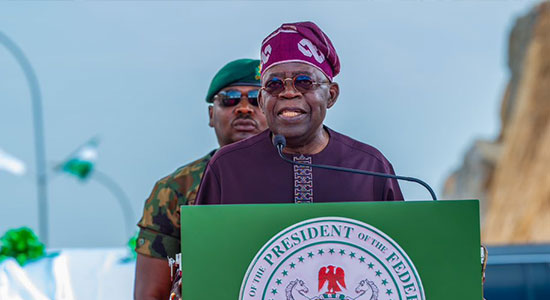
The economic reforms under President Bola Tinubu — including the removal of fuel subsidies, exchange rate unification, and tax restructuring — were acknowledged as ambitious steps aimed at stabilising the economy.
These reforms have contributed to improved external buffers, with rising foreign exchange reserves and reduced volatility.
Additionally, Nigeria’s fiscal deficit stood at 3.1 per cent of GDP in 2025, while the debt-to-GDP ratio declined for the first time in a decade.
Yet, the World Bank cautioned that tighter global financial conditions could still pose risks to capital inflows, borrowing costs, and remittances.
Experts Push Back on World Bank Prescriptions
Despite the cautiously optimistic outlook, Nigerian economic experts have expressed strong reservations about the World Bank’s recommendations, particularly its advocacy for free trade and fuel import liberalisation.
A development economist and consultant to ECOWAS, Professor Ken Ife, criticised the World Bank’s policy stance as overly aligned with Western economic interests.
According to him, the push for free trade often disadvantages developing economies by encouraging import dependence rather than domestic production.
“Countries like China and Kazakhstan prioritise protecting their domestic economies,” Ife argued, noting that China imports crude oil but restricts exports of refined products to safeguard local industries.
He drew parallels with the COVID-19 pandemic, when countries such as India curtailed pharmaceutical exports despite relying on imported raw materials.
Similarly critical of the World Bank’s position, economic analyst Okey Inuegbu dismissed the institution’s forecasts and policy advice, arguing that they have historically failed to benefit developing economies.
“The government should not rely on the World Bank’s recommendations,” he said, urging policymakers to prioritise domestic production as the cornerstone of economic recovery.
Ife, however, acknowledged the validity of the World Bank’s concerns regarding inflation.
He agreed that the sharp rise in fuel prices inevitably triggers higher transportation and food costs, compounding inflationary pressures already influenced by seasonal and security-related factors.
On fiscal policy, the development economist strongly supported the call to save oil windfalls but criticised the government’s spending patterns.
He argued that Nigeria should channel excess oil revenues into strategic reserves, foreign exchange buffers, and the sovereign wealth fund to create long-term economic stability.
“Conventional wisdom dictates that some of this revenue should go into reserves and debt reduction to create fiscal space,” Ife said.
He also warned against excessive public spending following the recent expansion of the national budget to N68 trillion.
He advocated the establishment of strategic crude reserves in oil-producing states such as Bayelsa, Rivers, and Ondo, which could support local refineries and stabilise supply.
In a more controversial stance, Ife called for restructuring the Nigerian National Petroleum Company Limited (NNPCL), urging it to exit midstream and downstream operations.
“They should focus on upstream activities and divest from refineries,” he said, blaming inefficiencies in the sector for Nigeria’s continued reliance on fuel imports.
Ife also rejected the World Bank’s recommendation to liberalise fuel imports, describing it as inconsistent with Nigeria’s Petroleum Industry Act (PIA), which prioritises domestic refining. He argued that expanding imports would undermine local refining capacity and perpetuate economic vulnerabilities.
On his part, Inuegbu emphasised that addressing insecurity—particularly in key agricultural regions such as Benue State—could yield immediate economic benefits by enabling farmers to return to their fields.
He described this as a short-term solution with rapid impact, given Nigeria’s seasonal farming cycles.
“If security is restored, production will rise almost immediately,” he noted, adding that increased agricultural output would reduce dependence on imports and ease inflationary pressures.
He also advocated for labour-intensive public works programmes to tackle unemployment, suggesting that the government could engage citizens in infrastructure maintenance while paying minimum wages.
On fuel policy, Inuegbu aligned with Ife in opposing import liberalisation.
He argued that increased imports would drive prices higher due to foreign exchange costs, whereas supplying crude oil to domestic refiners in naira could stabilise prices.
He pointed to challenges faced by local refineries, including those operated by the Dangote Group, which have had to rely on imported crude due to supply constraints. According to him, strengthening domestic supply chains and building fuel reserves would be more effective than opening up imports.
The divergence between the World Bank’s recommendations and local expert opinions underscores a broader debate about Nigeria’s economic direction. While international institutions emphasise market-driven reforms and fiscal discipline, domestic analysts are calling for a more protectionist, production-focused approach tailored to Nigeria’s unique challenges.
Both sides, however, agree on key risks: inflation remains a significant threat, fuel price shocks continue to ripple through the economy, and without careful policy calibration, gains in growth could be undermined by declining living standards.
We’ve got the edge. Get real-time reports, breaking scoops, and exclusive angles delivered straight to your phone. Don’t settle for stale news. Join LEADERSHIP NEWS on WhatsApp for 24/7 updates →
Join Our WhatsApp Channel