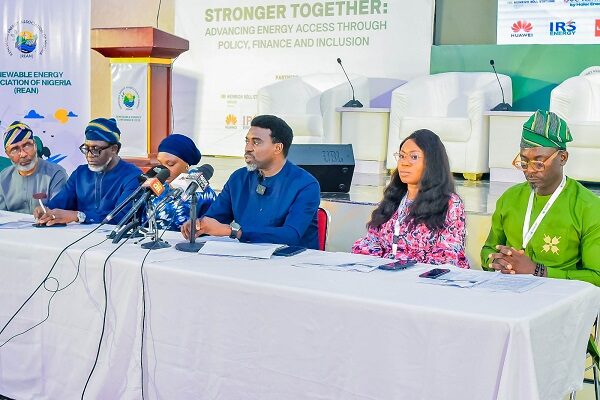
The Renewable Energy Association of Nigeria (REAN) has raised concern over Nigeria’s persistent energy deficit, revealing that no fewer than 85 million citizens still lack access to electricity. The association said it has concluded plans to power 2,000 Small and Medium Enterprises (SMEs) with renewable energy solutions within the next two years.
Speaking in Abuja on Wednesday at day two of the 2025 Renewable Energy Conference themed “Stronger Together: Advancing Energy Access Through Policy, Finance, and Inclusion,” REAN President, Ayo Ademilua, said the engagement aims to alert the government and stakeholders on the urgent need to accelerate the country’s energy transition.
Ademilua explained that the initiative, in partnership with the Small and Medium Enterprises Development Agency of Nigeria (SMEDAN), is designed to tackle the energy burden faced by SMEs — a challenge he described as a key driver of business failure and reduced productivity.
According to him, a recent REAN survey of 1,026 MSMEs in Lagos and Abuja showed that over 90 percent of women-led enterprises suffered negative impacts from the 2023 fuel subsidy removal. He added that SMEs contribute about 48 per cent to the nation’s Gross Domestic Product (GDP), underscoring the necessity of alternative clean energy solutions.
“Nigeria is at a critical point in its energy development. With over 85 million citizens still without reliable electricity, the call for sustainable, affordable and scalable energy solutions has become more urgent than ever,” Ademilua said.
He noted that the 2025 conference convenes policymakers, financiers, developers, manufacturers, academics and energy users to drive meaningful dialogue and action on financing, policy reforms and inclusion across the renewable energy value chain.
Ademilua also announced REAN’s partnership with Heinrich Böll Stiftung (HBS), which led to the development of a policy brief proposing single-digit naira-based concessionary loans and long-term local currency financing to boost renewable energy deployment nationwide, especially for women-led businesses.
On sector advocacy, the REAN president said the association is pushing for mini-grid viability through supportive tariff structures and business models, adding that long-term sustainability cannot be achieved without well-prepared technical talent and strong local content.
He further disclosed that REAN is leading stakeholder engagements on the proposed solar importation ban, arguing that the policy must support — not restrict — industry growth, reduce import dependency, attract investment and empower local manufacturers.
Under its SME renewable rollout plan, REAN will deploy clean energy solutions across SMEDAN’s Common Facility Centres to power 1,000 enterprises in the first phase.
Ademilua also highlighted the association’s “REAN Safe Solar Campaign,” which supports technical competence, sector standards and consumer protection.
This year’s conference features keynote addresses, policy dialogues, technical workshops and exhibitions showcasing innovations in electric mobility, mini-grid deployment, financing frameworks and inclusive energy access.
Speaking earlier, Chairman/CEO of IRS Green Energy Limited, Alhaji Rabiu Isyaku Rabiu, announced that the company has delivered electric motorcycles to the Nigeria Police Force to aid security operations, and to the Federal Road Safety Commission (FRSC) to reduce road accidents. He added that the firm has also rolled out public-oriented electric motorcycles and solar-powered tricycles in response to fuel subsidy challenges.
The President of the Electric Mobility Promoters Association of Nigeria (EMPAN), Engr. Dapo Adesina, urged Nigerians to embrace electric mobility, insisting that operating electric vehicles remains significantly cheaper than petrol-powered alternatives.
We’ve got the edge. Get real-time reports, breaking scoops, and exclusive angles delivered straight to your phone. Don’t settle for stale news. Join LEADERSHIP NEWS on WhatsApp for 24/7 updates →
Join Our WhatsApp Channel