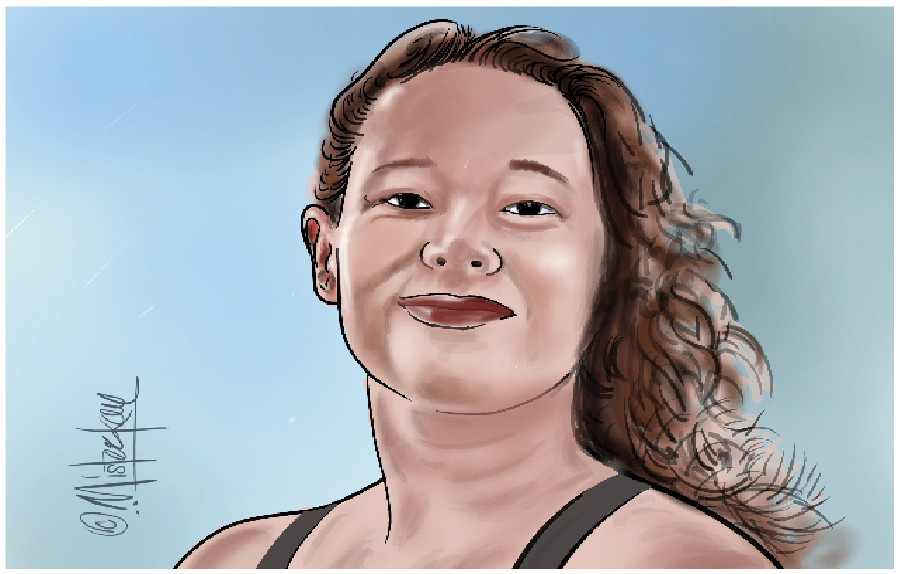
The killing of Renee Good on January 7 in Minneapolis by a U.S. Immigration and Customs Enforcement agent is a tragedy that echoes far beyond the United States. Good, a 37-year-old mother, poet, and queer woman, was observing an ICE operation in her neighbourhood when she was shot as she attempted to drive away. Video footage of the incident shows the agent firing multiple shots into her vehicle, even as she sought to comply with the authorities’ instructions. The images are horrifying, yet they are also instructive. They reveal the enduring patterns of state power, the fragility of individual rights, and the unsettling logic of institutional violence. For those of us observing from Nigeria, her death prompts reflection on our own struggles with authority, enforcement, and accountability.
Renee Good’s killing forces us to confront a familiar illusion, that some people are inherently “protected” from state violence. In the United States, public discussion focused heavily on her characteristics: she was white, a mother, and, crucially, observed the law at the moment of her death. Many commentators treated these attributes as exceptional, framing her as a “perfect victim.” Scholars such as Mariame Kaba and Ruth Wilson Gilmore warn that this framing obscures the systemic nature of state violence. Innocence should never be a precondition for safety; the right to life is universal. In Nigeria, similar dynamics usually play out when security operatives act with impunity. Consider the case of a middle-class trader in Ibadan who refuses to pay an arbitrary local tax or defy a sudden security directive; intimidation, harassment, or even violence may follow. Compliance, social status, or perceived innocence rarely shields citizens from unchecked authority.
The Logic of Lethal Force
The circumstances of Good’s killing illuminate the operational norms within which agencies like ICE function. Federal law enforcement officers are frequently authorized to use lethal force if they perceive an imminent threat. In Good’s case, however, video evidence contradicts official claims. She was attempting to leave, not accelerate toward the officer. Historian Robin D. G. Kelley notes that such shootings are not anomalies; officers often invoke fear for their life as justification. The reasoning is consistent: lethal force is excused whenever the state deems it necessary, regardless of proportionality or context. In Nigeria, public shootings by law enforcement are rarer, but the same logic manifests in other forms: arbitrary arrests, selective enforcement, and intimidation. In both contexts, institutional self-preservation often trumps individual rights.
This is not only a procedural failure; it is a moral one. Killing someone who poses no clear threat is a rupture in the social contract. Philosophers from Hobbes to Locke debated the tension between authority and citizen rights. Renee Good was shot as she attempted to withdraw from a tense encounter with federal agents, and the circumstances surrounding her death raise urgent questions about when and how state power is exercised. The lesson is universal: no one is automatically shielded from the lethal exercise of state authority.
Institutional Structures and Accountability
ICE is often depicted as exceptional, distinct from local police; yet its methods reveal a continuum of coercion. Federal agents operate with broad legal protection, rarely face accountability, and enjoy institutional cover. In Minneapolis, judicial interventions have temporarily limited some of ICE’s authority; yet the broader pattern remains: unaccountable power, defended by law, reinforced by institutional inertia. Civil society plays a critical role in checking this power. In Nigeria, citizens and journalists perform similar functions, documenting state actions and challenging abuses. Lagos-based initiatives monitor traffic enforcement and publicize misconduct; Port Harcourt residents organize against forced evictions, using media and collective action to pressure authorities. In both contexts, the principle is consistent: civic vigilance is essential, yet fragile.
Post-incident responses in the U.S. echo patterns observable in Nigeria. Federal authorities framed Good’s death as justified self-defence; in Nigeria, officials accused of abuse often receive protection through bureaucratic inertia or political patronage. Investigations are slow, sporadic, or inconclusive. Both settings illustrate that legitimacy is derived not solely from law but from the perception and enactment of accountability.
The Role of Public Vigilance
Renee Good’s killing also highlights the importance of civic observation. She was not a protester; she was a legal observer, performing a duty to ensure transparency. Her death illustrates that formal compliance alone does not prevent harm. In Nigeria, journalists, civil society organizations, and ordinary citizens undertake similar observation in high-risk contexts. They document state action, amplify abuses, and mobilize public opinion to demand reform. Civic vigilance, whether in Minneapolis or Lagos, becomes a bulwark against unaccountable authority. Yet its effectiveness is constrained: resources, political interference, and institutional resistance limit its reach and impact.
Public protests, judicial review, and media scrutiny play complementary roles in constraining state violence. Yet these are not sufficient. Renee Good’s death reminds us that formal mechanisms alone are inadequate; citizen engagement, historical memory, and collective advocacy are essential.
Narratives and Political Framing
Similarly, the framing of Renee Good’s death reveals another layer of power: narrative control. Federal authorities presented her as threatening; political commentators labelled her a domestic threat or “fugitive.” In Nigeria, similar narrative manoeuvres occur. When a resident in Abuja challenges the arbitrary actions of local authorities, official statements may portray the citizen as disruptive or even criminal, regardless of evidence. Such control of the narrative shapes public perception, limits collective action, and preserves institutional authority. Hence, the lesson is universal: the power to define reality often outweighs the power to enforce it.
Global Lessons and Nigerian Reflections
Thus, once can say Renee Good’s killing is not merely an American story. It is a reflection on universal dynamics of state authority. From Minneapolis to Kano, from Chicago to Port Harcourt, the patterns are familiar: selective enforcement, impunity, narrative manipulation, and erosion of trust. Nigerian citizens, whether navigating urban markets, interacting with local authorities, or contesting arbitrary enforcement, confront the same structural asymmetries. The global lesson is clear: when state agents exercise unchecked power, compliance, wealth, or social status cannot guarantee safety.
Philosophically, the incident challenges assumptions about obedience. Renee Good attempted to withdraw peacefully, yet she was killed. Nigerian citizens, too, must recognize that the protection of rights depends on structural accountability, not mere compliance. Observing Good’s death invites reflection on the balance between authority and liberty, the scope of enforcement, and the responsibilities of citizens in holding power accountable.
Towards Accountability and Reform
Post-incident mobilizations in Minneapolis demonstrate that civic engagement can influence state behavior. Judicial review, media scrutiny, and organized protest constrain abuse. Nigeria can draw lessons from these examples. Civic mechanisms, oversight bodies, and independent investigations are crucial. Transparency, accountability, and active engagement are not optional; they are foundational to preventing abuses and protecting citizens.
Ultimately, Renee Good’s killing is a reckoning: a stark reminder of how states exercise authority, the limits of compliance, and the fragility of individual rights. It exposes systemic vulnerabilities, underscores the moral obligations of governance, and challenges societies to reconsider how power is exercised. For Nigeria, it is both a cautionary tale and a mirror. Citizens and policymakers must recognize that impunity erodes legitimacy, narrative control cannot substitute for justice, and safety must be structural, not incidental.
We’ve got the edge. Get real-time reports, breaking scoops, and exclusive angles delivered straight to your phone. Don’t settle for stale news. Join LEADERSHIP NEWS on WhatsApp for 24/7 updates →
Join Our WhatsApp Channel