Joining Forces Nigeria, a coalition of non-governmental organisations (NGOs), has revealed that of the 1.2 million Nigerians displaced by floods in 2024, more than 150,000 children were affected in Borno State alone.
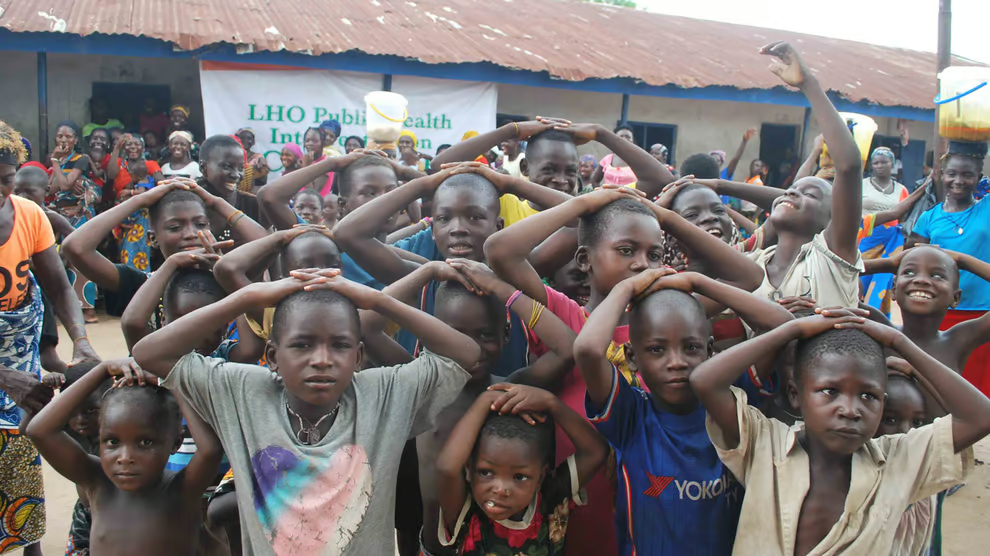
The coalition of NGOs, comprising SOS Children’s Villages, Plan International, Save the Children International, and Terre des Hommes International Federation, added that behind these statistics were girls whose education was interrupted, whose safety was threatened, yet who continued to dream, rebuild, and lead change in their communities.
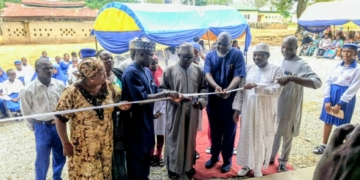
The Chairperson Joining Forces Nigeria, Eghosa Erhumwunse, who is also the National Director of SOS Children’s Villages, said this at the weekend during the commemoration of the International Day of the Girl Child with the theme, “The Girl I Am, The Change I Lead: Girls on the Frontlines of Crisis,” said the commemoration reminded them that progress for girls is progress for humanity.
He noted that across Nigeria, millions of girls continue to stand resilient in the face of adversity, from conflict and displacement to floods and the mounting threats of climate change, saying that their courage is a testament to the power that lies within when opportunity meets support.
The National Director of SOS Children’s Villages said, “In 2024, over 1.2 million Nigerians were displaced by flooding, with more than 150,000 children affected in Borno State alone. We have witnessed young girls in Borno evolve from survivors to changemakers, becoming eco champions, peer mentors, and advocates for climate resilience and child protection. They remind us that actual change does not come when we are static, but when we are in motion.
“The future we seek, one where every girl thrives, will be built not by isolated efforts but by collective will and sustained partnerships. To all stakeholders here today, government, development partners, civil society, and the media, we invite you to join forces with us to collaborate, to innovate, and to act decisively so that every child in Nigeria, especially every girl, grows up protected, valued, and free from violence.”
In her goodwill message, Programme Associate and representative of the Programme Specialist and Head of Office, Maiduguri, UN Women, Hadiza Usman, said that 222 million girls live in crisis-affected countries where access to education, healthcare, and safety is severely disrupted.
She said in Nigeria, 1 in 5 out-of-school children is a girl, and that an estimated 20 million children are out of school—most of them girls from the North-East and North-West regions.
“The impacts of conflict, climate change, and displacement disproportionately affect adolescent girls. During emergencies, girls are 2.5 times more likely to drop out of school than boys. Furthermore, according to UNICEF, 43% of Nigerian girls are married before the age of 18, and 20% become mothers before 17, often as a result of poverty, insecurity, or harmful social norms intensified by crises.
“At UN Women, we believe that every girl, regardless of her background or circumstance, deserves the right to learn, to lead, to be protected, and to thrive. Our work in Nigeria and globally focuses on: Expanding girls’ access to education and leadership, particularly in humanitarian and post-conflict settings,” Usman said.
One of the school children who attended the commemoration of the International Day of the Girl Child, Zara Abubakar, urged the government to ensure that the rights of girls are protected anywhere and at any time, saying that girls have been the major victims of violence that has occurred in the state, especially in the Boko Haram insurgency.
We’ve got the edge. Get real-time reports, breaking scoops, and exclusive angles delivered straight to your phone. Don’t settle for stale news. Join LEADERSHIP NEWS on WhatsApp for 24/7 updates →
Join Our WhatsApp Channel