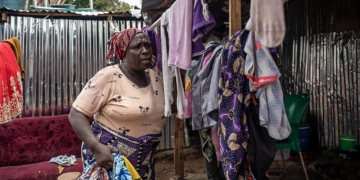

Researchers from the University of Maiduguri have raised concerns about the increase and inadequate recording of Gender-Based Violence (GBV) cases in Borno State, blaming the government for the poor documentation.
The researchers from different faculties made the revelation yesterday during a media dialogue on their research, titled “Exploring Solutions to the Prevalence of Gender-Based Violence in Conflict-Affected Areas in Borno State,” held at the University of Maiduguri.
Presenting on behalf of the team, Dr Abdulmutallib Abubakar commended the interventions put in place by the government and non-governmental organisations for GBV survivors, but noted that gaps still exist.
He said from their findings, 93 per cent of the respondents have indicated that, yes, the gender based violence is increasing, stressing that the finding was measured based on the public perception.
Highlighting some of the gaps, the University Don said there are no publicly collated available data on trends of GBV, adding that the situation has further compounded the GBV trend in the state
“To get the quantitative data that will give you the number to corroborate the increase is not available to the public, and even if it’s available to the public, it has not been aggregated in one single location where you can access the data.
“The Borno state government, through its Ministry of Women Affairs and Social Development, does not have sufficient data to give you the increase over the years.
“It’s only in some NGOs that they will give you a bucket of data, and even if you aggregate that, you will see a Zig-zag increase of Gender Violence in Borno state”, he said.
The study, according to him, also shows that there is a small gap between available interventions and the prevalence of GBV.
“The intervention over the years has impacted only the victims, the victims who are aware of the interventions. Also, outside Maiduguri city, residents are not aware that the interventions are meant to reduce gender based violence. Most feel the interventions are only meant to reduce hunger, not even gender based violence,” he added.
He also stressed that major stakeholders involved lack understanding of the environment within the state
“Major actors involved are non-governmental organisations that do not have a strong understanding of the communities outside the cities
“Some survivors of GBV are supposed to go through psychosocial support activities, but, because communities do not understand the impact, they do not avail their children to such services or intervention by non-governmental organisations. So, it is not only about intervention, but the impact is not there”, he emphasised.
The team, however, recommended that the government and other stakeholders must prioritise data collection and presentation to reduce GBV cases across the state.
“The data to determine the trend of GBV in Borno state is still discreet. It is not in a compressed manner. Therefore, we recommend that, as part of a way to solve this issue, there should be an annual release of the data that shows either a decrease or an increase in GBV at all locations in the state
“We also recommend that the Ministry of Women’s Affairs should ensure annual collation, and create a desk that can aggregate data from all the NGO’s and state agencies so that people will keep seeing the efforts of the state and non-state actors in reducing GBV.
“If this is done, we can see the progress annually and solve the issue of gender based violence”, he noted.
We’ve got the edge. Get real-time reports, breaking scoops, and exclusive angles delivered straight to your phone. Don’t settle for stale news. Join LEADERSHIP NEWS on WhatsApp for 24/7 updates →
Join Our WhatsApp Channel