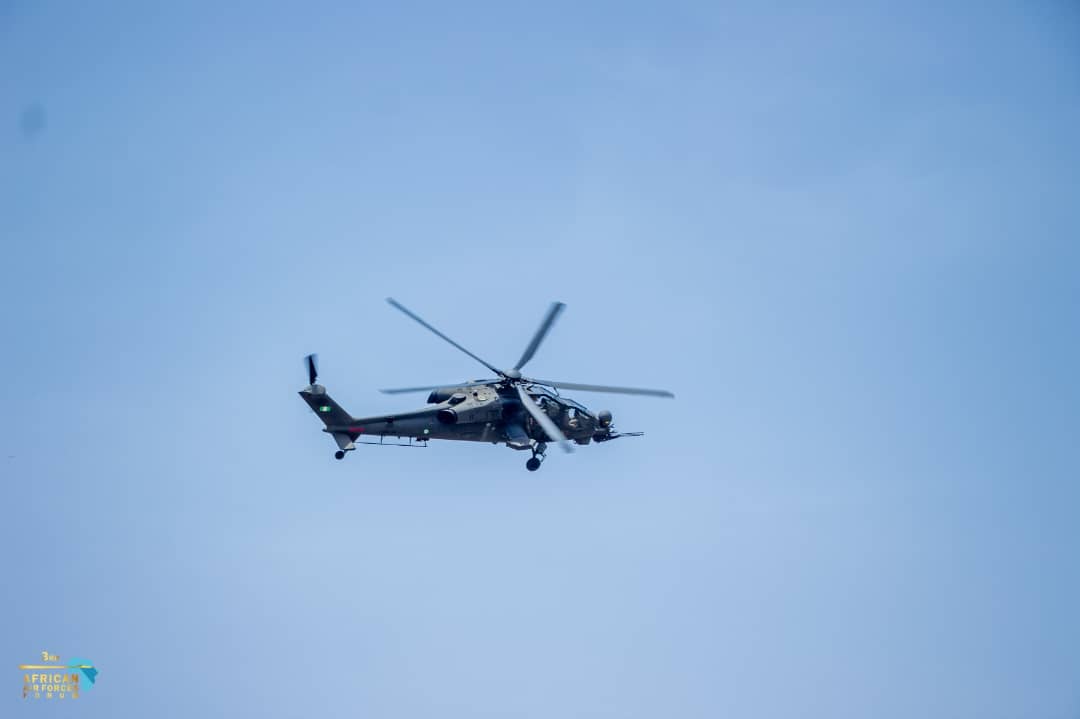
A rights group, Civil Society for Peace, Security and Development (CSPSD), has given the Nigerian Air Force’s (NAF) counterinsurgency operations a very high rating and described the development as a major break from the past.
It was particularly impressed with the neutralisation of six high-profile terrorist commanders and dozens of their supporters in recent air strikes.
Presenting the findings of an independent assessment in Abuja, the national coordinator of the CSPSD, Dr Kabiru Muhammed, said field monitors deployed to Borno, Yobe, Adamawa, Katsina, Zamfara and Sokoto states between October 2025 and February 2026 verified what he termed “measurable improvements” in operational effectiveness, civilian protection and civil-military relations under the leadership of the Chief of the Air Staff, Air Marshal Sunday Kelvin Aneke.
According to the report, those neutralised include Boko Haram commanders Basulhu and Ubaida, killed on January 22, 2026, in the Mandara Mountains; ISWAP leaders Qaid and Munzir, eliminated in coordinated airstrikes in the Timbuktu Triangle of Borno State; an unidentified ISWAP commander neutralised in the Tumbuns region of Lake Chad in February 2026 and a notorious bandit leader Kachalla Dogo Sule, whose camp was destroyed at Turba Hill in Tsafe local government area of Zamfara State in December 2025.
Mohammed explained that “the findings were based on corroborated intelligence from community leaders, vigilante groups and cross-referenced field reports,” noting that, “Basulhu had been responsible for coordinating attacks on civilian convoys along the Madagali–Gulak axis, while Ubaida was linked to multiple abductions along the Adamawa–Borno border.”
Qaid reportedly oversaw insurgent operations in northern Borno, including attacks on fishing communities around Lake Chad, with Munzir managing logistics and weapons supply routes, he said.
Mohammed added that “more than 50 rank-and-file fighters were neutralised during separate operations in Abbagajiri, Musarram, Azir and Ambia Tasha in January 2026.”
The group also commended the NAF for what it described as “improved accountability and civilian protection measures,” citing the handling of the December 25, 2024, airstrike error in Silame local government area of Sokoto State, which claimed 12 civilian lives, as evidence of a shift toward transparency.
Mohammed said NAF publicly accepted responsibility and engaged directly with the affected community, a move he said had helped to “build institutional credibility despite the tragic loss.”
The report documented what it called “positive operational impacts on communities, including improved access to farmlands in parts of Borno previously considered unsafe, reduced insurgent incursions around the Timbuktu Triangle and disruption of terrorist logistics networks as well as psychological pressure on insurgents, leading to some defections”.
The CSO further acknowledged ongoing fleet modernisation efforts by the Air Force, including the acquisition of M-346 fighter ground-attack aircraft, AH-1Z Viper attack helicopters, AW-109 Trekker helicopters and increased investment in unmanned aerial vehicle capabilities and training.
While applauding NAF for the gains, the group urged it to “sustain the momentum, deepen community engagement in conflict zones and strengthen post-strike verification mechanisms,” and called on the federal government to accelerate aircraft delivery, maintenance, and logistics, support conflict-affected communities, and establish a compensation framework for civilian victims of military operations.
We’ve got the edge. Get real-time reports, breaking scoops, and exclusive angles delivered straight to your phone. Don’t settle for stale news. Join LEADERSHIP NEWS on WhatsApp for 24/7 updates →
Join Our WhatsApp Channel