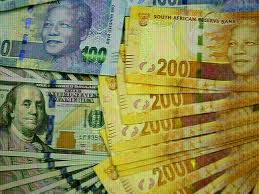
The South African rand extended modest gains in early trading on Tuesday, buoyed by a weaker US dollar and sustained foreign demand for South African government securities, according to a market brief from First National Bank (FNB). The currency was quoted at R16.28 against the dollar, R18.95 against the euro, and R21.92 against the pound sterling.
FNB attributed the rand’s resilience to an easing of US dollar strength across global markets and continued appetite among international portfolio investors for South African fixed-income instruments. South African bonds have drawn steady non-resident inflows in recent sessions, offering relatively attractive real yields compared with other emerging-market peers.
“Gold is finding support from persistent geopolitical uncertainty after US-Iran peace negotiations reportedly broke down, keeping safe-haven demand intact.”
Meanwhile, gold climbed to $4,505 per troy ounce during Tuesday’s session, underpinned by renewed geopolitical anxiety following reports that direct talks between Washington and Tehran had stalled.
Market participants have pointed to the collapse of the latest round of US-Iran negotiations as a catalyst for fresh safe-haven positioning, reinforcing bullion’s upward trajectory after a period of consolidation.
Investor caution was further heightened by uncertainty over US President Donald Trump’s position on a potential ceasefire extension, with market participants reluctant to take large directional bets until the White House articulates a clearer stance.
That wariness has continued to underpin the gold price even as diplomatic communications remain fluid.
Brent crude eased marginally to around $94.07 per barrel on Tuesday after surging approximately 4.2 per cent in the previous session — the benchmark’s largest single-day advance in roughly a month.
Monday’s spike followed news reports that Iran had suspended engagement with the United States in response to Israeli military operations in Lebanon, raising concerns about potential disruption to Middle Eastern oil supply chains.
Prices pulled back modestly on Tuesday after President Trump announced that he had helped broker a halt to Israeli military activity in Lebanon and signalled that a diplomatic channel with Iran remained viable.
The development partially unwound the geopolitical risk premium that had driven the previous day’s advance, though analysts cautioned that the situation remained fragile and subject to rapid change.
The interplay between currency, commodity, and bond markets reflects the degree to which South African financial assets remain sensitive to global macro and geopolitical dynamics — a pattern that analysts expect to persist as long as US foreign policy and Middle East tensions dominate investor sentiment.
We’ve got the edge. Get real-time reports, breaking scoops, and exclusive angles delivered straight to your phone. Don’t settle for stale news. Join LEADERSHIP NEWS on WhatsApp for 24/7 updates →
Join Our WhatsApp Channel